
Operation Ambassador
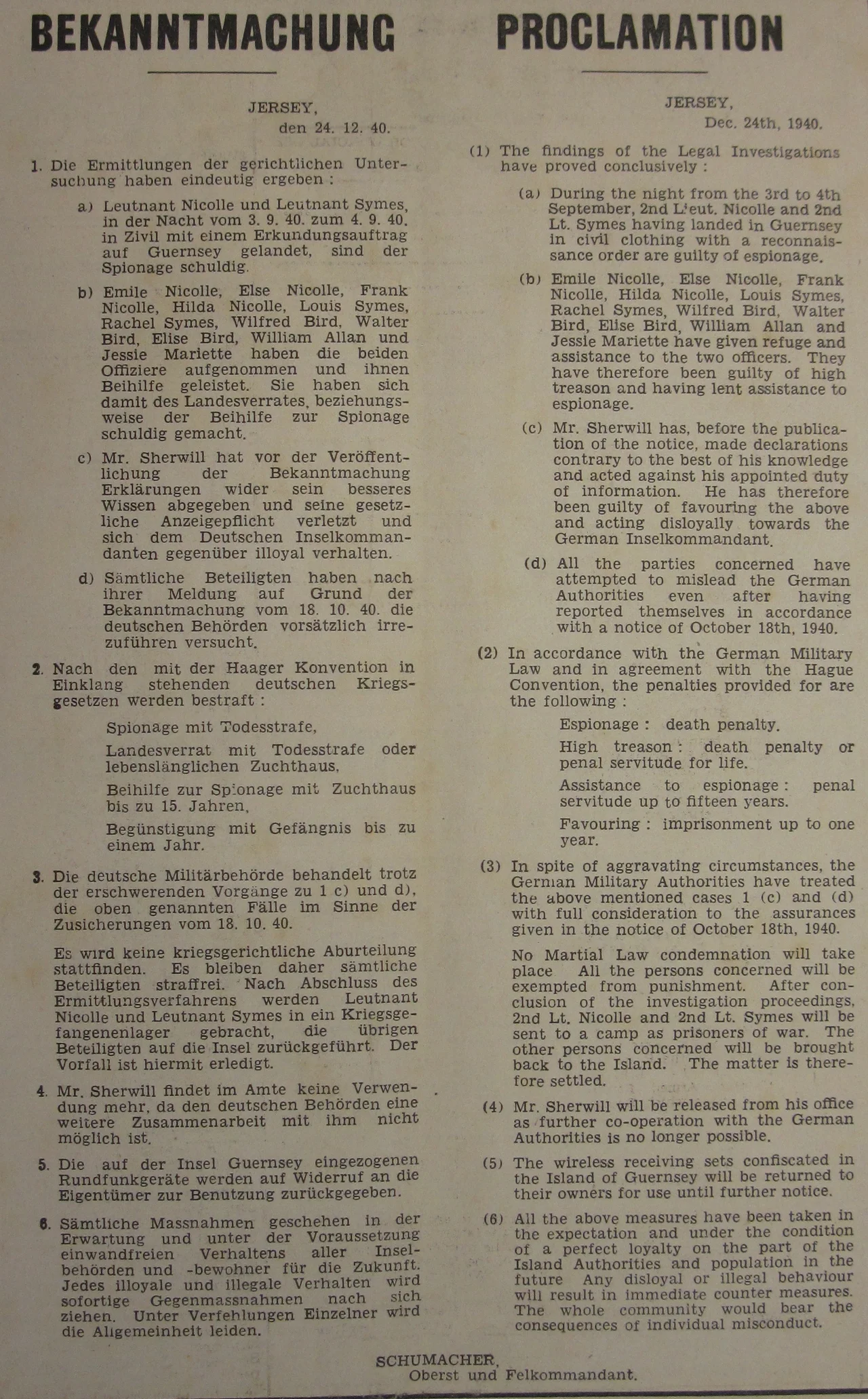
Three men from H Troop, No. 3 Commando, sat in the dark on a Guernsey beach with a wad of French francs and a problem: they could not swim. The motor launches that had brought them ashore could no longer reach the rocks at high water, and the rendezvous with the destroyers was at 0300. Their commanding officer asked the Admiralty to send a submarine. The Admiralty said no. The three men waited for daylight and the Germans, and Operation Ambassador, the second commando raid of the Second World War, ended the way the entire night had gone, with British soldiers stranded on someone else's beach.
Churchill's Hurry
The Germans landed on Guernsey on 30 June 1940. Two days later Winston Churchill sent a memo to General Hastings Ismay: organize a raid on the Channel Islands, immediately, this is exactly the work the new Commandos should be doing. The War Office approved the proposal the same day. There were no commandos to speak of yet, only a handful of recently formed Independent Companies and a unit being assembled around Lieutenant Colonel John Durnford-Slater. The plan that emerged was for 140 men to land on Guernsey, attack the airfield, destroy aircraft and buildings, kill or capture Germans, and leave. Most of the details were worked out in London by Durnford-Slater and a staff officer at Combined Operations Headquarters named David Niven, who would later be a film star but in 1940 was helping plan an island raid against the wishes of the Royal Navy.
Reconnaissance and Reality
On the night of 7-8 July a submarine, HMS H43, put Lieutenant Hubert Nicolle ashore on Guernsey. Nicolle was Hampshire Regiment but Guernsey-born, originally commissioned in the Royal Guernsey Militia, and could move on the island without attracting attention. He came home with useful intelligence: 469 Germans on the island, mostly around Saint Peter Port, machine-gun posts along the coast but spaced widely enough that twenty minutes might pass between alarm and reinforcement. The raid was scheduled for the night of 12-13 July, then pushed to 14-15. At Royal Naval College Dartmouth, cadets helped the commandos load Bren and Thompson magazines. At 17:45 on the fourteenth, 140 men embarked on the destroyers HMS Scimitar and HMS Saladin and headed south. Six RAF air-sea rescue launches went along to ferry them ashore from the destroyers. To cover the noise of those launches, Avro Ansons were laid on to overfly the island.
Everything That Could Go Wrong
A party from No. 11 Independent Company put down on the wrong island. Their compass was off, and they landed on Little Sark, ten miles southeast of where they were meant to be. They explored La Sablonnerie, found no Germans, and returned to the destroyer. Another launch hit a rock. Two more broke down. The party that did make Guernsey, men of No. 3 Commando, came ashore wet and found none of the 469-man garrison. They cut a couple of telegraph wires on the way back to the beach, where they discovered the tide had risen too far for the launches to come in. The commandos had to swim a hundred yards out to the boats. That was when the three non-swimmers were identified. They were left with francs and surrendered the next day. The British military gain from the night: one severed telephone line.
Failure That Mattered
The official tally was bleak. No Germans killed or captured. No aircraft destroyed. Three British prisoners. Equipment carried that nobody needed: extra ammunition, steel helmets, gaiters that filled with seawater. The press tried to spin it heroic. The commandos themselves did not. For months afterwards the entire Commando concept was reportedly in jeopardy, with senior officers arguing the units should be disbanded. They were not. The Independent Companies were dissolved instead and their men reorganized into the first twelve commando units, the structure that would carry through to Saint Nazaire, Dieppe, and eventually D-Day. The lessons were brutal: better compasses, watertight equipment, fewer last-minute plan changes, commanders who could swim. Durnford-Slater absorbed all of them. By late 1941 the man whose first raid had achieved nothing was leading Operation Archery, a commando raid on Vaagso, Norway, praised for his personal courage and quick grasp of the situation by his commanding general. Ambassador failed cleanly enough to teach.
From the Air
Operation Ambassador unfolded along the south and east coasts of Guernsey, centered near Petit Port at 49.4228 N, 2.5307 W. The Royal Naval College Dartmouth, where the raid was prepared, is at 50.3508 N, 3.5712 W on the south Devon coast. The destroyer track ran roughly south-southwest from Dartmouth to Guernsey, about 110 nautical miles. From altitude over Guernsey, the south coast cliffs and Petit Port appear immediately east of Jerbourg Point; Saint Peter Port harbor is visible to the north. Nearest airport: Guernsey (EGJB). Alderney (EGJA) and Jersey (EGJJ) are usable diversions in deteriorating weather; sea fog can develop quickly across the Channel Islands.
Nearby Stories
- Pallot Steam, Motor & General Museum 29 km away
- HMS Affray 29 km away
- Operation Donnerkeil 29 km away
- German Submarine U-672 35 km away
- Action of 18 June 1793 60 km away
- Mont Saint-Michel: The Abbey That Becomes an Island Twice a Day 78 km away
- Basilica of Sainte-Therese, Lisieux 209 km away
- 1941 Santander Fire 642 km away