
The Secret War in Borneo's Jungle
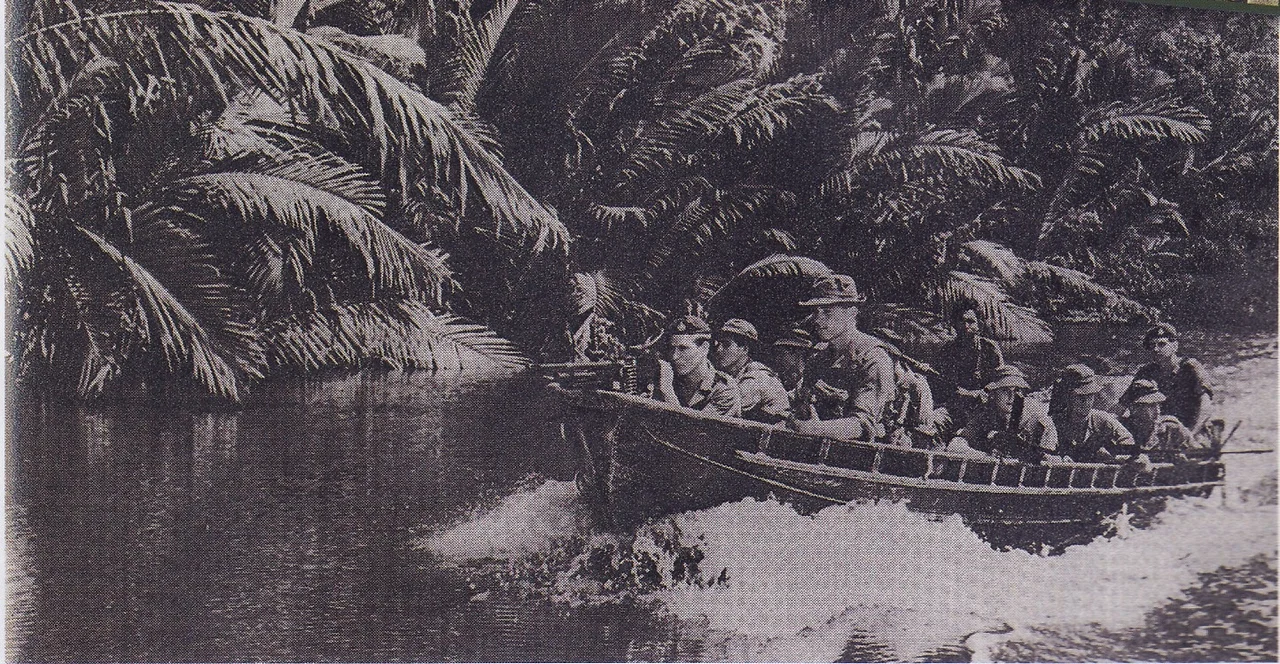
The soldiers wore no identity discs. They carried nothing that could link them to any nation. If they died across the border, their bodies were to be recovered at all costs, and their deaths reported as having occurred in East Malaysia. For two years, from mid-1964 to mid-1966, thousands of British, Gurkha, Australian, and New Zealand troops crossed from Sarawak and Sabah into Indonesian Kalimantan under the codename Claret, fighting a shadow war that their governments would not acknowledge for decades. Britain did not publicly disclose the operations until 1974. Australia waited until 1996.
The Undeclared Border
The Indonesia-Malaysia confrontation was President Sukarno's attempt to prevent the formation of the Malaysian federation, which he viewed as a neocolonial construct. Indonesian forces launched cross-border raids from Kalimantan into the Malaysian states of Sarawak and Sabah, growing bolder through early 1964 as poorly trained 'volunteers' gave way to regular Indonesian troops. Major General Walter Walker, the Director of Borneo Operations, watched the raids intensify and concluded that a purely defensive posture was untenable. The border stretched roughly 1,000 miles through some of the densest jungle on Earth, and the Indonesians could strike anywhere along it while retreating to safety across the line. Walker proposed taking the fight to them. In July 1964, the new Labour government in London agreed, authorizing cross-border operations to a depth of 5,000 yards. The codename was chosen. The rules were set. And nobody was to know.
Seven Golden Rules
Walker imposed seven conditions that transformed what could have been a reckless escalation into one of the most disciplined military campaigns of the Cold War era. Every operation required his personal authorization. Only trained and tested troops could participate. Penetration depth was strictly limited. Civilian casualties were never to be risked. No air support was permitted except in extreme emergencies. Every mission had to be planned and rehearsed for at least two weeks. And the most sobering rule of all: no soldier was to be captured, alive or dead. These constraints shaped everything about how Claret operations were conducted. Patrols lasted five to ten days, entirely self-contained, carrying all their own ammunition and rations. Because aircraft could not cross the border, wounded soldiers had to be carried on foot back to Malaysian territory before evacuation was possible. The secrecy was absolute. Weekly operational reports described engagements in language implying they occurred in East Malaysia, identifiable only by grid references that, with the right map, revealed positions south of the border.
Ghosts in the Canopy
Operations ranged from four-man SAS reconnaissance patrols to company-strength infantry assaults coordinated at the battalion level. The SAS and Border Scouts slipped across the frontier to locate and monitor Indonesian positions, then infantry units acted on the intelligence with ambushes and fighting patrols. Initially, only Gurkha battalions were used, but as experience grew, British, Australian, and New Zealand units joined the roster. By 1965, after the fierce Indonesian assault at the Battle of Plaman Mapu, penetration limits were doubled to 10,000 yards, then pushed to 20,000. The Special Boat Service launched amphibious raids on the flanks. Artillery support came from guns deployed singly in remote platoon bases, each section handling its own fire control. A single 105mm pack howitzer might support an entire operation, burning through far more than its standard ammunition allocation. Intelligence flowed from an improbable network: SAS patrols, Border Scouts with relatives across the line, local informants, military intelligence officers, and likely police Special Branch operatives.
When Plans Unraveled
Not every operation went as rehearsed. Late in 1965, the Reconnaissance Platoon of the Scots Guards, deep into their second tour, crossed the border to investigate reports of an unknown Indonesian base in the estuarine country west of Tawau. They found the base deserted, left four men in position, and fanned out to reconnoiter. The base's occupants, a company of Indonesian marines, returned unexpectedly. Contact was immediate and violent. The platoon fought a running withdrawal while a single artillery piece at Serudong Laut fired over 350 rounds in support, the entire company at that base unpacking and hauling ammunition to keep the gun fed. Meanwhile, one of the most complex Claret operations saw the 2nd Royal Green Jackets position their battalion headquarters on the border ridge. One company swam a river to outflank an Indonesian base. A second company set a river ambush. When Indonesian mortars opened fire on the ambush, British mortars suppressed them, driving the defenders into the waiting ambush behind their own position.
A War That Worked
The last Claret operation took place in July 1966, an artillery ambush near Ba Kelalan by the 1st Battalion, 7th Gurkha Rifles and 38 Light Battery, targeting a track leading to the Long Bawang airfield. By then, political upheaval within Indonesia was already rendering the confrontation moot. Across two years, Claret operations had seized the tactical initiative, inflicted significant casualties, and kept Indonesian forces pinned on the defensive without ever triggering the international incident that Walker and his political masters feared. The campaign remains a rare example of covert military operations achieving their strategic objectives while maintaining operational secrecy. The jungle along the Sarawak-Kalimantan border has long since swallowed any trace of the fighting. No memorials mark the ambush sites. No official British history of the confrontation has ever been published. The operational reports sit in the UK National Archives, their grid references the only quiet testimony to what happened south of the line.
From the Air
Centered near 3.87N, 115.62E along the Sarawak-Kalimantan border in Borneo. From altitude, the border region appears as unbroken primary rainforest bisected by river valleys running north-south. The Kelabit Highlands rise to the east near Bario (WBGZ). Nearest major airports include Kuching (WBGG) to the west and Kota Kinabalu (WBKK) to the north. The border itself is invisible from the air, which is precisely the point.
Nearby Stories
- Sarawak Chamber 16 km away
- Our Forests, Our Name 21 km away
- The Green Jewel You Can Only Reach by River 42 km away
- The Abode of Peace on Borrowed Coastline 48 km away
- Baram Dam 56 km away
- Maliau Basin 119 km away
- Keningau Oath Stone 155 km away
- Battle of Tarakan (1942) 176 km away