_Kampong_Panaga.jpg)
Panaga
On the morning of December 8, 1962, residents of Panaga woke to gunfire. Rebels from the Brunei People's Party had launched coordinated attacks across the Belait coast, and Panaga's police station -- built just six years earlier -- was under assault. Some Indian community members were seized and used as human shields in the attack. Families barricaded themselves inside their homes while rumors spread through the settlement. The police station held. It was never occupied by the rebels, though the terror of those hours left a mark on the village that no amount of postwar prosperity could fully erase.
The Golf Course Airstrip
Panaga's role in the 1962 revolt extended well beyond the besieged police station. Eight kilometers west of Anduki Airfield, the Panaga Golf Course became an improvised landing site for five RAF Scottish Aviation Twin Pioneers. The short-takeoff aircraft touched down on fairways never designed for anything heavier than a golf cart, deploying troops who helped retake the nearby airstrip. Meanwhile, Panaga School was quietly converted into an emergency headquarters. It was equipped with security provisions, a powerful radio transmitter linked to Singapore's military base, and secret evacuation plans for Brunei Shell Petroleum staff should the situation deteriorate further. In a village built around corporate comfort, the infrastructure of everyday life had been repurposed for war overnight.
Shell's Company Town
Panaga exists because of oil. The headquarters of Brunei Shell Petroleum -- the joint venture between the Brunei government and Royal Dutch Shell that operates the country's petroleum industry -- sits at the village's center, making Panaga the administrative heart of Brunei's most important economic sector. The village developed as a classic company town: BSP built the fire station, the health center (rebranded as Panaga Health in 2022 after 54 years of operation), and much of the housing. The Berry Bridge, constructed around 1940 on the main road between Seria and Kuala Belait, remains the oldest bridge in Belait District and still carries traffic today. At 100 feet long and 30 feet wide, it was built by BSP and has outlasted most of the infrastructure around it.
From Derricks to Solar Panels
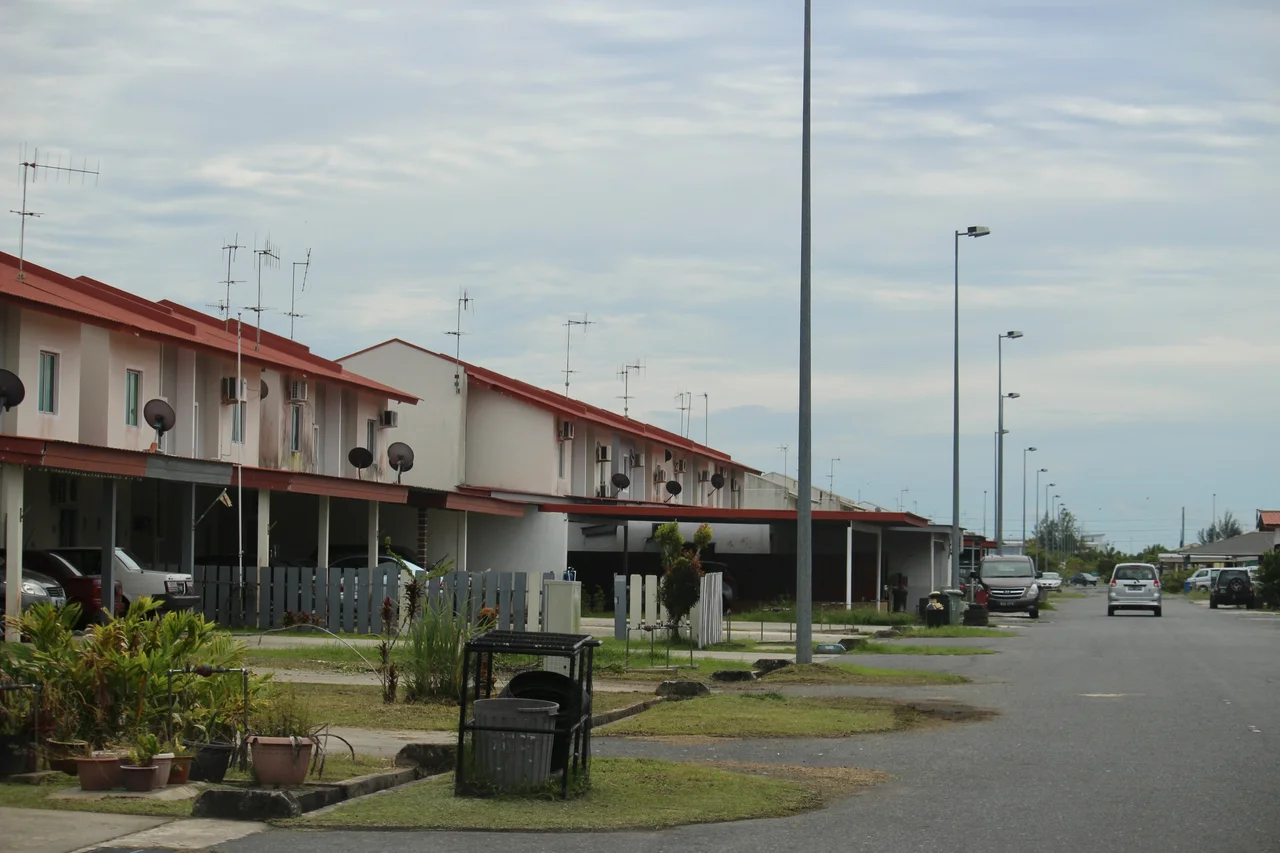
In 2025, BSP launched a solar plant at Panaga featuring nearly 7,000 panels -- a striking development in a village that exists because of fossil fuels. The installation supports Brunei's renewable energy ambitions, a quiet acknowledgment that the oil wealth which built Panaga cannot last forever. The village's evolution is visible in its housing, too. Between 2009 and 2011, contractors built 2,000 homes -- 1,200 terrace houses and 800 semi-detached units -- as part of a B$288.7 million government pilot project. Known as Panaga 2000 Housing, the development incorporated fiber-to-the-home internet and vacuum sewerage systems, modern comforts that would have been unimaginable to the petroleum workers who first settled this stretch of Borneo coast.
Life Beyond the Compound
Despite its corporate origins, Panaga has grown a community identity independent of BSP. The Panaga Club and recreation facilities serve both employees and expatriates, but the Village Consultative Council has organized its own programs around the Panaga Lagoon, hosting family events that emphasize village progress and communal bonds. The BSRC Football Club, founded in 2004, fields teams in Brunei's domestic leagues. Schools range from the private Hornbill School and Panaga School to public institutions including Panaga Primary and Religious Schools. Scientists have even named a species after the village -- Cytherelloidea panagaensis, a tiny ostracod discovered near the mouth of the Panaga rivulet and studied at depths of up to 96 meters off the coasts of Seria and Sabah. In a place defined by what lies beneath the ground, something small and alive turned up in the water.
From the Air
Coordinates: 4.60N, 114.283E. Panaga sits on the Brunei coast along the South China Sea, immediately west of Seria town. The Brunei Shell Petroleum headquarters complex is visible from altitude as a cluster of buildings amid palm oil plantations and oil infrastructure. Anduki Airfield is approximately 8 km to the east. The nearest commercial airport is Brunei International Airport (WBSB), about 75 km east near Bandar Seri Begawan. Expect tropical conditions year-round with high humidity and frequent afternoon convective activity.
Nearby Stories
- The Sultan's Gurkhas 2.4 km away
- The Town That Splits a Nation 12 km away
- Kelabit Highlands 20 km away
- The Billion-Dollar Playground That Michael Jackson Opened 45 km away
- The Ants of Borneo 56 km away
- Niah National Park 66 km away
- Similajau National Park 156 km away
- Luconia Shoals 185 km away