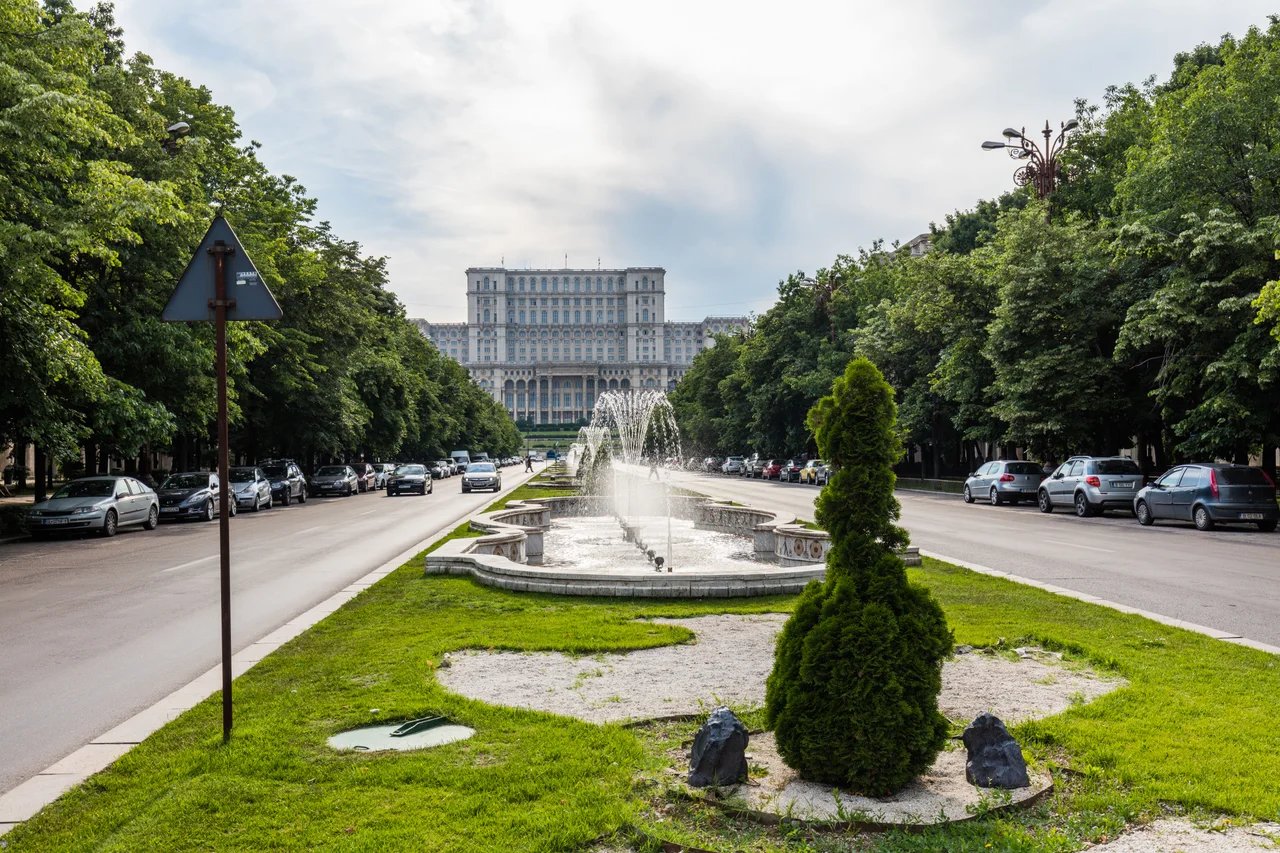

Parliament of Romania
Nicolae Ceausescu never lived to see his palace finished. The Romanian dictator was executed by firing squad on Christmas Day 1989, with the building still wrapped in scaffolding, its 1,100 rooms still echoing with the sound of unfinished marble work. A few years later, the people he had brutalized handed the colossus to the very institution he had spent decades neutering: a real, working parliament. Today the Chamber of Deputies and the Senate meet inside the second-largest administrative building on the planet, a megalomaniac's monument repurposed for the slow, argumentative business of democracy.
Two Chambers, One Long Memory
Romanian parliamentarism is older than Romania itself. The Regulamentul Organic, adopted in Wallachia in May 1831 and in Moldavia the following January, established the first formal legislative body in the principalities that would eventually unify. Domnitor Alexandru Ioan Cuza added a second chamber in 1864, modeling Bucharest's politics on the great parliaments of Western Europe. From beneath the parliamentary dome, on 9 May 1877, deputies read the Declaration of Independence that severed Romania from Ottoman suzerainty. In 1920, the same chamber ratified the Treaty of Trianon, formalizing the Greater Romania that absorbed Transylvania and Bessarabia.
The Authoritarian Interruption
King Carol II suspended meaningful parliamentary work in February 1938, replacing democracy with personal rule. The pattern held under Ion Antonescu's wartime dictatorship and then under four decades of Communist Party domination, when the so-called Great National Assembly served as a rubber stamp for the politburo. The body retained the architecture of a parliament, with deputies and votes and committees, but every outcome was decided in advance. The institution was a shell, its democratic function gutted long before Ceausescu took power and continued the tradition with a flourish all his own.
Inheriting a Tyrant's House
After the December 1989 revolution, Romania restored bicameral parliamentary democracy and ratified a new constitution in 1991. By the mid-1990s, the Chamber of Deputies had moved into Ceausescu's unfinished Casa Poporului, the People's House, which had displaced an entire historic neighborhood during construction. Roughly 40,000 residents had been forcibly relocated. Twenty churches and dozens of monasteries had been demolished. Now the building hosts a parliament that argues, dissents, and votes itself out of office on a regular schedule, a fact that would have horrified its original patron.
The 2003 Reform and the Workings of Today
Until 2003, both chambers held identical powers, and disagreements were hammered out by joint mediation commissions, a French-style procedure that proved exhausting. A constitutional referendum that year carved up legislative responsibilities. Each chamber now acts as the deciding body for specific subject areas while the other reviews. A 2009 referendum suggested Romanians would prefer a single 300-seat chamber, but because the vote was advisory rather than constitutional, the bicameral structure persists. The Chamber of Deputies and Senate together oversee everything from budget-making to intelligence-service oversight, including specialized inquiry committees that have probed cases like the Bordei Park land scandal.
European Anchor
The post-Communist parliament's signature achievement was integration. Through the 1990s and 2000s, deputies and senators passed thousands of laws aligning Romanian institutions with Western standards on rule of law, market reform, and human rights. Romania joined NATO in 2004 and the European Union in 2007. Both accessions ran through this chamber, sometimes contentiously, often grudgingly, but always within the procedural framework that Cuza had imagined and Carol II had broken. The Palace of the Parliament now anchors Bucharest's southern skyline as a paradox: a building constructed to glorify one man, repurposed to argue with itself in public.
From the Air
Located at 44.4272 N, 26.0875 E in central Bucharest. The Palace of the Parliament is the dominant landmark on the southern edge of the city center, visible for miles due to its sheer size (12 floors above ground, 365,000 sq m, second-largest administrative building in the world). Henri Coanda International Airport (LROP) lies 16 km north. Bucharest Baneasa (LRBS) lies 8 km north. The Carpathian Mountains rise to the north, with the Danube River 60 km to the south.
Nearby Stories
- National Transport Museum, Bulgaria 34 km away
- Slanic Mine 68 km away
- Sinaia 79 km away
- Great Basilica, Pliska 87 km away
- Sinaia Monastery 108 km away
- Holy Forty Martyrs Church, Veliko Tarnovo 115 km away
- Shumen Fortress 126 km away
- Danube Delta 227 km away