
Parnaíba
Most travelers treat Parnaíba as a comma in a longer sentence - a brief pause between Lençóis Maranhenses and Jericoacoara, two of Brazil's most famous natural wonders. They pile into shared vans, transfer buses near the center, and are gone before lunch. But the ones who stay discover something the hurried miss: a city of colonial porticos, palm-frond handicrafts, and an evening promenade that locals have been walking for generations.
The Pause That Pays Off
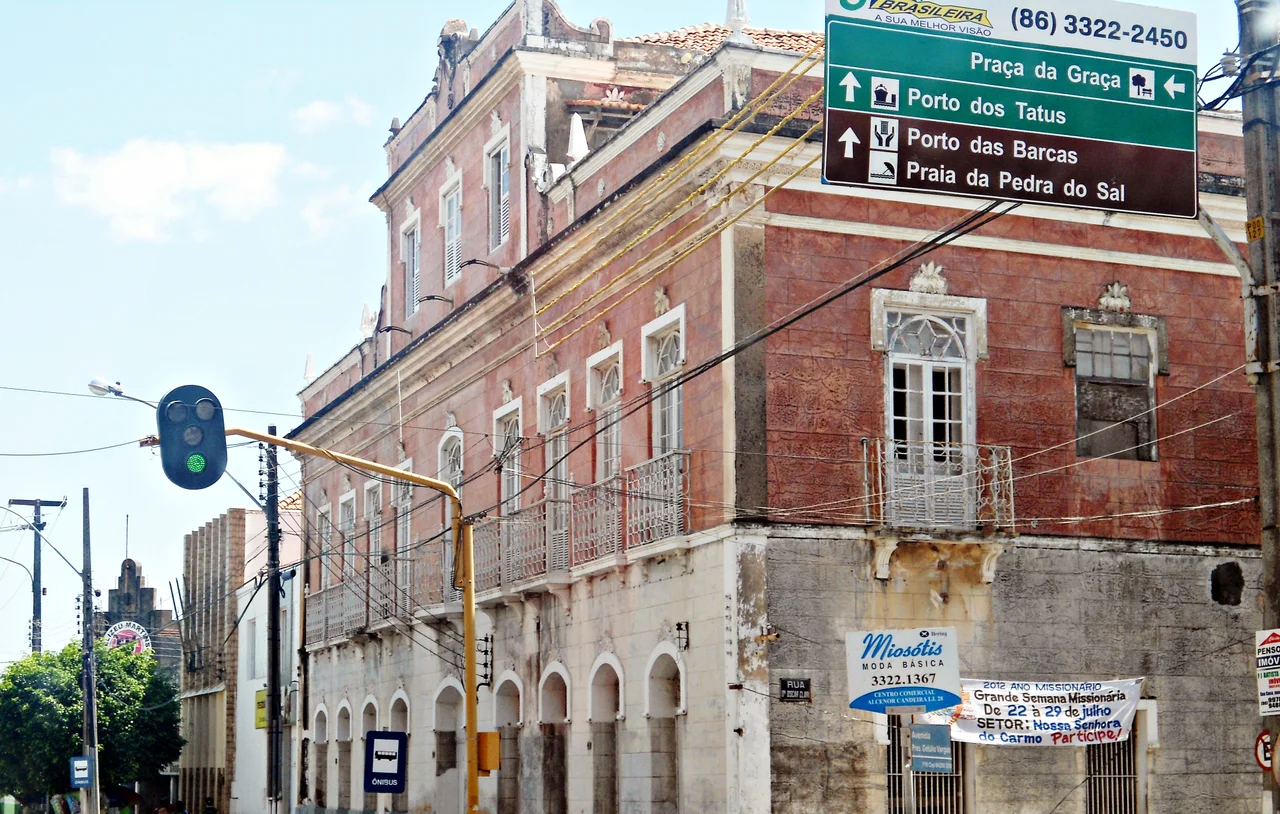
A couple of days is all Parnaíba asks. The payoff is a softer rhythm than the coastal resorts east and west. Near the bridge, on the northern edge of the center, Praça Nossa Senhora das Graças sits among preserved colonial buildings whose arched windows and pastel stucco come straight from a Portuguese trading post. Walk south along Avenida São Sebastião at dusk and you'll join a ritual the city treats as compulsory - the stroll from the Balão roundabout toward downtown, dozens of snack bars glowing on both sides, the smell of grilled fish and sweet fried cassava thick in the air.
The Delta Begins Here
Tours to the Parnaíba River delta launch each morning around 9 from Porto de Tatus, about fifteen kilometers northwest of the city. Some operators call the same dock Morro de Mariana; either name points to the same narrow channel where boats thread between mangroves before the land simply dissolves into water. The delta is one of the few open-ocean river deltas in the world, a maze of islands where you can spend a day or sleep aboard the Ilha das Canárias, Ilha do Caju, or Ilha dos Poldros. Return by midafternoon, or don't return at all.
Beira Rio After Dark
A kilometer north of the center, the Beira Rio district pulls the city's social life toward the Igaraçu riverbank every evening. Restaurants and bars stay open late, their plastic chairs spilling toward the water. There's nothing performative about it - no tourist circuit, no cover charge, just cold beer and slow conversation beneath the carnauba palms that give Piauí its signature silhouette. Pedra do Sal, fifteen kilometers north, offers a different pace: shacks on the sand, fried fish wrapped in paper, a beach where the wind rarely stops blowing.
Mototaxis and Palm Leaves
The city runs on mototaxis - three or four reais gets you anywhere, even with a backpack, though the drivers lean fast into the corners. Taxis are meterless and negotiable. At the markets, handicrafts made from the leaves of a particular palm species arrive in baskets woven so tightly they hold water. These are not tourist souvenirs manufactured elsewhere; they're the product of a regional craft tradition tied to the same carnauba palms that provided wax for candles, polish, and phonograph records in the city's trading heyday.
From the Air
Coordinates 2.90°S, 41.78°W. Parnaíba-Prefeito Dr. João Silva Filho International Airport (ICAO SBPB) sits on the city's eastern edge with a 2,500-meter runway, served by Azul and Voepass. The Parnaíba River delta sprawls immediately northwest, unmistakable from altitude as a five-armed estuary opening into the Atlantic. Cruising eastward along the coast, Jericoacoara lies 150 km east; westward, Lençóis Maranhenses begins within 100 km. Visibility is generally excellent in the dry season; rainy months run January through June.
Nearby Stories
- Paulino Neves 43 km away
- Caburé 57 km away
- Tianguá 65 km away
- Jericoacoara Beach 69 km away
- Serra da Ibiapaba Environmental Protection Area 106 km away
- Atins 121 km away
- Chapada Limpa Extractive Reserve 171 km away
- German submarine U-164 (1941) 210 km away