
Atins
The wind in Atins does not stop. From July through December, constant cross-onshore gusts of 15 to 30 knots sweep in off the Atlantic, and anything not tied down learns to surrender. Laundry snaps horizontally on its lines. Palm fronds hiss like surf. Sand drifts across the streets and into the houses, and the locals have long since given up trying to keep it out. All this weather turns Atins into one thing: the wind's playground. A fishing village on the estuary of the Rio Preguiças, squeezed between the ocean and the rolling white dunes of Lençóis Maranhenses National Park, Atins is the kind of place where the electrical grid barely reaches and the nearest paved road is an hour and a half away by four-wheel-drive.
Sand as Pavement
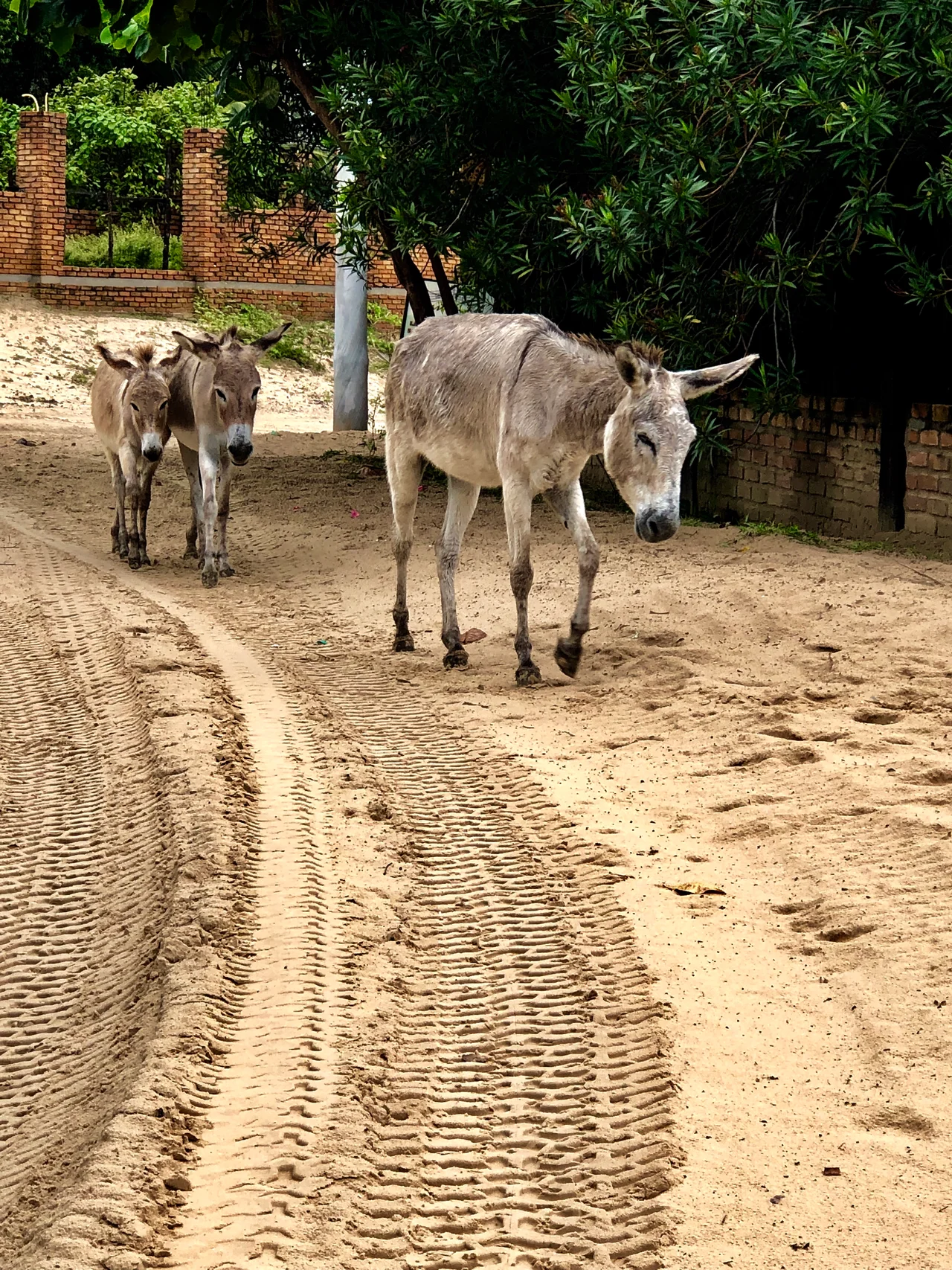
Atins has no paved streets. Every road, every pathway between the small houses and the beachfront pousadas, is made of soft sand that swallows ankles and holds the afternoon heat like a frying pan. From about 10:30 in the morning until 2:30 in the afternoon, the sand is too hot to walk on barefoot - locals and visitors alike switch to boots, to horseback, or simply stay inside. The village keeps its rustic bones: single-story houses with wooden shutters, a central square where old men gather in the evenings, a handful of chapels whose Sunday services carry through the village on loudspeakers. Mobile phone signal is essentially nonexistent. Most pousadas offer Wi-Fi, which means WhatsApp has become the village's main infrastructure for talking to the outside world.
A Kite Economy
The transformation of Atins from fishing outpost to international kitesurfing destination happened fast, and it happened to an economy that was not ready for it. Word spread through the global kitesurfing circuit in the 2000s and 2010s: constant wind, vast empty beaches, warm water in the mid-20s Celsius year-round, waves breaking at 1.5 to 2.5 meters for the experienced and flat sheltered water behind sandbanks for beginners. Instructors now charge R$150-250 per hour for lessons, and the village's population of foreigners - French, Italian, Spanish, German, Brazilian from the south - rivals the local Maranhense residents during the peak wind season. You can kitesurf the open Atlantic, the calm river, or even certain lagoons in the national park (though technically only one lagoon is legal, a rule everyone quietly ignores).
Crossing the Lençóis
Atins is the preferred starting point for trekking across Lençóis Maranhenses National Park, for one simple geographic reason: moving east to west goes with the trade wind, not against it. Sand blowing past your face is less painful than sand blowing into it. The crossing usually takes three days on foot, with overnight stops in small settlements inside the dune field where you sleep in hammocks in local homes, eat simple meals of rice and fish, and pay around R$50 for the night (as of recent years). Guides cost roughly R$200 per day. Water becomes the expedition's biggest logistical challenge: it is sold at marked-up prices along the route, and a portable purifier earns its weight in the first few hours. The landscape you cross is one of the strangest on Earth - white sand dunes punctuated by turquoise rainwater lagoons that appear in the wet season and vanish by November.
Canto do Atins
About a kilometer and a half west of the village, over the first serious dune, lies Canto do Atins - a tiny settlement inside the national park known for two family-run restaurants competing across a sand-street divide. The older of the two is Luzia's, famous for barbecued shrimp. After eight years of working alongside her, Luzia's sister-in-law opened a rival restaurant named after her husband, Antônio - Luzia's brother. The family feud is discussed openly, and with humor, by anyone who spends more than a day in Atins. There is no electricity in the settlement. Rooms go for about R$50 a night. Reaching Canto do Atins takes most people 90 minutes on foot; the alternative is a four-wheel-drive or quadbike ride along the beach, best attempted at low tide.
The Rhythms of a Remote Village
Getting in and out of Atins requires deliberate effort. Four-wheel-drive trucks make the hour-and-a-half run to Barreirinhas morning and early afternoon, charging around R$25 as of recent years. Boats leave Barreirinhas for Atins at midday and return in early afternoon, a one-hour trip on the Rio Preguiças for roughly R$50. From Jericoacoara, it is seven hours overland to Caburé followed by a ten-minute river crossing. Groceries are expensive and limited, so seasoned travelers shop in Barreirinhas before arriving. Pousada owners, the story goes, pressure the village to keep nightlife quiet so their guests can sleep - but even they have not managed to quiet the enthusiastic evening services at the main intersection's church, which still carry on undiminished. Only the beachfront bars occasionally host live music. You come to Atins to ride the wind, walk the dunes, and remember that a life without mobile signal is still a life.
From the Air
Located at 2.57°S, 42.74°W at near sea level on the estuary of the Rio Preguiças, Atins sits at the eastern edge of Lençóis Maranhenses National Park. The village has no airport of its own; the nearest commercial field is São Luís - Marechal Cunha Machado International (SBSL), roughly 270 kilometers west. Barreirinhas maintains a small landing strip (SNBR) about 40 kilometers southwest, served by Azul flights from São Luís, Fortaleza, Jericoacoara, and Parnaíba on select days. From cruising altitude, Atins is a small cluster of buildings at the boundary between the white-dune complex of Lençóis Maranhenses and the blue-green sweep of the Atlantic coast. Steady onshore winds make low approaches to the local airstrip challenging; expect 15-30 knot crosswinds from July through December.
Nearby Stories
- Araioses 33 km away
- Ilha de Santana Lighthouse 42 km away
- Delta do Parnaíba Environmental Protection Area 51 km away
- Munim River 96 km away
- Parnaíba 105 km away
- Metal Open Air 126 km away
- Parcel de Manuel Luís Marine State Park 235 km away
- German submarine U-164 (1941) 315 km away