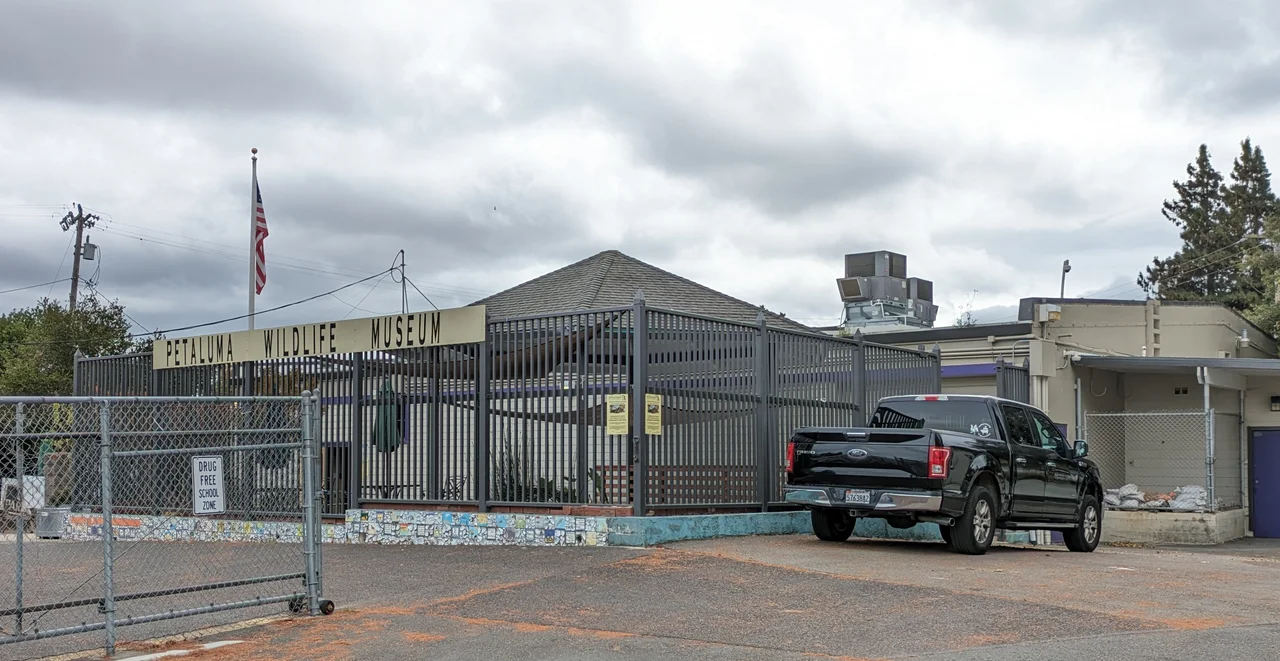

The Museum the Students Built
Ron Head had a theory about teenagers. He believed that if you gave high school students real responsibility, not simulated exercises or hypothetical scenarios, but actual authority over something that mattered, they would rise to it. In the late 1980s, teaching at Petaluma High School in Sonoma County, he got the chance to test that theory in the most unlikely way imaginable: a local millionaire's taxidermy collection was looking for a new home, and Head saw in it not a pile of mounted animals but the foundation of something that could change how his students saw themselves.
A Millionaire's Dead Zoo
Hugh Codding was one of Sonoma County's most successful developers, the man who built much of Santa Rosa's postwar suburban landscape. He was also an avid hunter, and over decades he had assembled an enormous taxidermy collection, housed in a nondescript industrial building on Summerfield Road in Santa Rosa that locals called the Codding Museum. Inside were some four hundred stuffed animals: bears in menacing poses, a Bengal tiger, a leopard, walls of mounted heads, and smaller specimens like South African dik-diks no larger than cocker spaniels. Generations of Santa Rosa schoolchildren took field trips to the collection in the 1960s and 1970s. But by 1989, Codding was ready to close the museum. He was crestfallen to learn that people had begun disparaging the collection because of the hunting trophies. Rather than let it disappear, he donated the entire inventory to Ron Head at Petaluma High School.
From Bus Garage to Natural History
The collection quickly outgrew Head's classroom. The Codding family stepped in again, purchasing a new bus garage for the school district, which freed up the old one on the Petaluma High campus. That 9,000-square-foot concrete building, never designed to hold anything more charismatic than a school bus, became the Petaluma Wildlife and Natural Science Museum when it opened in 1992. Head's vision was never primarily about the animals. "I saw what kids could do and how a museum could motivate kids," he said. The museum became a laboratory for career skills, leadership, and management. Students maintained the exhibits, cared for live animals, led tours for visiting elementary school groups, managed the nonprofit's finances, and learned to speak publicly about ecology and conservation. The old bus garage became the largest student-run museum in the United States, a distinction it still holds.
Living Collections and Young Docents
Walk through the museum on a Saturday, when it opens to the public, and the experience is unlike any conventional natural history institution. The guides are high school students. They are not reading from scripts. They are docents who have taken specialized elective classes in wildlife management and museum maintenance, learning fauna biology, animal husbandry, and conservation science before earning the right to lead tours. The collection itself has evolved far beyond Codding's taxidermy. Live animals now fill the museum: snakes, lizards, chinchillas, and other species that the students feed, clean, and care for daily. Phil Tacata, the current teacher overseeing the program, has shifted the museum's emphasis toward conservation and habitat preservation, connecting the mounted specimens to broader ecological stories rather than treating them as hunting trophies. The transformation mirrors a larger cultural shift, but it happened here because teenagers decided that the animals in their care deserved a different narrative.
A School Within a School
The museum operates as a 501(c)(3) nonprofit, governed by a board of directors and sustained by community donations. Students who participate gain volunteer service hours, hands-on experience in biology and animal care, and practical business skills that most high schoolers never encounter. The program runs summer camps for children ages five to twelve, with student docents supervising activities in animal behavior, ecology, and conservation science. Each year, a handful of students earn the title of Lead Docent, the museum's highest student honor, chosen for their professionalism and mastery of the tour material. The position has become a point of genuine pride at Petaluma High, a recognition that carries weight precisely because it is earned through competence rather than popularity. Ron Head's original theory, that real responsibility produces real growth, has been tested now for more than three decades. The converted bus garage on a public high school campus remains the proof.
From the Air
Located at 38.23N, 122.65W on the Petaluma High School campus in Petaluma, Sonoma County. The school and museum sit in the residential area of Petaluma, which is identifiable from the air by the Petaluma River winding through downtown and the surrounding dairy farmland. Nearby airports include Petaluma Municipal Airport (O69) approximately 3nm east of the city, and Gnoss Field (KDVO) in Novato approximately 12nm southeast. Best viewed at 1,500-2,500 feet AGL. The school campus is distinguishable by its athletic fields and parking lots in the residential grid west of downtown Petaluma.
Nearby Stories
- Remillard Brothers 3 km away
- David Grant USAF Medical Center 4.8 km away
- Where the Valley Came to Grind 5.1 km away
- Austin Creek State Recreation Area 7.9 km away
- The Hole in the Head 8.2 km away
- Black Diamond Mines Regional Preserve 12 km away
- From Radio Towers to Tribal College: D-Q University 12 km away
- ʻAkaka Falls State Park 3689 km away