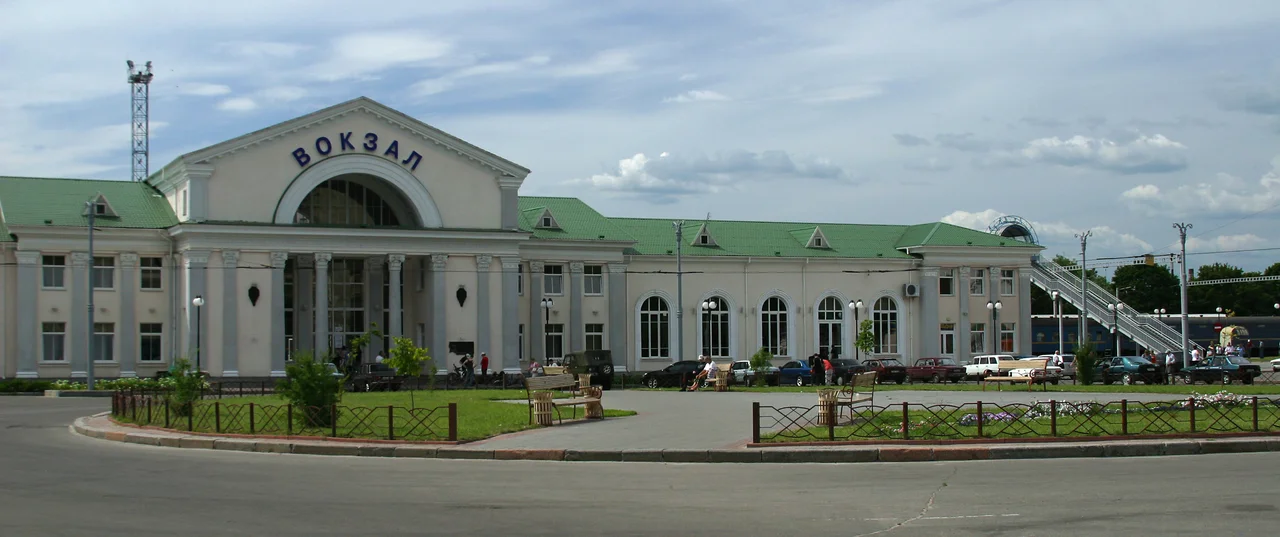

Poltava
Poltava calls itself a cultural capital, and for once the boast is earned in ink. It was here, in this hilly city on the Vorskla River in central Ukraine, that a local writer named Ivan Kotliarevsky reached for the everyday speech of the streets and villages around him and turned it into literature, an act that historians mark as the birth of the modern Ukrainian language on the page. Poltava is green almost to a fault, threaded with parks and gardens, its residents fond of calling it a city where one simply wants to live. But its quiet streets sit on ground that once decided the fate of an empire.
Where a Language Found Its Voice
Ivan Kotliarevsky was born in Poltava in 1769 and spent most of his life in the town he loved. In 1798 the first parts of his poem Eneida appeared in print, and Ukrainian letters were never the same. He took Virgil's ancient Aeneid and remade it in the vernacular, transforming the Trojan heroes into Zaporozhian Cossacks and the Olympian gods into grasping landlords, a sly, funny, deeply local reworking of a classic that gave written form to a language until then dismissed as mere peasant speech. His Eneida is remembered as the starting point of modern Ukrainian literature. A museum in his honor opened in the city in 1952, and Poltava has claimed him ever since, one of the many writers and cultural figures whose names fill its many small museums and give the cultural-capital label its weight.
The Morning That Changed the Map
For all its literary pride, Poltava is best known worldwide for a single day of fighting. In 1709, the armies of the Russian tsar Peter the Great met the forces of the Swedish king Charles XII outside the city, and the Battle of Poltava ended in a decisive Russian victory. The consequences reached far beyond the Vorskla. In the treaties that followed, Russia took most of the Swedish territories along the eastern Baltic, including the new capital at Saint Petersburg, and the balance of power in the north shifted for good. Poltava is where the Swedish Empire's long dominance began to fall and the Russian Empire rose to the front rank of great powers. Today the battlefield and its memorials draw visitors to the edge of the city, a landscape heavy with the memory of the men who fought and died there.
A City Built for Walking
Modern Poltava rewards the wanderer. Compact enough to cross on foot in an afternoon, its historic center clusters around handsome squares, and the local administration has worked to scrub away the gray Soviet look in favor of a brighter, more European feel. The city rises and falls dramatically: the Lower City, the old Podil district down by the Vorskla near the southern train station, sits so far below the rest that the climb back up will leave you winded. Trolleybuses, buses, and marshrutkas knit the districts together for a few hryvnia a ride. Football fans can catch FC Vorskla Poltava, a Ukrainian club that spent nearly three decades in the top flight before a 2025 relegation, at their stadium just north of the center. And for a taste of the wider region, the pottery town of Opishne and the resort of Myrhorod lie within easy reach, deep in the rural Poltava countryside.
From the Air
Poltava sits at about 49.589 N, 34.551 E in central Ukraine, on the hilly right bank of the Vorskla River, roughly midway between Kyiv and Kharkiv. From 2,500 to 4,000 feet AGL the river valley, the green parks, and the Battle of Poltava memorial grounds northeast of the center are the key landmarks. The city's airport is Poltava (UKHP), though note that Ukrainian civil airspace has been closed to commercial traffic.
Nearby Stories
- Velyki Sorochyntsi 16 km away
- Krasnokutskyi Arboretum 18 km away
- Gelonus 19 km away
- Deriivka 59 km away
- Battle of the Vorskla River 66 km away
- Borki Train Disaster 70 km away
- Hadiach 79 km away
- Samar 85 km away