
Popular Center of Remembrance
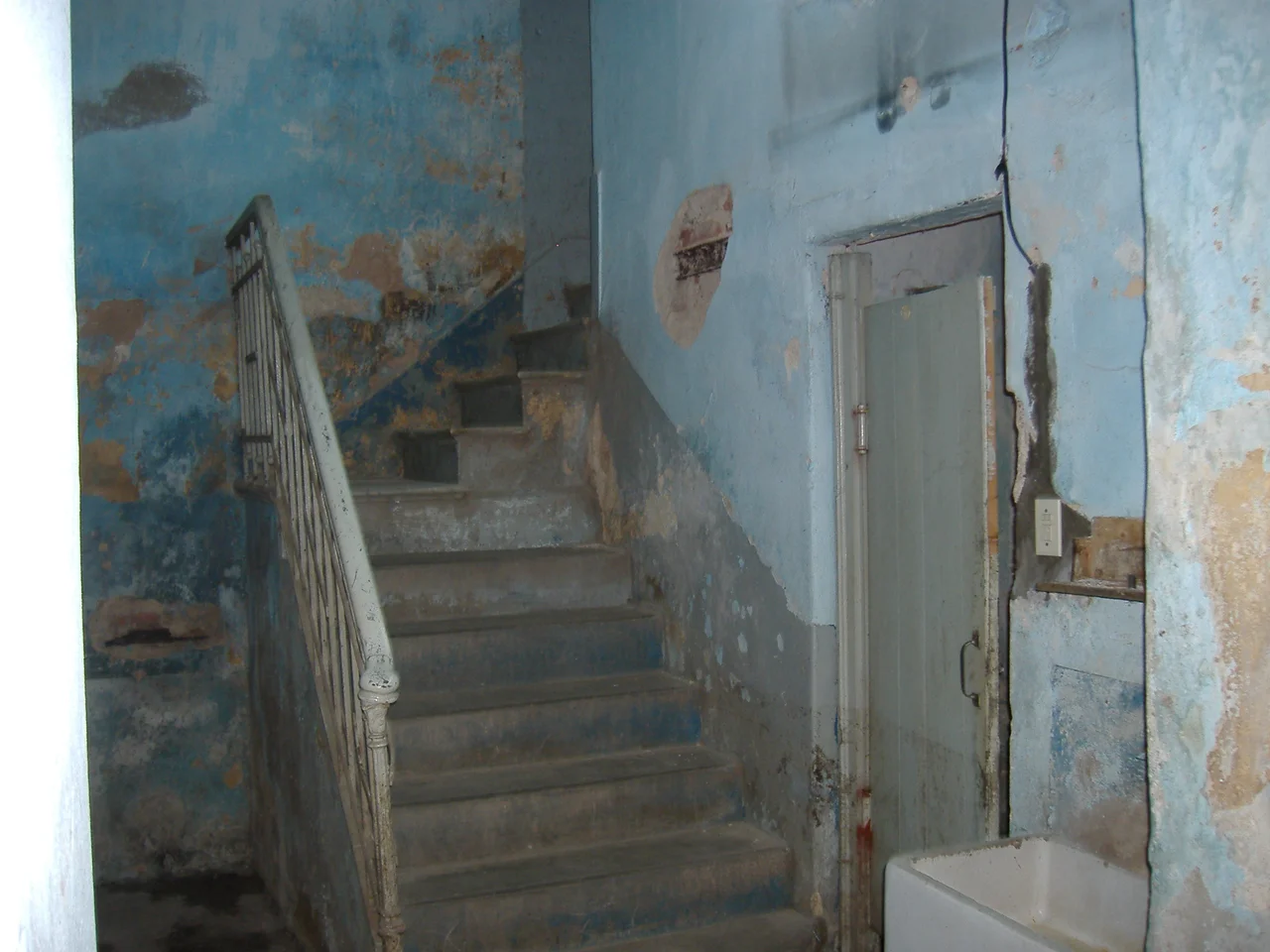
From the street it looks like what it long was: a corner of a heavy government building taking up an entire block in the center of Rosario. People walked past it for decades. What few of them knew was that behind those walls, in the late 1970s, an intelligence division of the provincial police ran one of the largest clandestine detention centers in Santa Fe Province. The prisoners who were brought here in secret had a name for the place. They called it El Pozo, the Pit. Today it is called the Centro Popular de la Memoria, the Popular Center of Remembrance, and it exists to make sure the country never looks away.
The Years of the Junta
The terror had a bureaucratic name: the National Reorganization Process, the self-styled label of the military junta that seized power in Argentina in 1976. In the period that came to be known as the Dirty War, the state kidnapped, tortured, and murdered thousands of its own citizens, holding them with no charges and no trial. The official justification was a war against subversion and terrorism. The reality was that most of those who disappeared were social activists, political dissidents, or simply the relatives, friends, and acquaintances of anyone the regime deemed ideologically suspect. They were teachers, students, workers, organizers, ordinary people swept up and made to vanish. The word for them entered the language: los desaparecidos, the disappeared.
Inside the Service of Information
On paper, the building was the headquarters of the provincial police and the home of an intelligence unit, the Servicio de Informaciones of Regional Unit II. In practice, between 1976 and 1979, it was a place where people were held in secret and tortured. The man in charge of the intelligence service, a Gendarmería commander named Agustín Feced, did not confine himself to giving orders; he took part personally in kidnappings, in torture sessions, in executions. Prisoners bitterly nicknamed the site El Pozo and La Favela. Decades later, the courts would catch up. The investigations into Feced and his collaborators, opened in 2004, became one of the central cases in Argentina's long reckoning with the crimes of the dictatorship.
Taking the Building Back
Democracy returned to Argentina in 1983, but the building kept doing its official police work for nearly two more decades, as if nothing had happened inside it. That changed in 2001, when human rights organizations demanded that the place be preserved rather than quietly used and forgotten. The provincial government agreed. The police facilities were dismantled and moved elsewhere. Part of the building passed to municipal control, part became a provincial government office, and the central courtyard was opened as a public square. In 2002 the most significant sections, the rooms where people had been held, were granted to a coalition of human rights groups under the name Centro Popular de la Memoria. The Pit had been taken back.
Kept by the Families
What makes this memorial different is who tends it. The Center is managed by the relatives of victims of forced disappearance, the mothers and grandmothers and children of the people who never came home. They have turned the site into an exhibition of remembrance, hanging newspaper clippings and photographs, the same images of the disappeared that families have carried in demonstrations for half a century, each face a demand that someone account for what happened. A documentary film traces the investigation and recovery of the site and gathers the testimony of survivors and the researchers who pieced the history back together. Standing in the underground rooms, the visitor is left with the plain fact the families insist upon: these were real people, and they are not forgotten.
From the Air
The Centro Popular de la Memoria occupies a full city block in central Rosario, Santa Fe Province, on the corner of San Lorenzo and Dorrego streets, bounded by Dorrego, Moreno, Santa Fe, and Córdoba. Rosario sits on the west bank of the Paraná River in southern Santa Fe; from the air the city reads as a dense riverside grid, with the broad Paraná and its islands defining the eastern edge. The memorial is one building among many in the urban core and is best appreciated on the ground rather than from altitude. Nearest airport: Rosario – Islas Malvinas International (SAAR), about 13 km west-northwest of the city center, elevation 26 m. Note: this site is a place of mourning and historical conscience, not a scenic landmark.
Nearby Stories
- Sa Pereira Rail Disaster 20 km away
- Rafaela 30 km away
- Predelta National Park 37 km away
- Cayastá 47 km away
- San José Palace 165 km away
- El Palmar National Park 173 km away
- Federación 212 km away
- Villa General Belgrano 321 km away