
Pueblo Liebig
Soldiers in the trenches of the First World War used the words "Fray Bentos" as slang for anything good. They had reason to. The corned beef in their ration tins and the beef cubes that flavored their broth came from a single industrial empire on the banks of the Río Uruguay, and one of its great factories stood here, in the village that now bears the name Pueblo Liebig. Today it is a small, slow town in Entre Ríos, the kind of place that seduces visitors with its quiet pace. But the silence is recent. For most of a century, this was a machine for feeding the world.
From Wasted Cattle to a Global Brand
The story starts with a problem. In the nineteenth century, the cattle of the River Plate were often slaughtered only for their hides, the meat left to rot. A German chemist named Justus von Liebig had devised a concentrated extract of beef, and an engineer named Georg Giebert saw a way to put the region's wasted carcasses to use. The company they founded, Liebig's Extract of Meat Company, built its flagship plant at Fray Bentos in Uruguay and a second great works on the Argentine side of the river. That second site, the Fábrica Colón, anchored this town. The extract was sold as Oxo. The tinned corned beef carried the name of the Uruguayan port across the water: Fray Bentos.
A Town Built Around a Factory
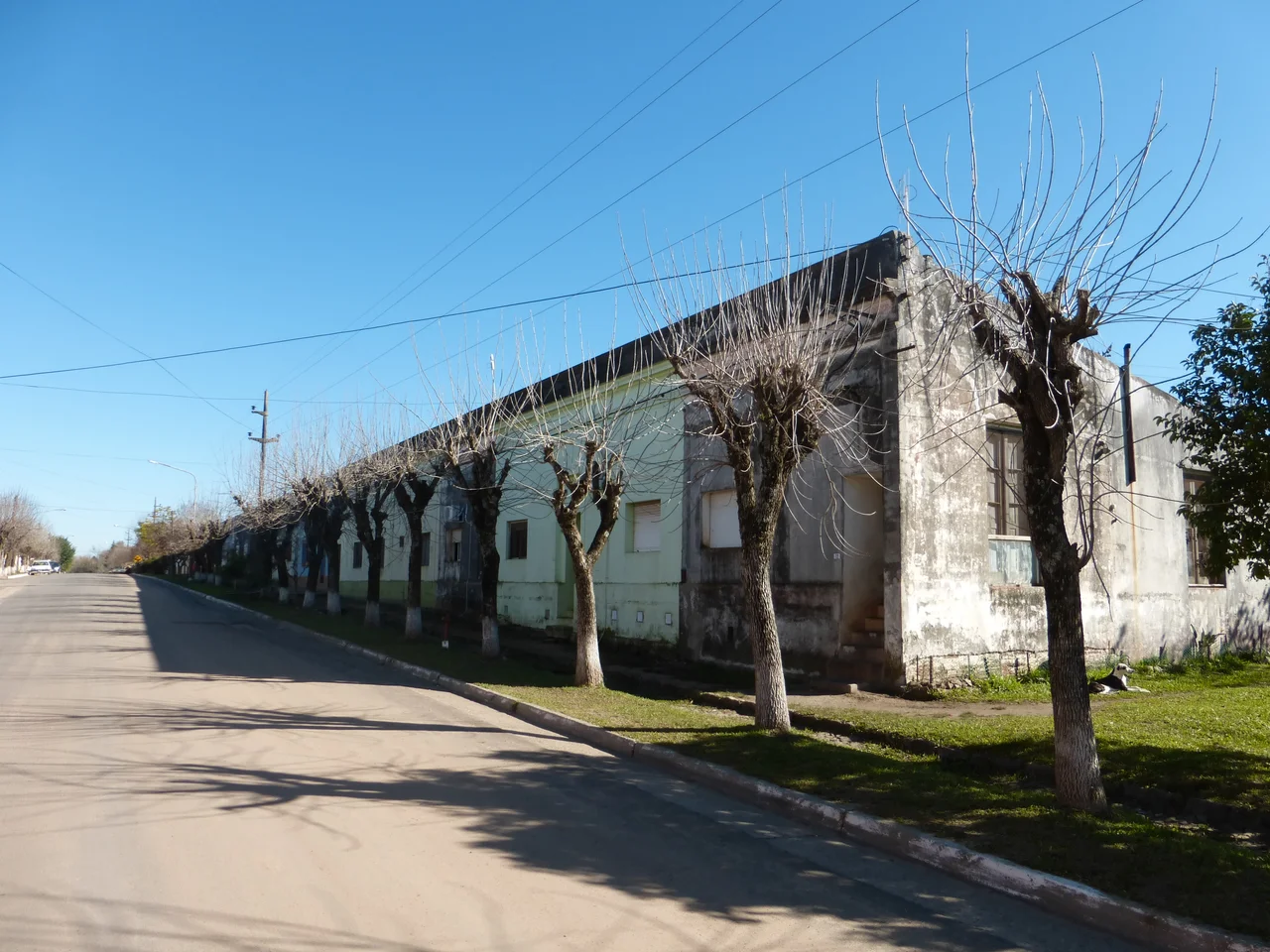
Everything in Liebig revolved around the slaughterhouse. A cattle chute called the manga ran west to east through the settlement, and each dawn it funneled the day's herds toward the killing floors. It also drew an invisible line. On one side of the manga lived the workers and the foremen; on the other, the managers and senior staff in their better houses. The company gave the town comforts most of rural Argentina could only envy. Electricity, telephone, telegraph, running water, and sewers all came to Liebig long before they reached its neighbors. Modern conveniences were not generosity, though. They kept a workforce healthy and tethered to the plant, in a town where the company was landlord, employer, and the rhythm of daily life all at once.
Feeding Two World Wars
The scale is hard to grasp now, in these quiet streets. During the First World War alone, the Liebig enterprise supplied something like 100 million Oxo cubes and 200 million tins of corned beef to Allied forces. The men and women who worked here, processing carcasses through stifling heat in shifts that filled the day, were the unseen labor behind that flood of food. Their hands fed armies and households on the far side of an ocean most of them would never cross. The settlement kept the company's name to honor that history, formally becoming Pueblo Liebig in 1975. The great works eventually fell silent, but the brick buildings, the workers' rows, and the line of the old manga still trace the shape of a town that labored to feed the world.
From the Air
Pueblo Liebig sits at roughly 32.15°S, 58.19°W on the west bank of the Río Uruguay in Entre Ríos, about ten kilometers north of the Argentine city of Colón. From the air, the river border with Uruguay is the dominant feature; the older Fray Bentos works lie downstream on the Uruguayan side. The nearest commercial field is Concordia's Comodoro Pierrestegui Airport (ICAO: SAAC) to the north, while Paysandú's Tydeo Larre Borges (ICAO: SUPU) and Salto's Nueva Hespérides (ICAO: SUSO) lie across the river in Uruguay. A viewing altitude of 3,000 to 5,000 feet reveals the riverside grid of the factory town against the surrounding farmland. The flat terrain and clear regional skies keep visibility high in most seasons.
Nearby Stories
- Concepción del Uruguay 16 km away
- Salto, Uruguay 52 km away
- Abadía del Niño Dios 140 km away
- Cayastá 154 km away
- Tacuarembó 159 km away
- Cisplatina 171 km away
- Raúl Uranga – Carlos Sylvestre Begnis Subfluvial Tunnel 174 km away
- Battle of Masoller 187 km away