
Queen Alexandra Bridge
Sir William Arrol had already built the Forth Bridge and the Tay Bridge replacement when he came to the Wear in 1907. He was sixty-eight years old and famous, the most decorated structural engineer in the British Empire, and the Sunderland Corporation wanted him because their coal needed a way south. The clause in the North Eastern Railway Act 1900 was specific: only one arch over the river, with clearance high enough to let fully-rigged ships pass beneath. So Arrol built the heaviest bridge in Britain. Six million tonnes of coal a year crossed the upper deck. Within twelve years almost none did.
The Shape the Shipyards Demanded
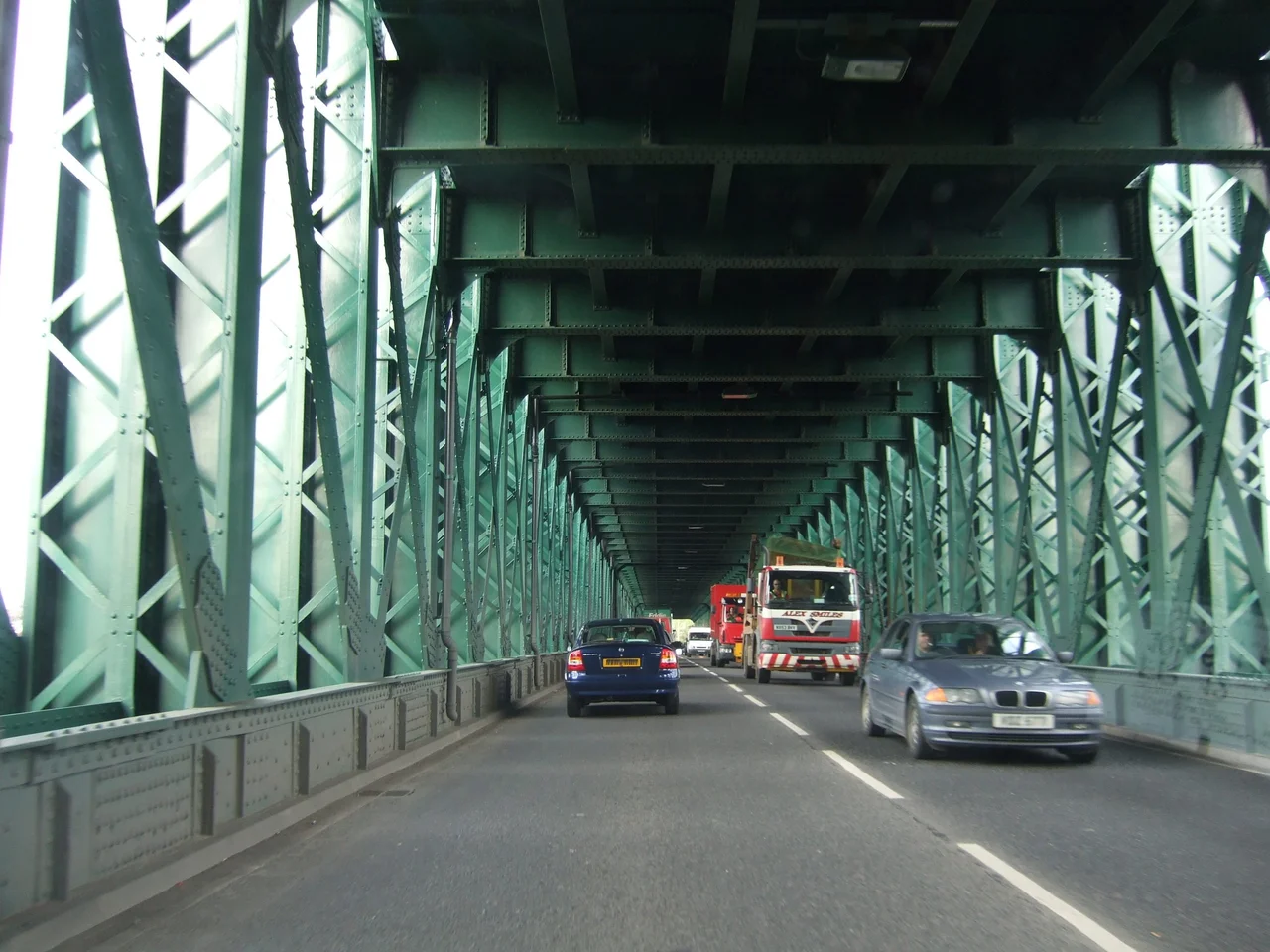
The constraint shaped the design. Wearside shipyards launched some of the largest hulls in the world, and the bridge had to clear them. Charles A. Harrison - a nephew of Robert Stephenson's old assistant - drew up a double-deck steel truss with three 200-foot land spans flanking a 300-foot main arch over the water. The numbers are extraordinary even now. The main span weighed 2,600 tonnes by itself. The three side spans weighed 1,000 tonnes each. Total steel: 8,500 tonnes. Granite: 4,500 tonnes. Red Dumfries sandstone for the piers: 60,000 tonnes. Bricks for the approaches: 350,000. The bridge came in at £450,000 - close to £60 million in modern money - and was the heaviest in the United Kingdom at the time it was completed.
The Two Halves Meet
Arrol's firm built the bridge from both banks simultaneously, the two arms stretching towards each other above the water. The Mitchell Brothers of Glasgow handled the approaches. At noon on 15 October 1908 the two cantilevered halves of the main span met in the middle, the fitters' bolts dropped home, and the most ambitious river crossing in northeast England became a single structure. The official opening followed on 10 June 1909. Queen Alexandra herself stayed away - the Earl of Durham did the honours on her behalf - but the name stuck. The upper deck took the railway. The lower deck took the road, the gas main, the water main, and eventually the high-voltage electricity cables and a pumped sewage rising-main. One bridge, four utilities, two transport modes.
The Coal That Did Not Last
Six million tonnes of coal crossed the upper deck every year - hauled from the Annfield Plain and Washington pits to the south docks for export. It was a staggering volume of traffic, and it was already dying. The collapse came faster than anyone had predicted. By the end of the 1910s the coal trade had thinned to a single train a day across the bridge. The last goods train ran in 1921 - twelve years after the official opening. The upper deck fell silent. During the Second World War it found a brief second purpose as a searchlight and anti-aircraft platform watching for German bombers heading for the shipyards beneath. After the war the upper deck stayed empty, the rails eventually lifted, the great trusses carrying nothing but their own weight.
Still a Road, Just Not the Same One
The lower deck has carried road traffic continuously for 116 years. For most of that time it was part of the A1231, the main route west out of Sunderland. That changed on 29 August 2018 when the Northern Spire Bridge opened a kilometre upstream - a sleek single-pylon cable-stayed crossing with twice the capacity. The Queen Alexandra was demoted to the B1539. The trade-off felt fair. The new bridge took the volume; the old one kept the dignity. Arrol's masterpiece still stands above the Wear, the great steel trusses painted dark grey against the river, carrying local traffic between Deptford and Southwick, with the upper deck still empty - a hundred-year-old monument to a coal trade that no longer exists.
From the Air
Located at 54.9138 degrees north, 1.4059 degrees west, the bridge spans the Wear about a kilometre upstream of the Wearmouth Road Bridge and just downstream of the modern Northern Spire cable-stayed bridge. From 2,000 feet AGL the dark steel truss is easy to identify against the river - look for a double-deck rectangular structure with three smaller flanking spans. The new white pylon of the Northern Spire is the most distinctive landmark in the immediate area. Nearest major airport is Newcastle International (EGNT), 12 nautical miles north-northwest. Durham Tees Valley (EGNV) sits 22 nautical miles south.
Nearby Stories
- Seaton Carew 2.7 km away
- HMS Unity (N66) 6 km away
- George Stephenson's Birthplace 6.1 km away
- Raby Castle 9 km away
- Cragside 15 km away
- Whitby Abbey 21 km away
- German submarine U-2367 46 km away
- Alexander L. Kielland (Platform) 277 km away