.jpg)
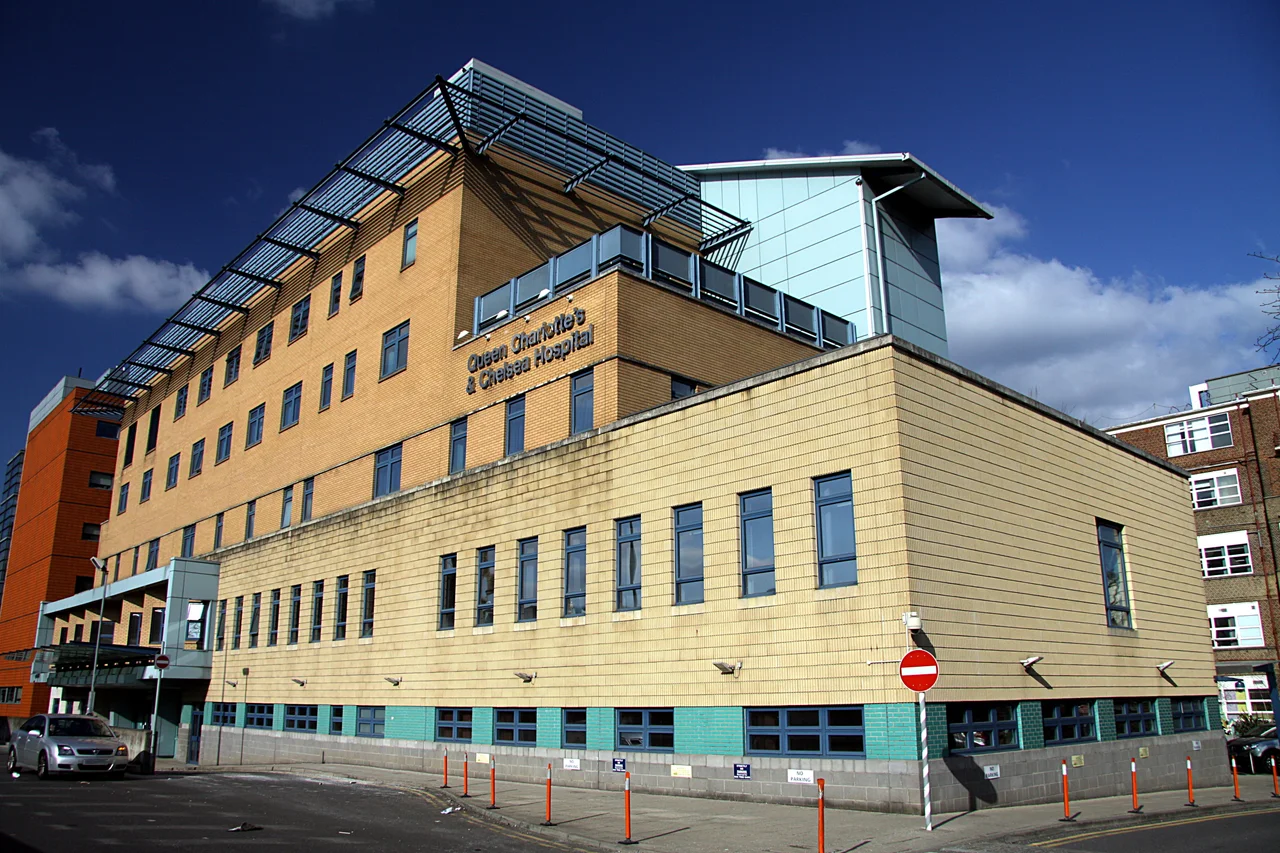
Queen Charlotte's and Chelsea Hospital
Daniel Radcliffe was born here. So were Helen Mirren, Benedict Cumberbatch, Roger Daltrey, and Sebastian Coe. The list reads like a casting agency's most fortunate week, but the building behind these births has a deeper claim than celebrity. Sir Richard Manningham founded a seventeen-room lying-in hospital on Jermyn Street in 1739 - the first such institution in Britain, where women could give birth indoors with trained attendants in an era when childbed could be a death sentence. That hospital, after several moves and several names, is the Queen Charlotte's of today. It is one of the oldest maternity hospitals in Europe.
A House on Jermyn Street
Maternal death stalked London for centuries. Healthy young women in good health before pregnancy could be dead within hours of delivery, undone by haemorrhage or infection that medicine of the day could neither diagnose nor stop. For more than a century, the maternal death rate was the chief measure of whether a maternity service worked. Manningham's 1739 institution on Jermyn Street was a response: a place where women could lie-in - the contemporary term for the bed rest of late pregnancy and early postpartum - under medical supervision rather than at home alone. In 1752 it moved to Marylebone Road and became one of the first teaching institutions for midwives in the country. On 10 January 1782, the Justices of the County of Middlesex granted it the licence then required by law for all maternity hospitals.
Royal Patronage
In 1809, the Duke of Sussex persuaded his mother, Queen Charlotte, to take the hospital as her cause. The institution became the Queen's Lying-in Hospital, and the queen threw an annual ball - Queen Charlotte's Ball - to fund it. The hospital moved in 1813 to the Old Manor House at Lisson Green in Marylebone, was completely rebuilt to a design by Charles Hawkins in 1856, and received a Royal Charter from Queen Victoria in 1885. In 1923 it took the name it still uses: Queen Charlotte's Maternity Hospital and Midwifery Training School. The royal name carried a meaning beyond patronage. Queen Charlotte herself had borne fifteen children, more than most women of any class could survive. Her name on the door announced a hospital prepared to be on the side of mothers, including those who would have to fight to come through it alive.
The Matron and the Midwife
Beatrice Blomfield served as Matron of Queen Charlotte's from 1908 to 1924, having trained at The London Hospital under the formidable Eva Luckes. She had been a sister at Queen Charlotte's in 1899, matron of the East End Mother's Home in 1901, and matron of Addenbrooke's Hospital from 1905 to 1908. At Queen Charlotte's she expanded the Out Patient's Department, oversaw new accommodation for District Midwives, and established the first Preliminary Training School at a specialist hospital. At the 1910 Nursing and Midwifery Conference and Exhibition, she gave a joint lecture on infantile blindness alongside Arthur Nimmo Walker, a leading ophthalmologist from Liverpool. Another woman trained as a midwife here would go on to fame: Elsie Knocker, born 1884 and decorated with the Military Medal, learned her craft at Queen Charlotte's before serving in the First World War as a nurse and ambulance driver near the front lines in Belgium.
The Hospital Today
Queen Charlotte's left the Goldhawk Road site it had occupied since the mid-twentieth century in October 2000, moving to its current location between East Acton and White City, adjacent to Hammersmith Hospital. It is part of the Imperial College Healthcare NHS Trust, one of five teaching hospitals in the trust. The specialist maternal medicine unit - the de Swiet Obstetric Medicine Centre - cares for pregnant women with pre-existing or pregnancy-related medical conditions. The hospital splits between a traditional labour ward and a birth centre designed for one-on-one continuity of midwifery care. Research projects underway include focused ultrasound ablation of uterine fibroids and rectal cancer, essential tremor thalamotomy, and Parkinson's dyskinesia pallidotomy.
Born Here
In 2016, the hospital sent eight hundred families home with foam mattresses tucked inside cardboard boxes - an idea borrowed from Finland that gives newborns a flat, safe sleeping surface to help prevent sudden infant death syndrome. The same year, the National Centre for Miscarriage Research opened here with a goal of halving the rate of miscarriages by 2030 through better understanding of why pregnancies are lost. The hospital that began with seventeen beds on Jermyn Street now contributes to research on the deepest questions in maternal medicine. Helen Mirren was born here in 1945; in 1994 she would return to the cinema as Queen Charlotte herself in The Madness of King George. Sebastian Coe, born here in September 1956, would go on to break world records and lead two Olympic Games. The names continue: Daniel Radcliffe, born here in 1989; Benedict Cumberbatch, born here in 1976; Roger Daltrey, born here in 1944; Zak Starkey, born here in 1965; Mischa Barton, born here in 1986. A hospital that has watched London give birth for nearly three centuries, and is still doing it.
From the Air
Queen Charlotte's and Chelsea Hospital sits at 51.5161 N, 0.2373 W between East Acton and White City in the London Borough of Hammersmith and Fulham, immediately adjacent to Hammersmith Hospital. From altitude, look for the Wormwood Scrubs green space to the south and the curve of the West Cross Route (A3220). Nearest airports are London Heathrow (EGLL) 9 nm west and London City (EGLC) 13 nm east. The hospital complex shows as a distinctive clustered building group north of the Scrubs.
Nearby Stories
- Stevenage 5.7 km away
- Malling Abbey 5.7 km away
- 1952 Farnborough Airshow Crash 7.7 km away
- Ingatestone Hall 8.2 km away
- Hellfire Caves 9.1 km away
- The Carrington Event: The Solar Storm That Could Happen Again 9.8 km away
- Bletchley Park 16 km away
- Castle Hedingham 23 km away