
Queen Victoria Market
Ten million people pass through here every year for cheese and flowers, for fish on ice and fruit by the crate, under the long iron roofs of the largest open-air market in the Southern Hemisphere. Almost none of them know what lies beneath their feet. The car park, the sheds, the worn aisles - much of the Queen Victoria Market is built directly on top of the Old Melbourne Cemetery, and an estimated nine thousand people are still buried under the bustle. Among them, in unmarked ground, lies John Batman, one of the founders of Melbourne itself. The city's busiest marketplace is also its quietest graveyard.
The Market That Outlasted the Rest
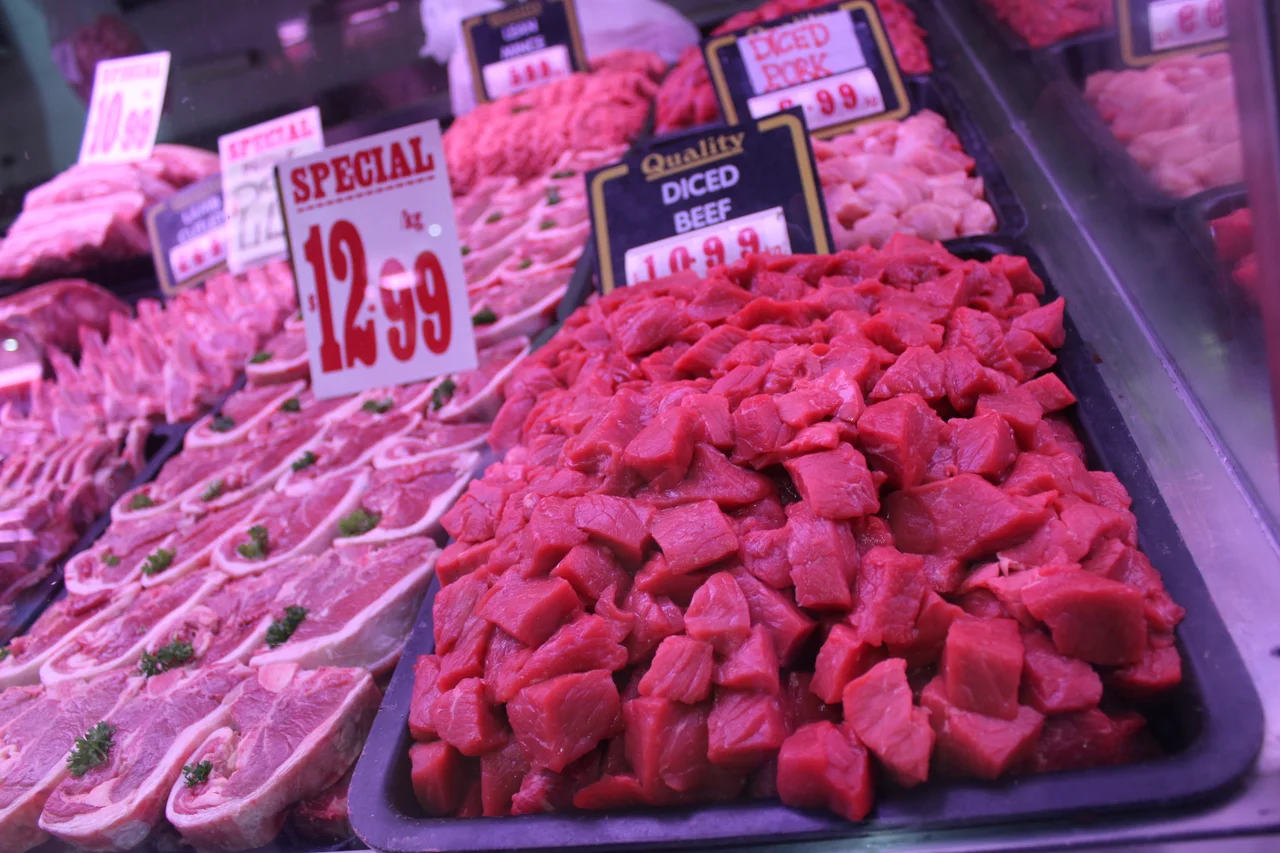
Melbourne in the nineteenth century was a city of markets. The Western Market opened in 1841, just six years after the city's founding; the Eastern Market followed soon after and overtook it. The Queen Victoria Market, constructed in stages from the 1860s and officially opened in March 1878, eventually outlived them all. Today it is the last of the great Victorian-era markets still trading in the central business district, sprawling across more than seven hectares of stalls and halls. The oldest surviving building, the brick Meat and Fish Hall on the corner of Elizabeth and Victoria Streets, dates to 1867, and shoppers still buy beneath its bones.
The First Burial Ground
Before any of this, the land was Melbourne's first official cemetery. Opened in the 1830s, the Old Melbourne Cemetery received the city's earliest settlers as the young town buried its dead. It was officially closed to burials in 1854, though some legal and many illegal interments continued as late as 1917. By 1920 it was estimated that around ten thousand graves lay on the site - though no one could be certain, because the cemetery's records had been destroyed in a fire in 1864. The dead were here first. The market grew up over them, stall by stall, shed by shed, the living trade pressing in around the edges of the graves.
A Protest Over the Dead
Expansion meant disturbing the buried, and not everyone would stand for it. In 1920, plans to extend the market toward Peel Street required building over sections of the cemetery, including ground set aside for Jewish burials and the graves of Melbourne's first British colonists. The protest was fierce. Sir John Monash - a respected engineer who would become Australia's most celebrated First World War general, and who was himself Jewish - warned that proceeding would 'stamp Australians as a people devoid of sentiment and morality.' A petition even reached the Prince of Wales, asking him to intervene. It failed. The development went ahead, but the objection was a moral line drawn in public, and history remembered who drew it.
Nine Hundred Exhumed, Thousands Left
Between 1920 and 1922, workers exhumed 914 bodies - those with identifying monuments - and reburied them in cemeteries across Melbourne, many at the new Fawkner Cemetery. By 1923 most of the prominent early settlers had been relocated, and the rest of the Old Melbourne Cemetery was simply ploughed under and prepared for market sheds. The arithmetic is stark and unsettling: of perhaps ten thousand buried here, fewer than a thousand were moved. The thousands whose graves bore no marker, or whose families had long since gone, were left where they lay. Sheds K, L, and M rose over them, and the market expanded to cover two full city blocks atop the unnamed dead.
A Living Heritage
What survives today is the largest and most intact of Melbourne's great nineteenth-century markets, listed on both the Victorian Heritage Register and the National Heritage List. It was nearly lost again in the 1970s, when developers proposed replacing it with a trade-and-hotel complex, only for public outcry and a union 'green ban' to halt the plan and win it heritage protection. So the haggling continues beneath the heritage iron - 300 carts a week once rolled in from the market gardens, and the crowds still come for produce and bargains. The Queen Victoria Market endures as two things at once: a noisy, beloved fixture of Melbourne life, and a place that asks, if you pause, to remember who rests below.
From the Air
The Queen Victoria Market sits at roughly 37.807 S, 144.957 E on the northwestern edge of Melbourne's CBD, bounded by Victoria, Peel, Franklin, and Elizabeth Streets. From the air it reads as a distinctive grid of long, parallel open-sided shed roofs and brick halls just north of the dense city core - a clear rectangular pattern unlike the towers around it. Best viewed at lower altitude in clear conditions. Nearest airports: Essendon (YMEN, 282 ft) about 6 km northwest, Moorabbin (YMMB, 55 ft) to the south, and Melbourne/Tullamarine (YMML, 434 ft) roughly 18 km northwest. Urban haze and Melbourne's fast-shifting weather can affect visibility over the city center.
Nearby Stories
- Geelong 12 km away
- The Disappearance of Harold Holt: The Prime Minister Who Vanished Into the Sea 41 km away
- Eureka Rebellion 54 km away
- Yarra River 55 km away
- Sovereign Hill 65 km away
- Waterloo Plains massacre 73 km away
- Glenrowan, Victoria 142 km away
- Bass Strait 210 km away