
RAF Cark
An airship factory was nearly built here in 1916. The Great War was on, preparation work began on a site on the flat coastal plain between the villages of Cark and Flookburgh, and then the project was cancelled the following year. The ground reverted to farmland for a generation. Twenty-five years later, in 1941, the runways finally went down - not for airships but for fighters. The flat strip of Cumbrian coast had been chosen again, this time for war.
A Fighter Station on the North Coast
RAF Cark opened in 1941 under No. 9 Group, RAF Fighter Command. Its primary purpose was air defence: protecting the industrialised cities of northwest England - Manchester, Liverpool, Barrow-in-Furness - from German bombers crossing the Irish Sea. The airfield was laid out with a dispersal site on the east side: six pens, each able to hold two aircraft. A Bellman Hangar went up on the northwest, the technical heart of the base. Over time fourteen blister-type hangars were added to handle the growing aircraft inventory. For its first year RAF Cark was a sub-station of RAF Millom further up the coast, only becoming self-reliant during 1942.
From Fighting to Training
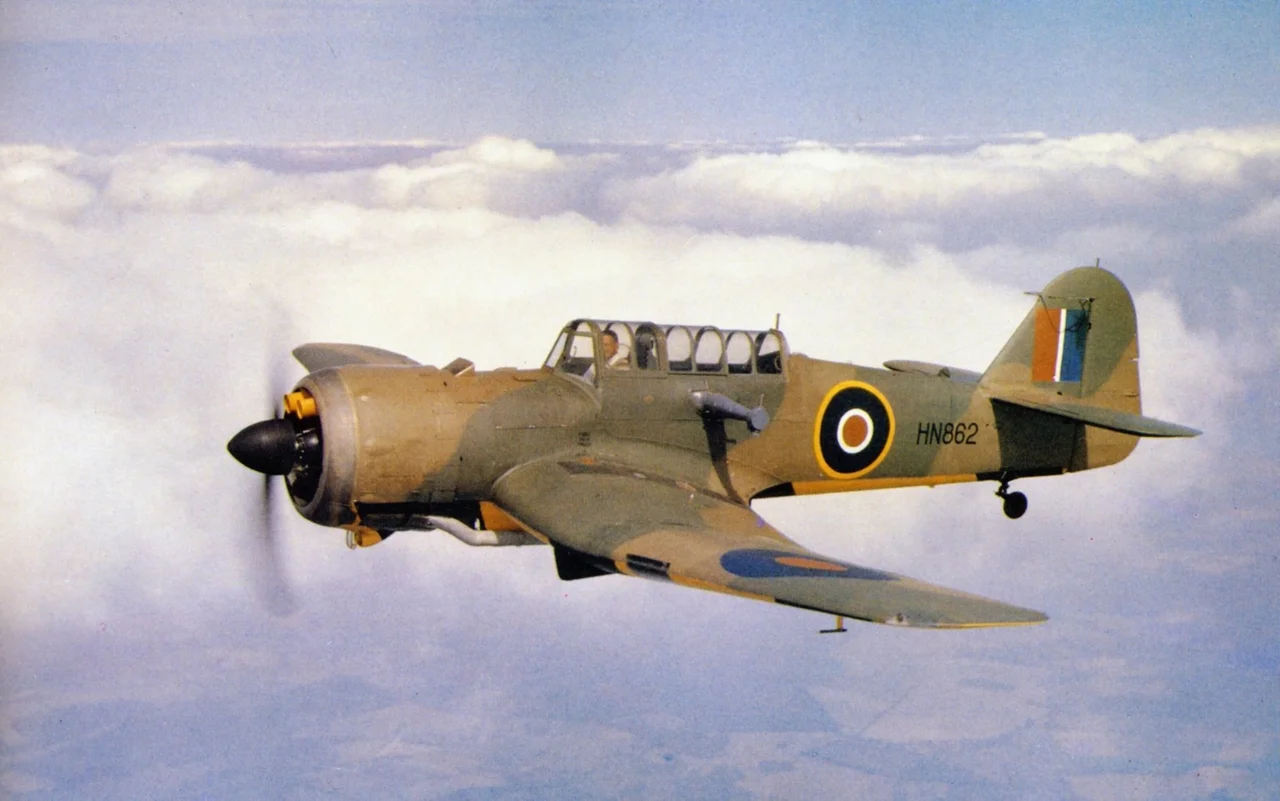
The role changed almost immediately. On 17 March 1942 RAF Cark was transferred from Fighter Command to RAF Flying Training Command. That same day a new unit was raised on the field - the Staff Pilot Training Unit, operating under No. 25 Group. Its job was to train the pilots who would in turn be posted to Air Observer Schools across the country. The Staff Pilot Training Unit flew an eclectic fleet: Hawker Hurricanes, Miles Martinets, later Supermarine Spitfires, and Avro Ansons used as multi-engine trainers. A de Havilland Tiger Moth handled communication runs between Cark and RAF Millom. The remit covered both day and night flying. Anti-aircraft gunnery training also took place here, with target-towing Martinets running circuits over the bay.
A Crowded Logbook
For its size, RAF Cark hosted an unusually long list of units. The Staff Pilot Training Unit came and went and came again - March 1942 to November 1942, then back from March 1943 until the war's end. No. 1 Anti-Aircraft Co-operation Unit operated 'R' and 'F' Flights here through 1942. No. 6 Anti-Aircraft Co-operation Unit followed from March 1942 to March 1943, then No. 1614 (Anti-Aircraft Co-operation) Flight took up the role through December 1943. Detachments from No. 289 Squadron arrived in November 1942 with Hurricanes; No. 650 Squadron sent Martinets and Hurricanes between 1943 and 1944; No. 290 Squadron flew Spitfires here briefly in April-May 1944. In 1944 the requisitioned gliders of the Lakes Gliding Club were moved from RAF Walney to form No. 188 Gliding School, Air Training Corps.
Wind-Down and Quiet Closure
Once Germany surrendered in 1945, the urgency that had built the runways drained away. Operations were wound down and RAF Cark was placed on care and maintenance. A Pilot-Navigation Instructors Course ran for a few weeks in late 1945. No. 188 Gliding School outlasted the Staff Pilot Training Unit, soldiering on until May 1947, when its young Air Training Corps cadets and their gliders were transferred to RAF Walney. With them went the last reason to keep the lights on. The station closed. The Air Ministry eventually sold the land.
Silk Above the Bay
Cark Airfield never quite stopped flying. After the RAF left, the strip was used for civilian gliding, the long flat surface ideal for winches and tow planes climbing into the marine air rising off Morecambe Bay. It is now the home of the North West Parachute Centre. Most days when the weather holds, a Cessna climbs out over Flookburgh full of jumpers, and a few minutes later canopies open above the sands - the same sands across which the Furness Railway crossed in 1857, the same sands the priory of Cartmel grew up overlooking. The runways remember everything: airships that never were, Spitfires that briefly were, and now the white nylon of recreational parachutes drifting down where the war once trained pilots for a job most of them hoped they would never have to do.
From the Air
RAF Cark - now Cark Airfield - sits at 54.1642N, 2.9615W on the flat coastal plain between the villages of Cark and Flookburgh, just north of the Morecambe Bay shoreline. The airstrip is roughly oriented east-west and is the most obvious landmark for miles. From altitude look for the airfield outline, with Cartmel village just to the north and Holker Hall to the northwest. Active as a parachute centre - check NOTAMs for skydiving operations before transit. Nearest controlled airports are Walney Island (EGNL) 12 nm west, Carlisle Lake District (EGNC) 50 nm north, and Blackpool (EGNH) 32 nm south. Recommended viewing altitude 2,500-3,500 ft AGL, clear of parachute operations.
Nearby Stories
- Red Tarn 4.2 km away
- Fleetwood Lifeboat Station 4.3 km away
- St Bees Priory 5 km away
- Brough Castle 9.5 km away
- Sawley Abbey 9.8 km away
- Hawes Junction Rail Crash 15 km away
- Egremont Castle 28 km away
- Celtic Array 63 km away