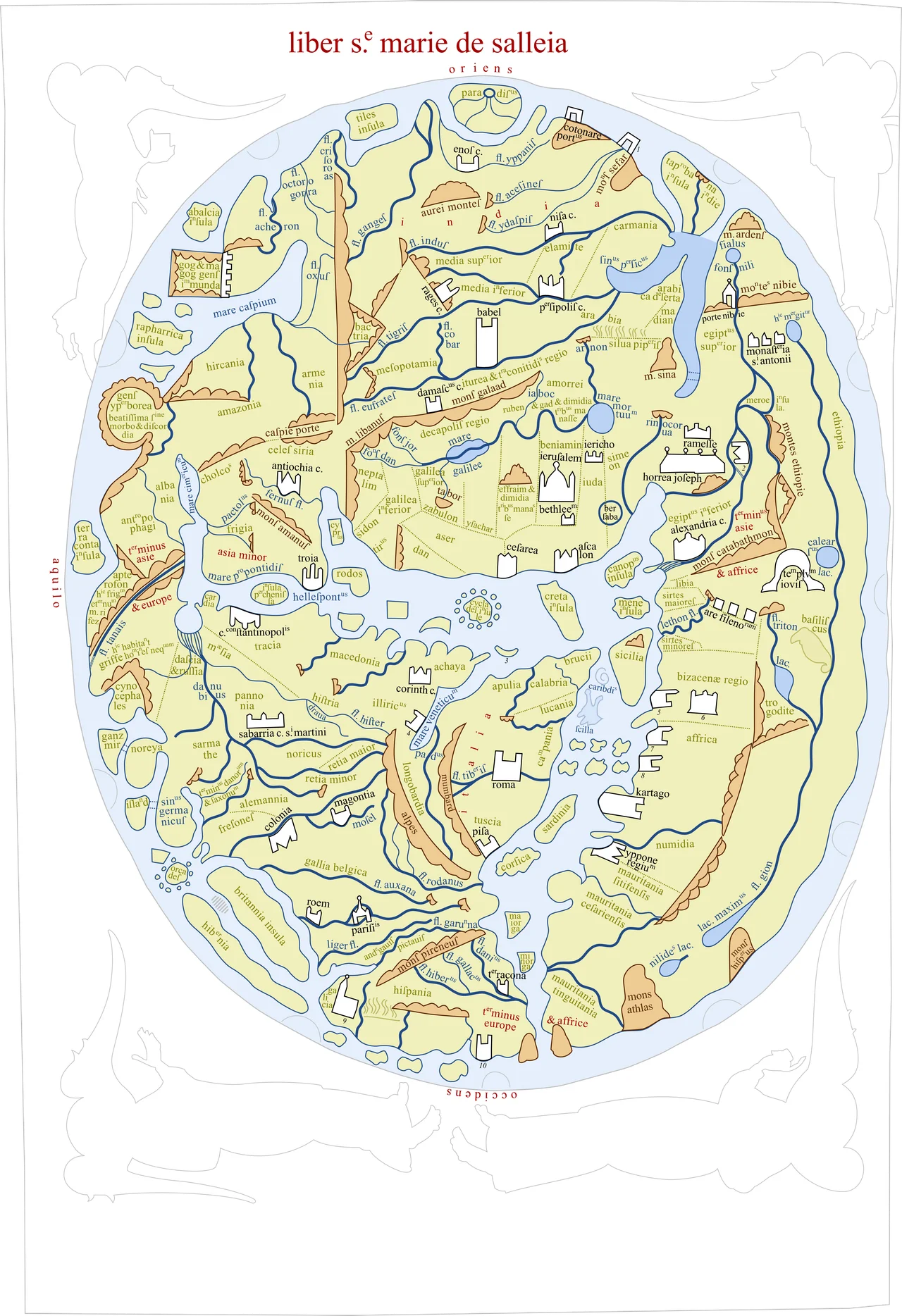

Sawley Abbey
On a low meadow beside the River Ribble, twelve monks and ten lay brothers walked out of Newminster in January 1148 and began arranging stones into the shape of a church. Sawley Abbey was always a modest place. It never grew rich like Fountains, never sprawled like Rievaulx, and for nearly four centuries its Cistercian community lived a life so quiet that its biggest crisis was a quarrel about tree bark.
Twelve Monks and a Spring
The chief sponsor was William de Percy II, whose family had held this corner of Craven since the Domesday survey. In the mid-1140s, a man named Swain sold his lease to Abbot Robert of Newminster and threw in a patch of land at Swanside, where a spring dedicated to Saint Andrew bubbled up from the hillside. Percy added more parcels: Dudland in Gisburn, Ellenthorpe in Paythorne, gifts from his steward at Ilkley. The abbey opened on 6 January 1148. By 1154, royal permission had been secured to build a fishpond and a mill, and in 1172 Pope Alexander III placed the small community under his personal protection. It was a slow, careful beginning, the kind the Cistercians preferred.
The Bark War
Sawley's neighbours were its undoing. In 1296, the Cistercians of Stanlow Abbey moved upriver to Whalley, just seven miles away, and Sawley's monks watched their income drain south. Worse, when Whalley began planning a tannery, local sellers of oak bark, the essential ingredient for curing leather, raised their prices so sharply that Sawley's own tanning operation nearly collapsed. The dispute went all the way to the general chapter of the order in 1305. The ruling was sharp: Whalley must offer any surplus produce to Sawley at market rates, and any monk who wronged the other house would be punished by his rival. It was, in its way, a perfectly Cistercian solution: even your enemies are still your brothers.
The Last Abbot
By 1536, the monastery had endured 388 years. Then came Henry VIII. The dissolution swept through England's religious houses like a fire through dry grass, and Sawley's last abbot, whether Thomas Bolton or his disputed successor William Trafford, was executed for resisting it. The records disagree on the name, the place, even the date, as if history itself had grown tired of writing it down. The community scattered. Stones from the church were carted away to build farmhouses and fireplaces. A bay window at Little Mearley Hall and decorated stonework at Middop and Southport Farmhouse still carry fragments of the abbey in their walls.
What the Earthworks Remember
What remains today, in the care of English Heritage, is mostly outline: low walls tracing the chancel, the chapter house, the cloister. But walk west of the surviving stones and the ground itself tells a fuller story. Earthworks ripple across the meadow where the infirmary stood, where the bakery and brewery served the brethren, where stock pens held the sheep that paid the bills. The corn mill once turned beside the Ribble, fed by a leat that still cuts a long, deliberate line along the base of the hill. Water from St Mary's Well to the northeast was channeled in to top it up. The buried Percys, William and Ellen, Henry and Eleanor de Warenne, lie somewhere in this ground, alongside Robert de Cliderhou, the parson of Wigan.
Visiting the Quiet
The ruins sit just off the A59 in the village of Sawley, on the Lancashire side of a border that was once Yorkshire. The site is small enough to walk in twenty minutes, large enough to sit in for an afternoon. Interpretation boards do the explaining. There are no admission fees, no audio guides, no cafe. What there is, mostly, is the sound of the river and the wind in the meadow and the occasional sheep. Eight centuries after the first abbot laid out his cloister, the place is still doing what Cistercians did best: keeping quiet.
From the Air
Sawley Abbey sits at 53.91°N, 2.34°W in the Ribble Valley of Lancashire, just inside the southern edge of the Forest of Bowland AONB. Best viewed at 2,000-3,000 feet AGL in clear conditions; the ruins are small, so look for the meandering River Ribble and the village of Sawley clustered around the A59 bridge. Nearest airports: Blackpool (EGNH) 30 nm west, Leeds Bradford (EGNM) 30 nm east, Manchester (EGCC) 35 nm south. The Forest of Bowland fells rise to the north, providing a striking backdrop in clear weather.
Nearby Stories
- Bury Art Museum 2.6 km away
- Silverdale, Lancashire 3.1 km away
- Siege of Lathom House 4.2 km away
- Leeds Bradford Airport 6.5 km away
- Preesall 11 km away
- Jervaulx Abbey 14 km away
- Wentworth Castle 19 km away
- Yorkshire Dales 19 km away