
RAF East Wretham
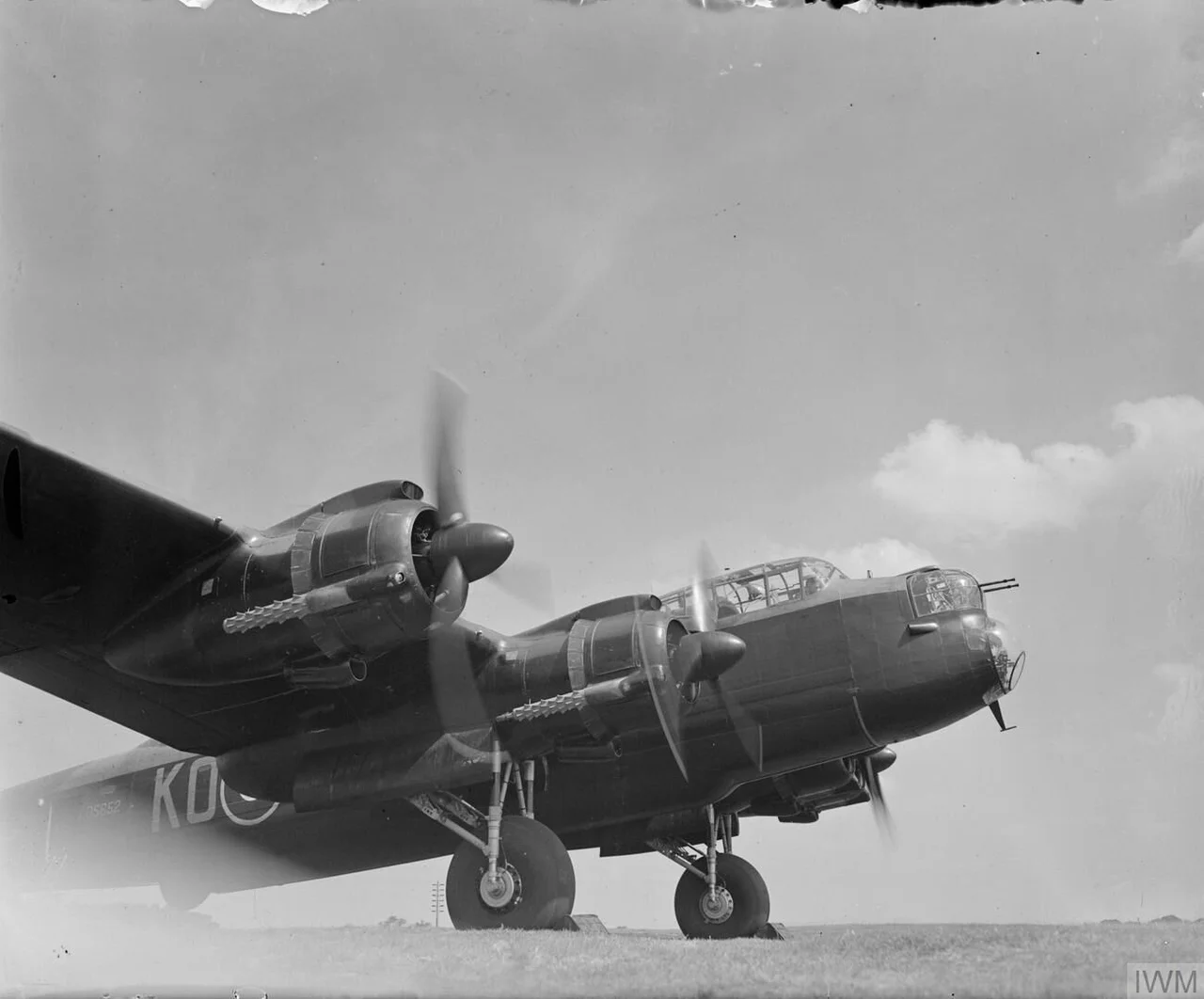
On 29 July 1940, with the Battle of Britain only weeks from beginning, No. 311 (Czechoslovak) Squadron RAF dispersed to East Wretham from RAF Honington. They were exiled airmen, their country dismembered, their families behind enemy lines. They flew bombers, and they flew them out of a hastily-prepared satellite airfield in the Norfolk Breckland. They were the first of many exiles to call this field home: Czechs followed by Royal Canadian Air Force Wellington crews, then Americans painting green identification stripes on their P-47s. After the war, East Wretham briefly became something more unusual still: a resettlement camp for Polish soldiers and their families who could not safely return to their now-Soviet homeland.
Sydney Smith's Wellington
Sydney Percival Smith, a Royal Canadian Air Force pilot flying Vickers Wellington Mk IIIs with No. 115 Squadron, arrived at East Wretham in November 1942. He found, by his account, 'a fully operational station complete with ammunition dumps, hangar repair shops, barracks, messes, and briefing rooms.' From this Norfolk field he flew bomber missions to Bremen, Stuttgart, Frankfurt, Munich, and Turin, and laid mines in the French ports at Le Havre, Brest, St Nazaire, and Lorient, and across the Bay of Biscay. The squadron later traded Wellingtons for Avro Lancasters, the four-engined heavy that became the icon of Bomber Command. Then the bombers left for Little Snoring, and the Americans came in.
Green Tails and Distinguished Citation
In October 1943, East Wretham became USAAF Station 133, and the 359th Fighter Group flew in from Westover Army Air Field in Massachusetts. Their aircraft wore green identification stripes around the cowlings and tails. The 359th started combat in mid-December 1943 with Republic P-47 Thunderbolts, then converted to the North American P-51 Mustang in April 1944. Mustangs gave the Eighth Air Force what it had needed since 1942: a long-range escort that could reach Berlin and beyond and still have ammunition left for the fight home. On 11 September 1944, over Germany, the 359th protected a heavy bomber formation against large numbers of enemy fighters and earned a Distinguished Unit Citation for the action.
Ludwigshafen to Brux
From July 1944 through February 1945, the 359th escorted bombers to the oil refineries and marshalling yards of Ludwigshafen, Stuttgart, Frankfurt, Berlin, Merseburg, and Brux. They flew dive-bombing and strafing missions in support of the Normandy invasion, the Operation Market Garden airborne assault on the Netherlands, the Battle of the Bulge, and the Rhine crossing of Operation Varsity. In April 1945 they were still flying escort for medium bombers against German communications targets. The group returned to Camp Kilmer, New Jersey, and was inactivated on 10 November 1945.
Polish Resettlement
After the war, the airfield had a different mission. The Polish soldiers who had fought alongside the Allies could not return home: their country was now under Soviet control and many of their families had been killed or displaced. The British government opened resettlement camps where these stateless veterans and their dependents could rebuild their lives. East Wretham became one of those camps until the refugees were resettled by 1946. The field then closed as an active airfield and was absorbed into the British Army's Stanford Practical Training Area, known as STANTA, where it remains.
STANTA and the T2 Hangar
STANTA is now a vast military training area in the Norfolk Breckland, with live firing ranges for artillery, mortars, anti-tank and machine guns, plus facilities for parachute drops and air-to-ground attacks. Tanks roll across the heath from July through September. Inside this restricted zone, many of the original wartime buildings still stand, including one of the T2 hangars that sheltered Mustangs in 1944. The actress and television presenter Caroline Flack grew up in East Wretham village, walking past the wartime ruins on her way to school in Watton. The airfield's quiet now belongs to the British Army; its history belongs to four different air forces, two refugee populations, and a long list of villages whose lives were rearranged around it.
From the Air
RAF East Wretham sits at 52.47 degrees north, 0.82 degrees east, in the Norfolk Breckland 6 miles northeast of Thetford. Note: the field is now inside the active STANTA training area; check NOTAMs before low-altitude passes. Nearby aviation: RAF Honington (EGXH) lies 5 nautical miles southeast; RAF Marham (EGYM) is 18 nautical miles northwest; Norwich Airport (EGSH) is roughly 22 nautical miles northeast. Recommended viewing altitude is 3,000 to 5,000 feet AGL to take in the broader military training area while remaining clear of active gunnery.
Nearby Stories
- Ding Family Murders 1.5 km away
- Bungay Castle 2.6 km away
- Ely and Littleport Riots of 1816 4 km away
- Aldeburgh Festival 7.9 km away
- Bed Burial 12 km away
- Happisburgh Lighthouse 13 km away
- Walsingham Priory 18 km away
- Chain Bridge Forge, Spalding 34 km away