
RAF Mousehold Heath
In October 1915 an aircraft built by a Norwich woodworking firm rolled out onto a cavalry drill ground above the city, took off, and disappeared east. It was a Royal Aircraft Factory FE.2b, serial number 5201, marked in white paint with the words 'Bombay No. 1.' Its builders were Boulton & Paul, a local manufacturer who up until that year had made fences, glasshouses, and prefabricated cottages. Six months earlier their managing director had walked into a government office and suggested they could build aircraft. The flight from Mousehold Heath was the proof. Within three years the same patch of high ground would be Royal Air Force Mousehold Heath, and Boulton & Paul would be turning out Sopwith Camels at industrial pace.
Cavalry to Aircraft
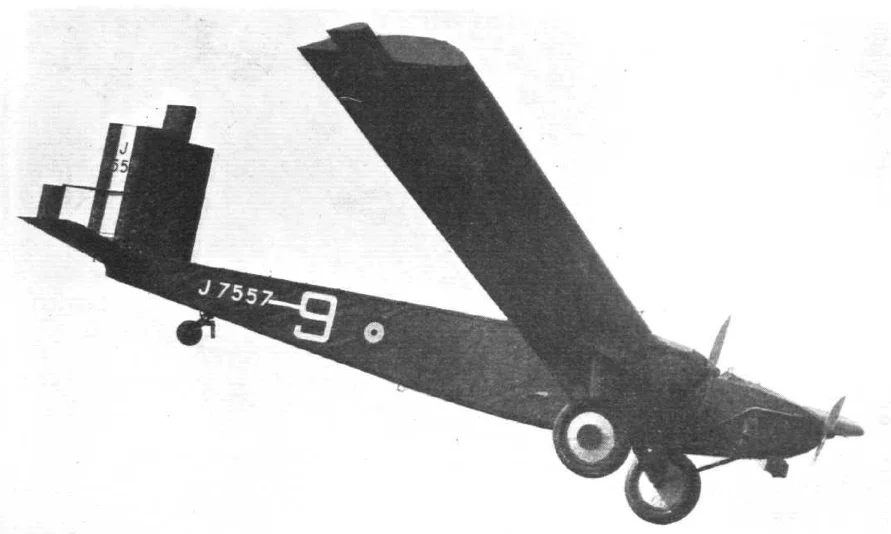
Mousehold Heath rises north-east of Norwich, the same elevated common where Robert Kett's rebel army had camped in 1549 looking down on the city below. By 1915 it was a cavalry training ground. When Boulton & Paul approached the War Department offering to build aircraft, they were given a trial contract for 25 Royal Aircraft Factory FE.2b pushers - lumbering, slow, but tough early-war reconnaissance fighters. The natural place to deliver completed aircraft was the new Aircraft Acceptance Park being built near Thetford, about 25 miles away. Boulton & Paul made a counter-proposal: put an aerodrome on the Cavalry Drill Ground to the north of Norwich, where they could roll new aircraft straight out of the factory and onto the grass. The War Department agreed. Boulton & Paul got an additional contract to build the buildings, which included accommodation for an RFC School of Flying. No. 9 Reserve Aeroplane Squadron was formed at Mousehold in July 1915, and three months later 'Bombay No. 1' lifted off.
Norwich's Acceptance Park
As Boulton & Paul's output increased, the aerodrome had to keep growing. They built the new buildings themselves. In 1917 the Royal Flying Corps formally established the Norwich Aircraft Acceptance Park - soon renamed No. 3 (Norwich) Aircraft Acceptance Park - at Mousehold to handle the output of all the local aircraft manufacturers, not just Boulton & Paul. The list of contributors makes the East Anglian wartime supply chain visible: Portholme Aircraft Company, Mann Egerton (a Norwich engineering firm that built motorcars before the war), and Ransomes, Sims & Jefferies of Ipswich. Ransomes had been farm-implement makers; Boulton & Paul built their aircraft works for them and gave them their FE.2 jigs and templates when Boulton & Paul themselves switched over to Sopwith Camel production. The Sopwith Camel was the British single-seat fighter of the last year and a half of the First World War - the aircraft credited with shooting down more enemy planes than any other Allied type. When the RAF was formed by merging the RFC and the Royal Naval Air Service on 1 April 1918, the aerodrome became Royal Air Force Mousehold Heath.
Norwich Storage Park
On 26 July 1919 the Acceptance Park's role wound down and the site was renamed the Norwich Storage Park - a place where surplus aircraft from the suddenly-too-large RAF were marshalled and disposed of. No. 3 Group of the RAF briefly used Mousehold as its headquarters between July and November 1919. After that the postwar contraction of military aviation hit hard, and the airfield went quiet. Boulton & Paul stayed on, continuing to use the site through the 1920s; they would eventually produce the Boulton Paul Defiant turret fighter that flew from RAF Horsham St Faith a few miles north in 1940. In 1927 the Norwich & Norfolk Aero Club formed at Mousehold, the kind of interwar civilian flying club that brought a generation of pilots into the sport between the wars. The aerodrome was upgraded to become the first Norwich Airport in 1933, before the city's main aviation operations migrated north to what became Norwich International Airport (the wartime RAF Horsham St Faith).
What Remains
Mousehold Heath as an airfield did not survive the Second World War. By the 1940s the site was being squeezed by Norwich's growth, and the much larger and more modern Horsham St Faith was taking over. Most of the old aerodrome has been redeveloped for housing - the streets between Salhouse Road and Plumstead Road were the flying field. Several original buildings remain, however, including hangars and other wartime structures that are still in industrial use on the Salhouse Industrial Estate. Part of the flying field itself survives as the playing field of the Open Academy (formerly Heartsease High School). The heath above the old aerodrome - the same open common where the Kett rebels camped four centuries earlier - is now a protected city green space. Walk it today and the views down over the cathedral and castle are the same ones the cavalry and the early aviators looked across, though the airplanes assembled on its grass were built by men whose previous job had been making garden buildings, and whose first product flew east toward a war that nobody had yet learned to fight.
From the Air
RAF Mousehold Heath sat at approximately 52.6433N, 1.3339E - the site is now mostly housing in north-east Norwich, between the Salhouse and Plumstead Roads. The historic flying field corresponds to today's Open Academy playing field and surrounding streets. The protected heath itself, where Kett camped in 1549, lies just to the south. Norwich International (EGSH) is about 3 nm north-west - the working successor to Mousehold's aviation role. At 1,500-2,500 ft AGL the old aerodrome is no longer recognisable from the air, but the relationship is clear: Mousehold Heath rising above the cathedral city, with Norwich International beyond it to the north-west on the open ground that supplanted this earlier field.
Nearby Stories
- Sheringham 2.7 km away
- Wingfield Castle 4.4 km away
- Castle Acre Castle and Town Walls 6.3 km away
- Brancaster 7.1 km away
- West Stow Anglo-Saxon Village 9.3 km away
- Four Days' Battle 80 km away
- Battle of Lowestoft 80 km away
- SM U-97 110 km away