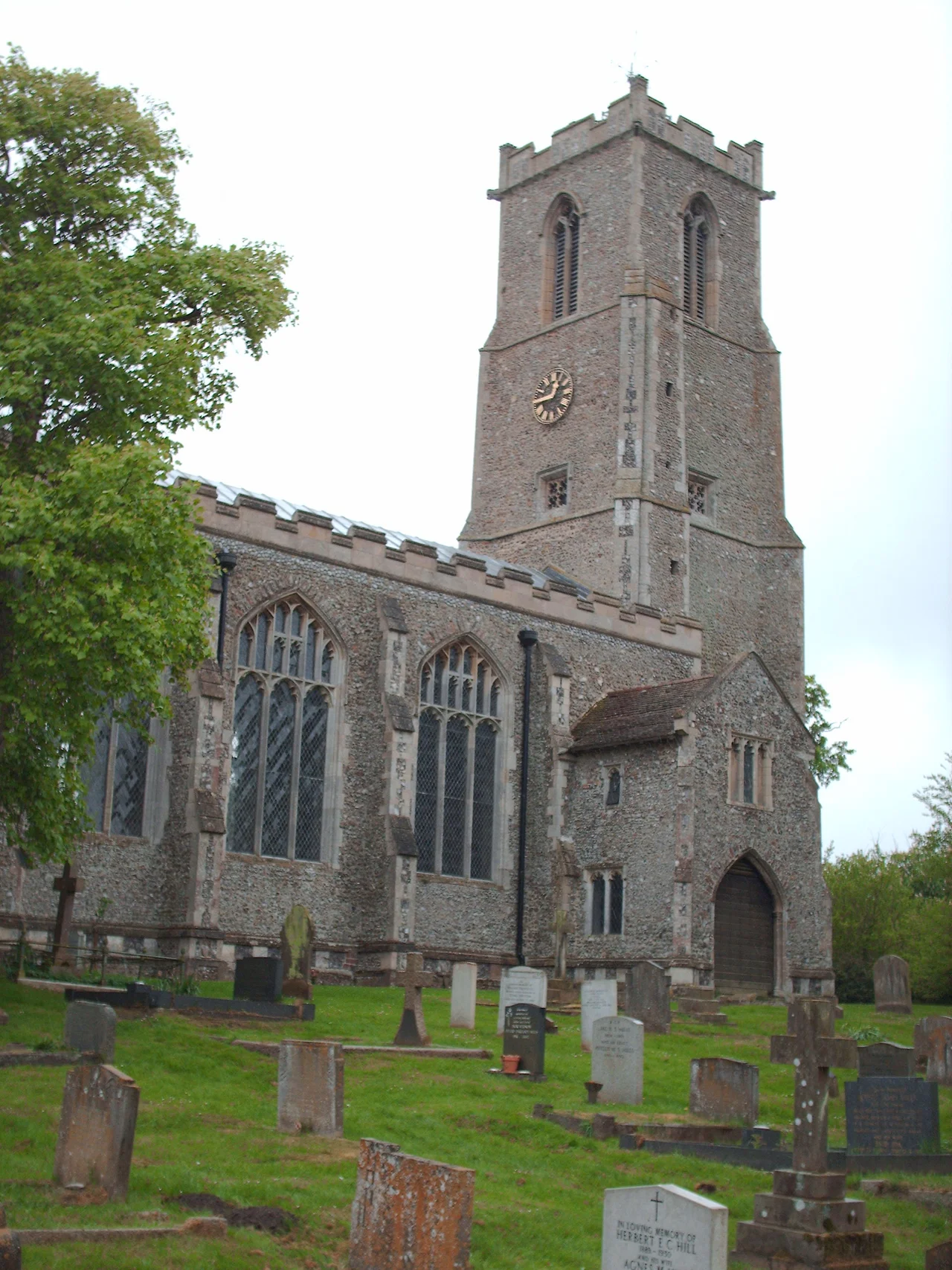

Ranworth
Climb the hundred feet to the top of St Helen's tower at Ranworth and the geography of the Norfolk Broads suddenly makes sense. Broads scatter across the flat country like coins dropped on a green tablecloth. Rivers thread between them. The Happisburgh lighthouse, twenty miles east on the coast, sits sharp against the sky on a clear day. Locals call this church the Cathedral of the Broads, and from up here the title feels earned. Below, the village itself is barely a hamlet - a cluster of houses, a staithe on Malthouse Broad, and a treasure inside the church that does not match the modesty of its setting.
The Painted Screen
Inside St Helen's, behind the chancel arch, stands a fifteenth-century rood screen that survived what most English screens did not: the iconoclasm of the Reformation and the more methodical destruction of the seventeenth-century Puritans. The panels show saints and apostles painted with rare delicacy - faces, drapery, halos still bright with the original pigments, the gilding intact. Nikolaus Pevsner, the architectural historian rarely given to enthusiasm, called it among the finest in England. Why Ranworth's screen survived when so many were burned, broken, or whitewashed is partly mystery, partly luck of a remote location far from the centres of religious enforcement.
The Antiphoner
The church holds a second medieval treasure: the Ranworth Antiphoner, an illuminated service book from around 1400 used by the monks of Langley Abbey before passing to the parish. It contains the chants for the church year, painted with initials in gold leaf and bright colours. The book vanished during the Reformation and reappeared in the nineteenth century at a London bookseller, who recognised its provenance and returned it to Ranworth. It now lives in a glass case in the church, opened to a different page each week so the parchment ages evenly.
Edge of the Marsh
Ranworth's name probably means 'edge enclosure' - a Saxon settlement on the rim of the great fenland that became the Broads. The village sits just above the waterline, looking out over Malthouse Broad and, a short walk further, Ranworth Broad and its floating wildlife centre. The civil parish today is part of Woodbastwick, which absorbed several small Broadland villages. In summer the staithe fills with hire boats; visitors moor up, walk to the church, climb the tower, then return to their floating holidays. In winter the marshes are silent and the church echoes to a handful of voices at evensong.
Why Climb the Tower
The hundred-foot ascent inside St Helen's tower is steep, narrow, and rewarded by what locals consider the finest view in the Broads. Six broads visible at once, sometimes more. The course of the River Bure traceable from Wroxham to Horning to the marshes east. The Happisburgh lighthouse winking on its coastal cliff. In the right light, the whole of medieval Broadland feels visible at a glance - the peat workings that became lakes, the marshlands that became reserves, the small parishes that have held their ground while everything around them dissolved into water.
From the Air
Ranworth lies at 52.683°N, 1.483°E in the Bure valley. Best viewed at 1,000-2,000 ft AGL to spot St Helen's church tower rising above flat marshland and the linked Malthouse and Ranworth Broads. Norwich International (EGSH) lies 14 nm southwest. The cluster of broads around Ranworth-Horning-Wroxham forms one of the most recognisable inland water features of East Anglia from the air.
Nearby Stories
- Redgrave and Lopham Fens 2.7 km away
- Cley next the Sea 4.8 km away
- East Dereham Windmill 7.1 km away
- Dunwich 12 km away
- Cromer Lighthouse 18 km away
- Battle of Lowestoft 58 km away
- Southern Bight 62 km away
- SM U-97 90 km away