
The Republic of South Maluku: A Nation That Exists Only in Exile
There is a government with a president, a flag, a coat of arms, and a national anthem. It has been a member of the Unrepresented Nations and Peoples Organization since 1991. Its anthem, written by its first president, references the Via Dolorosa in Jerusalem, likening its people's suffering to that of Christ. And for more than seventy years, this government has operated not from the tropical islands it claims but from the Netherlands, a country twelve thousand kilometers away where roughly 40,000 of its people now live as Dutch citizens. The Republic of South Maluku -- the RMS -- was proclaimed on Ambon on April 25, 1950. It lasted, on that island, for seven months.
Soldiers Without a Country
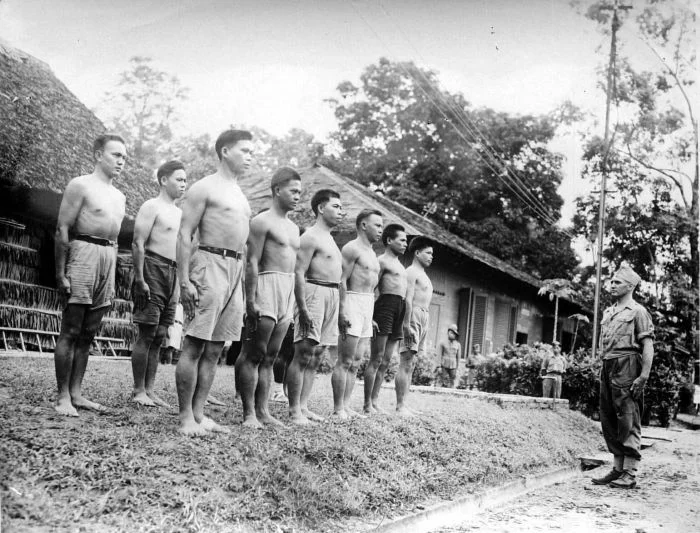
The story begins with the colonial army. For centuries, Ambonese soldiers had served the Dutch as some of the most effective troops in the East Indies. Protestant, fiercely loyal to the Dutch Crown, and deeply distrustful of the predominantly Javanese Muslim nationalist movement, these men found themselves in an impossible position when Indonesia declared independence in 1945. The Dutch were obligated to disband the colonial force, the KNIL, and each soldier had to choose: join the new Indonesian army or be demobilized. For the Protestant Ambonese, neither option felt safe. Only a minority chose to serve Indonesia. The rest waited -- for back pay, for a discharge location of their choosing, for someone to honor the promises they believed had been made. When a federal treaty between the Netherlands and Indonesia in December 1949 was abandoned in favor of a unitary Indonesian state, South Moluccan leaders declared their own republic, invoking the autonomy that treaty had guaranteed.
Seven Months on Ambon
The RMS began with 1,739 KNIL troops on Ambon, including 1,080 Ambonese soldiers who became the backbone of its armed forces. Indonesia responded with a naval blockade, and on September 28, 1950, federal Indonesian forces invaded. The RMS defenders abandoned the town of Ambon and took up positions in the old Dutch fortifications in the hills, where they waged guerrilla warfare with the discipline and skill their colonial training had instilled. The fighting was fierce enough to stall the Indonesian advance at the narrow isthmus connecting the island's two halves, but the outcome was never in real doubt. By November 5, Ambon had fallen. The RMS government fled to neighboring Seram, where a guerrilla struggle continued for another thirteen years. President Chris Soumokil went into hiding in the mountains, was finally captured by the Indonesian army on December 2, 1963, and was executed by firing squad on April 13, 1966, under the Suharto regime.
Camps, Exile, and Frustration
The Dutch government transported some 12,500 Moluccan soldiers and their families to the Netherlands, discharging them upon arrival and placing them in what were described as temporary camps. Some of these camps were former military barracks. One was the former Nazi transit camp at Westerbork. The arrangement was supposed to last until the Moluccans could return home, but that return never materialized. The camps became enclaves, geographically isolated in rural areas, with exclusively Moluccan schools and limited access to the labor market. By 1968, more than eighty percent of the Moluccans in the Netherlands remained stateless. The first generation clung to the dream of an independent RMS, a dream the Dutch government did nothing to realize and little to discourage. Frustration built for decades, compounded by isolation, unemployment, and the slow realization that the promise of return was hollow.
A Decade of Violence, Then Silence
The crisis exploded in the 1970s. In 1970, young Moluccans raided the Indonesian ambassador's residence in Wassenaar, killing a Dutch policeman. The attackers received mild sentences and gained prestige within their community. In 1975, a train was hijacked at Wijster and the Indonesian consulate in Amsterdam was seized simultaneously; three hostages were executed on the train. In 1977, another train was hijacked at De Punt while a primary school in Bovensmilde was taken hostage. Dutch marines stormed both targets, killing six hijackers and two hostages. A final action in 1978 -- the occupation of the provincial government building in Assen -- drew not the slightest community support. The violence ebbed as quickly as it had surged. By the 1980s, no further attacks occurred. The second generation of Moluccans, more integrated into Dutch society, channeled their identity into culture rather than confrontation. Musicians like Daniel Sahuleka and the band Massada brought Moluccan sounds to Dutch pop charts. Footballers like Giovanni van Bronckhorst and Simon Tahamata wore the orange of the Netherlands national team.
A Flag Still Flying
The RMS has never formally dissolved. John Wattilete, a second-generation Moluccan who became president-in-exile in April 2010, has shifted the movement's emphasis from armed struggle to pragmatic advocacy, saying he would accept autonomy similar to what Indonesia granted Aceh. On the islands themselves, the dream persists in quieter, riskier ways. The Maluku Sovereignty Front has operated in Ambon since 1999, periodically flying the RMS flag in public places -- an act that remains prosecutable as treason. In October 2020, three activists were jailed for three years for hoisting the flag. In May 2024, a fifteen-year-old was detained by Maluku police for carrying the Benang Raja flag of the RMS at a football match, sparking controversy across Indonesia and in the Dutch Moluccan diaspora. Seven decades after its seven-month existence on Ambon, the Republic of South Maluku endures as a government without territory, a cause sustained by memory, music, and a national anthem that speaks of suffering as the road to liberty.
From the Air
Coordinates: 3.62°S, 128.10°E. The RMS claimed Ambon, Buru, and Seram islands in the central Maluku archipelago of eastern Indonesia. From altitude, the butterfly-shaped Ambon Island is the geographic and symbolic heart of the movement. The narrow isthmus where RMS forces held off the Indonesian advance is clearly visible from above. Pattimura Airport (ICAO: WAPP) serves Ambon. Seram, the larger island to the north where guerrilla resistance continued until 1963, dominates the northern horizon. Best viewed at 8,000-15,000 feet for perspective on the full island group.
Nearby Stories
- The Witch That Walks Among the Living 17 km away
- Ambelau: The Spice Island the Empire Forgot 55 km away
- The Nutmeg Wars of Banda Neira 82 km away
- Where the Spice Routes Converged 95 km away
- Seram's Last Wilderness 105 km away
- Run Island 136 km away
- The Banda Sea: Where Continents Collide 172 km away
- The Fire Island That Shaped an Empire 206 km away