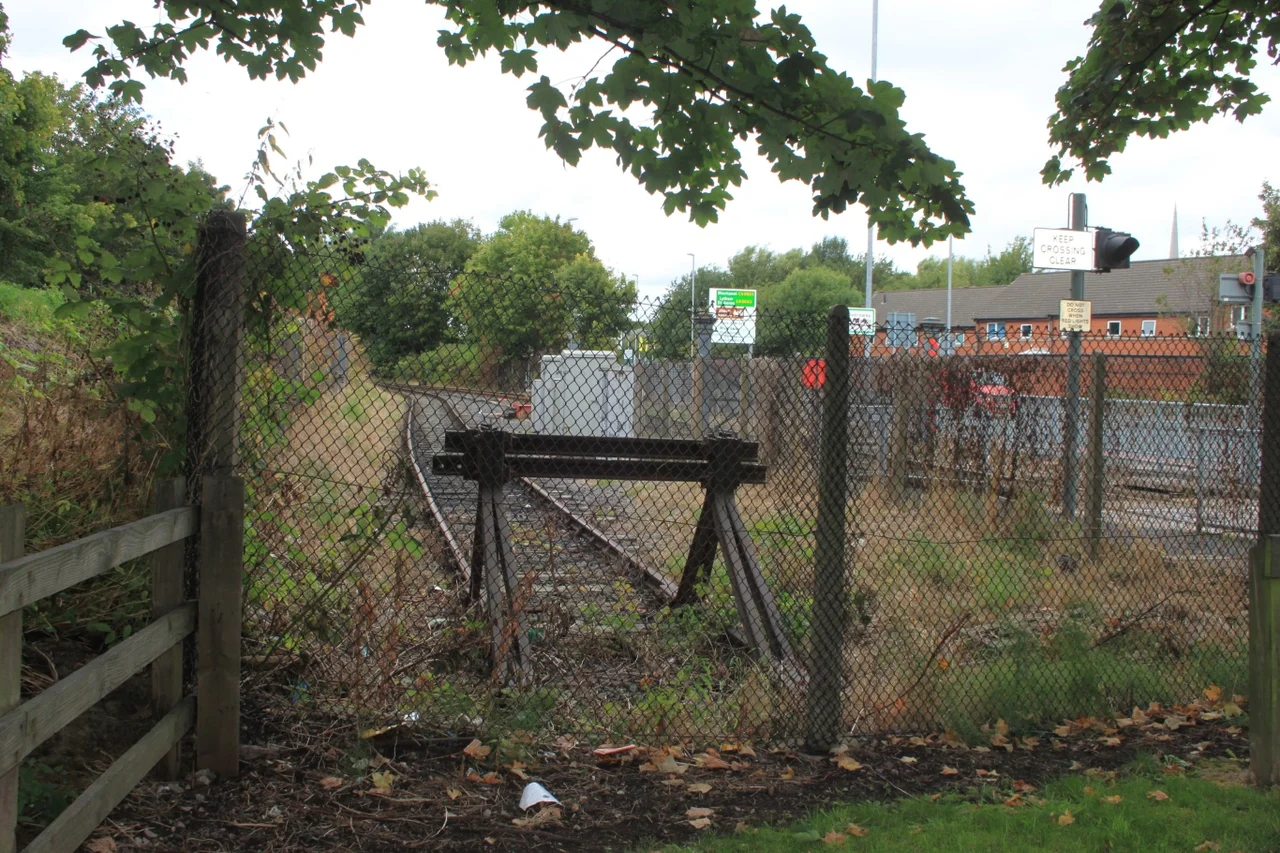

Ribble Steam Railway
Preston Docks closed in 1981 and the freight railway that had served them for nearly a century went quiet. The bananas had stopped coming from the West Indies, the Ulster ferry had moved to Stranraer, and the rusted track around the quays had no obvious future. Eighteen years later, a preservation group running an aging steam museum in a Lancashire and Yorkshire Railway shed at Southport realised their building was about to bankrupt them — and that Preston had ready-made workshops, tracks, and warehouses doing nothing. They moved. The Ribble Steam Railway opened to the public on 17 September 2005, and the docks rang with whistles again.
From Southport Shed to Preston Quay
The preservation effort began in 1973 at Derby Road, Southport, in the former Lancashire and Yorkshire Railway steam shed with BR code 27C. By the 1990s the shed was a money pit. Maintenance costs were outpacing the gate take. The trustees looked north up the coast to Preston, where the docks had a sprawling rail network nobody was using. The move began in 1999, the workshop opened in 2001, and the museum was completed in 2004. The first public passenger train rolled out on 17 September 2005. The collection brought across from Steamport now sits in purpose-built sheds along Chain Caul Way, and the railway runs a heritage line along the north side of what was once Preston's working dock.
One of Britain's Largest Locomotive Collections
Sixty-one locomotives are listed in the collection, with fifty-five currently on site. One is on loan from the National Railway Museum at York. Another belongs to the Lancashire and Yorkshire Railway Trust. Together they form one of the largest preserved locomotive collections in the United Kingdom. Steam engines share workshop space with diesel shunters that worked the docks and the industrial estates around them, and the visitor centre at the end of the main shed holds a museum, a cafe, a shop, and the platform for the passenger trains. The mix is unusual — most heritage railways focus on either main-line steam or industrial preservation, but Preston has both.
Riverside to Strand Road
Trains run hourly from Preston Riverside station, the railway's own platform at the visitor centre, to Strand Road Crossing and back. The rolling stock is usually two or more Mark 1 coaches behind either a small steam engine or a diesel. The line is short — under a mile and a half — but the route is unusual: the train crosses Strand Road on a level crossing protected by a manually operated gate, a piece of street-running railway theatre that has survived in very few places in modern Britain. There is no run-round at Strand Road, so the engine that takes you out has to back you in again.
The Bitumen Trail
Until January 2025, the line still carried real freight. A consist of fifteen tank wagons came in from the Lindsey Oil Refinery in Lincolnshire three times a week, carrying hot bitumen to TotalEnergies' Preston facility. The mainline locomotive would hand off at the level crossing and a small diesel would take the load on to the Lanfina Siding by Lockside Road, where the bitumen was pumped up an overhead gantry to the works. It was the last regular freight using the Preston Docks branch. In January 2025 the deliveries switched to road transport, and the working freight era of Preston Docks finally ended. The heritage trains kept running.
Future Plans
There are long-running proposals to build a new platform at Strand Road, closer to the Portway park and ride and the Guild Wheel walking route — Preston's circular 21-mile cycle and footpath that loops around the city. Further plans would extend the railway 1.5 miles to the Ribble Link canal, opening up a longer ride along the river. The funding is the obstacle, as it usually is. For now, the line ends where it ends, the bitumen tanks are silent, and the visitor centre cafe serves tea while a Mark 1 carriage with a steam engine at the front rolls back from Strand Road on a Sunday afternoon.
From the Air
Ribble Steam Railway is on the north bank of the River Ribble at Preston Docks, at 53.7588N, 2.7561W, west of central Preston. The line runs east-west along the dock basin, which is now a marina; the railway museum is at the eastern end. From the air, the rectangular dock basin filled with moored boats is the orienting feature. Nearest airports: Warton (EGNO) 5 nm west, Blackpool (EGNH) 12 nm west, Manchester (EGCC) 28 nm south-southeast. M55 motorway terminates at Preston's western edge. Best viewing altitude 1,500-3,000 ft for the railway and dock layout.
Nearby Stories
- Winwick rail crash 1.4 km away
- Hoylake Lifeboat Station 4.4 km away
- Murder of Lindsay Rimer 7 km away
- Mellor Mill 7 km away
- Embsay and Bolton Abbey Steam Railway 7.8 km away
- Piel Castle 11 km away
- Ashton Memorial 13 km away
- Hoylake 35 km away