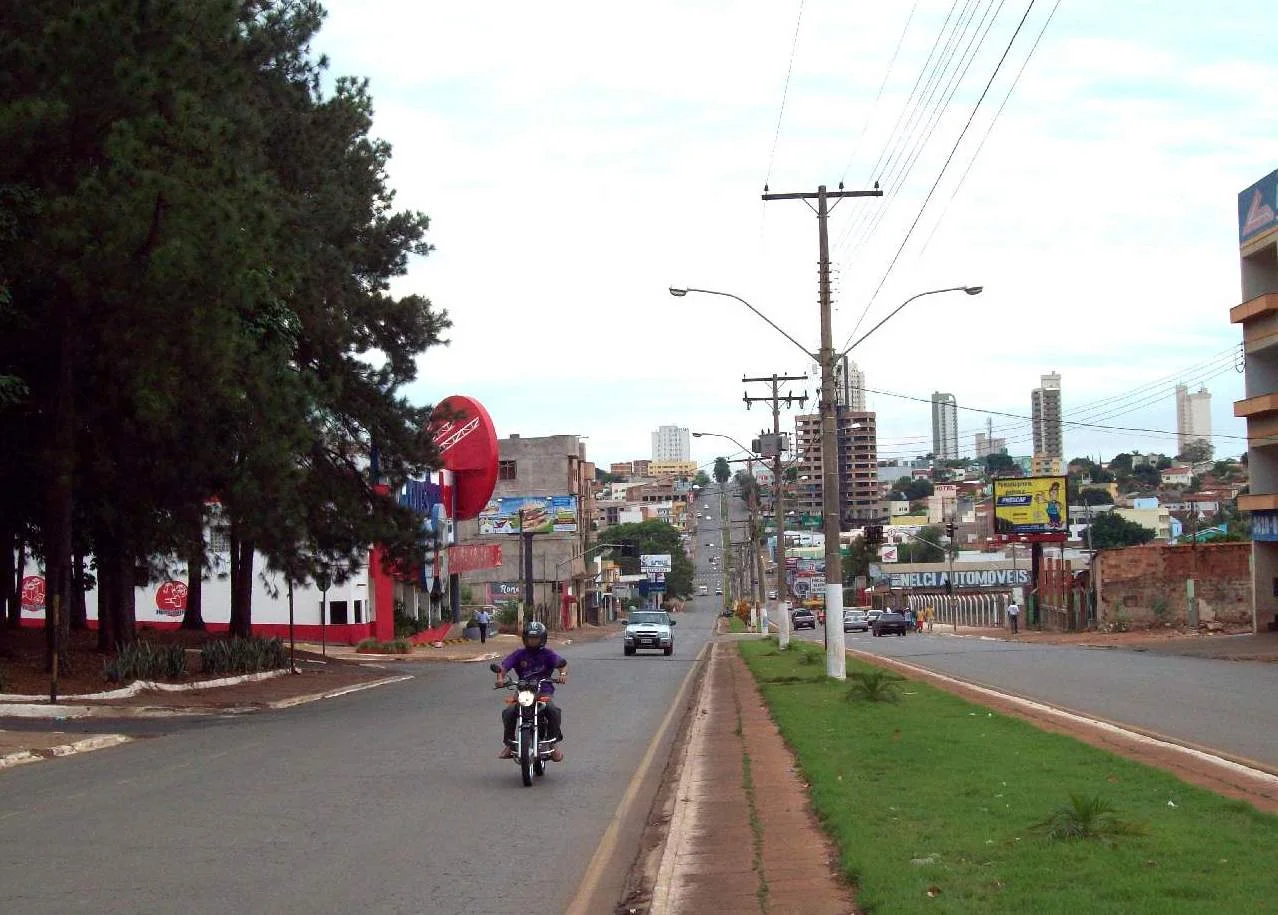

Rio Verde, Goiás
In 1838 the Brazilian government needed settlers in the central Goias interior, so it offered a ten-year tax exemption to anyone willing to move there. Enough people took the offer that by 1846 someone had donated land for a chapel, by 1848 a parish was formally established, and by 1882 Rio Verde had been elevated to a city. The taxes eventually came due. The agriculture never stopped. Today Rio Verde produces 790,000 metric tons of grain a year, raises cattle by the hundreds of thousands, and ships everything - soy, corn, cotton, sorghum, ethanol - to the port of Santos through a corridor of federal highways.
The Arithmetic of Soy
The numbers that define Rio Verde are numbers of scale. Soybeans cover 250,000 hectares. Corn covers 59,000. Sorghum runs 20,000 hectares, sugarcane 5,900, beans 5,600. Cotton fills 2,800. The city has 320,000 head of cattle and is the largest milk producer in Goias state, turning out 61 million liters of milk a month. Add 11,600,000 poultry and 335,000 pigs, and Rio Verde's barnyard alone probably outnumbers many Brazilian states. Twenty thousand head of cattle are slaughtered per month, supplying domestic consumers and - for about 10 percent of the production - international markets. The arable land across the municipality exceeds 2,300 square kilometers. The farm count was 2,166 in 2006, with 513,233 hectares under control and 3,928 workers on the payroll.
The Cooperative
The largest employer in Rio Verde is the Mixed Cooperative of Agricultural Producers of Southwestern Goias - a farmer-owned organization that was the first of its kind to form anywhere in the Brazilian Center-West region. It now ranks among the three largest cooperatives in the country, employs more than 4,000 people, and generates roughly 1,300 additional jobs. The cooperative handles grain storage, marketing, credit, and the logistics of moving millions of tons of harvest from fields to port. Its scale helps explain why Rio Verde attracts 62 percent of the private investment flowing into Goias state, 60 percent of Banco do Brasil's agricultural loans, and 15 percent of the state's agricultural operational funding. Agribusiness is not just the industry here. It is the civic architecture.
The HDI Surprise
In 2000, when the United Nations ran its Human Development Index across Brazil, Rio Verde earned a score of 0.807 and ranked first out of 242 municipalities in Goias state. Nationally it placed 44th out of 5,507. The score reflects income, education, and longevity - not just the cattle count. A regional university called FESURV, the Rio Verde campus of IFGoiano, and courses from SENAI and SENAC between them enroll thousands of students. Nine hospitals, one blood center, 110 physicians, 150 dentists, and a mobile emergency medical service cover regional healthcare. The city has 32,000 children in primary and secondary schools spread across 102 institutions. A grain town, it turned out, could be a learning town too.
The Ethanol Route
Two federal highways cross the municipality. BR-060 runs northwest from Brasilia all the way to the state of Acre on the Bolivian border. BR-452 connects Rio Verde to Itumbiara and the highway network that leads onward to Sao Paulo state. Between them they move the grain south and east. The city's Gal. Leite de Castro Airport has a 1,500-meter paved runway with night lighting - enough for regional service. But the serious movement happens by truck. Convoy after convoy rolls toward Santos, the coastal port, carrying soy, corn, and ethanol. The sugarcane that became a major crop after the 1970s oil crises feeds an alcohol economy that still powers about 30 percent of Brazilian vehicles. Rio Verde is one of the places making that system work.
Sister Cities in Four Time Zones
The city's sister-city agreements are unusually cosmopolitan for a mid-sized Brazilian agribusiness hub: Adelaide in Australia, Haarlem in the Netherlands, Porto Alegre in Brazil, and Sacramento in the United States. The pairings trace common agricultural geographies - Adelaide and Sacramento both sit in temperate wine-and-grain valleys, Haarlem anchors the productive Dutch polderland, and Porto Alegre anchors Brazilian beef country in the south. Rio Verde has been quietly networking with its counterparts around the world, learning and exporting. The tax exemption that started it all, back in 1838, was a small incentive for a small frontier. Nearly two centuries later, the descendants of those first settlers run one of the most productive agricultural economies on earth.
From the Air
Coordinates: 17.80 S, 50.93 W. Southwestern Goias at approximately 775 meters elevation, cerrado plateau. Rio Verde's Gal. Leite de Castro Airport (SWLC) has a 1,500-meter paved runway with night lighting for regional flights. Nearest major commercial airports: Goiania/Santa Genoveva (SBGO) 229 km northeast, Brasilia (SBBR) 420 km northeast. Visual landmarks: extensive agricultural patchwork in square-kilometer grid, the BR-060 and BR-452 highway corridors, cerrado vegetation transitioning to cultivated fields. Clear-air visibility excellent during dry season (May-September). No significant terrain obstacles - broad plateau country.
Nearby Stories
- Jataí 41 km away
- Quirinópolis 53 km away
- Goiatuba 99 km away
- Itumbiara 117 km away
- São Luís de Montes Belos 126 km away
- Anicuns 129 km away
- Mineiros 130 km away
- Tietê River 282 km away