
Roker Park
Danny Blanchflower captained Tottenham and Northern Ireland and is on most lists of the finest footballers Britain ever produced. He played at every major ground in England. Of Roker Park he wrote: nothing ever equalled the intensity of that wild roar. The Roker Roar was a phenomenon. It rose from the steep terraces of the Fulwell End and the Clock Stand, bounced off the criss-cross lattice of Archibald Leitch's Main Stand, and hit the pitch like a physical force. Players from elsewhere said it disoriented them. Sunderland players said it carried them. For ninety-nine years it was the sound of football in this town.
Three Months of Hammers
Roker Park went up fast. The Sunderland chairman bought farmland from a Mr Tennant in the 1890s with an unusual covenant attached - the club had to build a house on the site alongside the stadium, and pay rent until the house was finished. Within a year the ground existed. The wooden stands took just three months to erect. The Clock Stand had 32 steps, no seats, and crush barriers for safety. The turf was imported from Ireland and lasted 38 years. The pitch was deliberately crowned, dropping a foot from the centre to each corner for drainage. The official opening came on 10 September 1898; Sunderland beat Liverpool 1-0 in the inaugural friendly, with Jim Leslie scoring the ground's first goal.
Archibald Leitch and the Main Stand
By 1913 the capacity had risen to 50,000. In 1929 Sunderland tore down the original wooden grandstand and brought in Archibald Leitch - the Glasgow engineer whose signature criss-cross lattice work fronted half the great football grounds of Britain. Leitch's Main Stand at Roker Park bore the same trademark as Ibrox, Goodison Park, and Plymouth's Home Park. The work nearly bankrupted the club. By the 1930s the official capacity stood at 60,000, though some matches drew crowds estimated at 75,000. The record - 75,118 - was set in 1933 for a sixth-round FA Cup tie against Derby County. The terraces packed so tight that supporters at the back lifted children up and passed them down to the front for safety.
Bombs, Floodlights, and the World Cup
In 1943 a German bomb landed in the middle of the pitch. Another nearby killed a policeman on duty at the ground. The crater was filled, the turf relaid, and football resumed when the war did. In 1952 Roker Park became the second ground in England to install floodlights after Arsenal's Highbury. The original lights were temporary; permanent towers replaced them at season's end. When England hosted the 1966 World Cup, Roker Park hosted three group stage matches and a quarter-final between the Soviet Union and Hungary. Capacity for the tournament was 40,310. The Soviet team beat Italy 1-0 in front of 27,793 - the largest World Cup crowd ever seen at the ground.
The Last Match and the Housing Estate
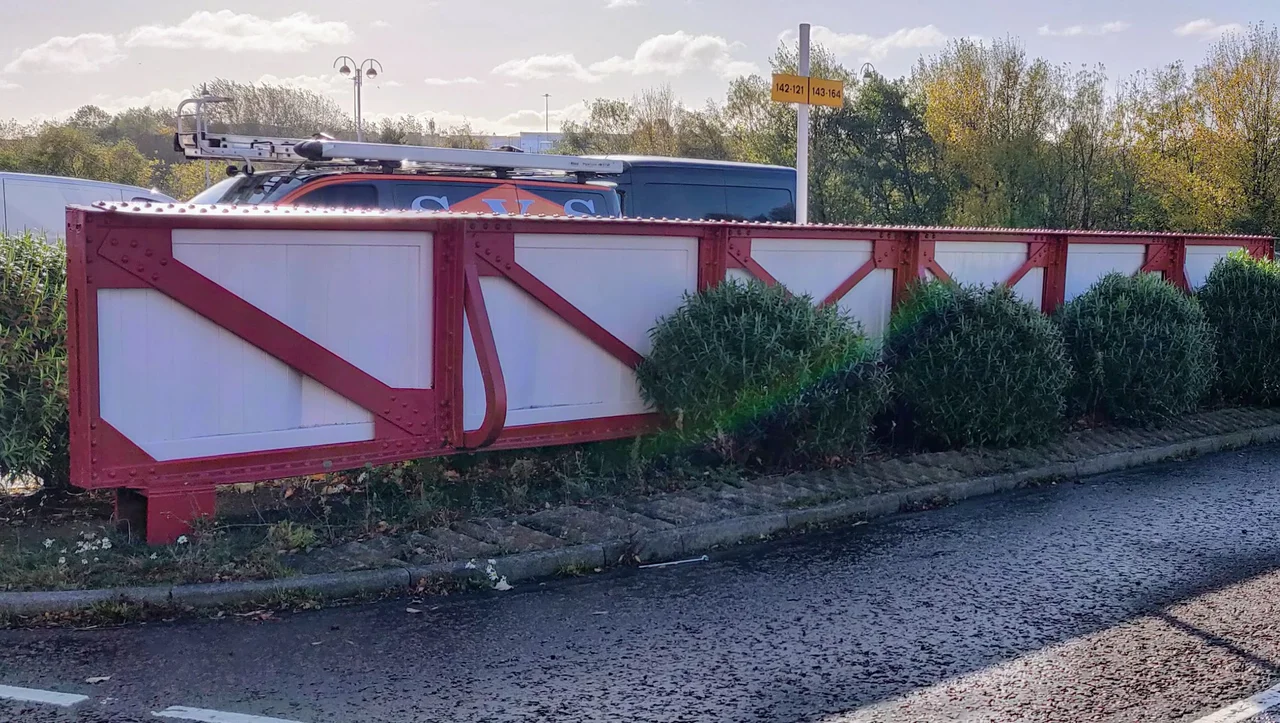
The Taylor Report of 1990 changed everything. All-seater grounds became mandatory in the top divisions of English football. Roker Park had no room to expand - the site was hemmed in by terraced streets on every side. In 1997, after 99 years and 1,907 first-team matches, Sunderland played their final game at Roker Park. They beat Everton 3-0 on 13 May. After the final farewell match - a 1-0 win against Liverpool, the same opposition as the opening fixture in 1898, with John Mullin scoring the last goal at the Fulwell End - Charlie Hurley, voted the club's Player of the Century, dug up the centre spot. The turf was planted at the new Stadium of Light. Roker Park was demolished. A housing estate now stands where the pitch used to be, with streets named Promotion Close, Clockstand Close, Goalmouth Close, Midfield Drive, Turnstile Mews and Roker Park Close. Fragments of Leitch's iconic lattice work were saved and incorporated into the car park dividers at the new ground. The Roker Roar lives only in memory now. The people who heard it still talk about it as though they cannot quite believe it was real.
From the Air
The site of Roker Park lies at approximately 54.9213 degrees north, 1.3755 degrees west, about 400 metres west of Roker Park (the recreation park) and 500 metres north of the Wear. From 1,500 feet AGL the housing estate appears as a small block of newer roofs distinct from the surrounding terraced streets - look for the curved street pattern that traces the outline of the old pitch. The Stadium of Light, Sunderland's current home, is 1.2 nautical miles south on the river. Nearest major airport is Newcastle International (EGNT), 11 nautical miles north-northwest. Durham Tees Valley (EGNV) is 23 nautical miles south.
Nearby Stories
- Seaton Carew 2.7 km away
- HMS Unity (N66) 6 km away
- George Stephenson's Birthplace 6.1 km away
- Raby Castle 9 km away
- Cragside 15 km away
- Whitby Abbey 21 km away
- German submarine U-2367 46 km away
- Alexander L. Kielland (Platform) 277 km away