.jpg)
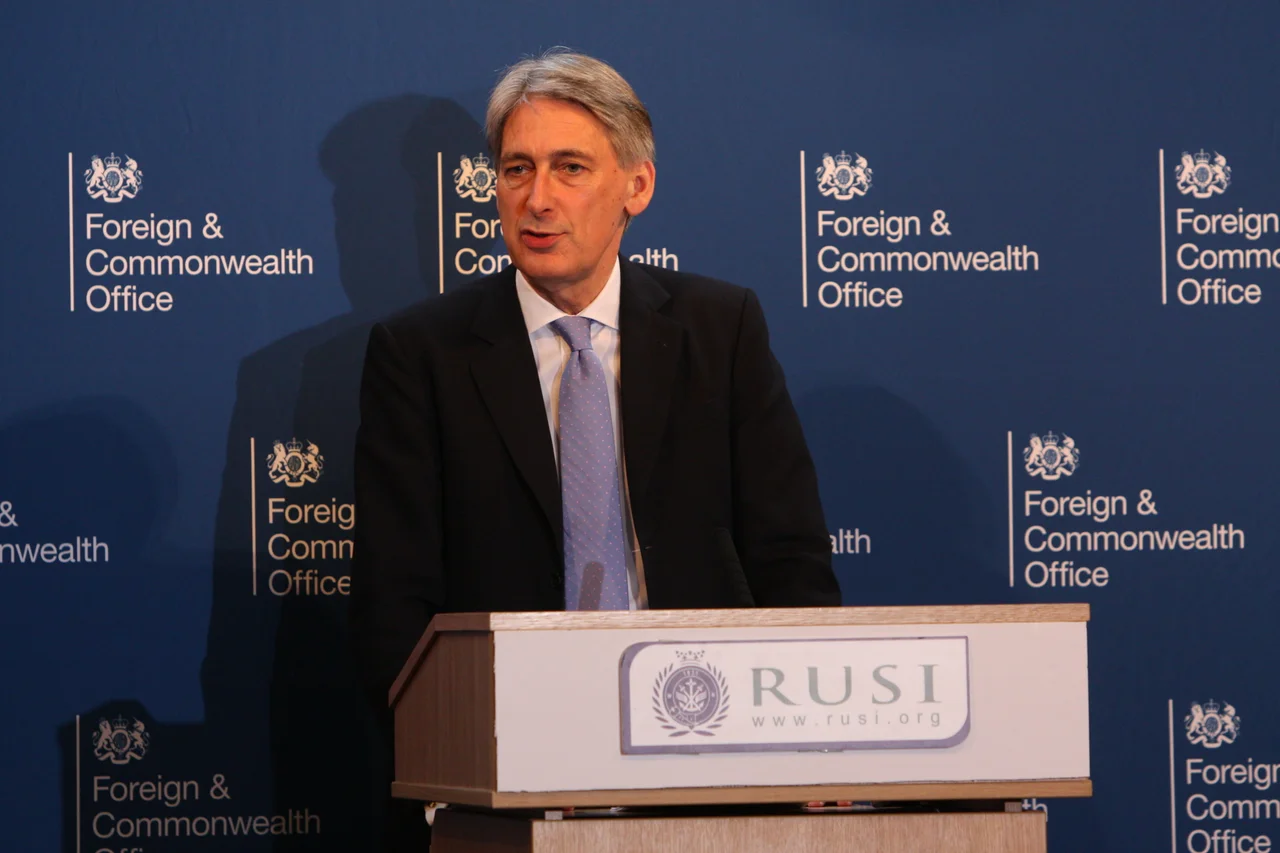
Royal United Services Institute
In a letter to Colbourn's United Service Journal, the Duke of Wellington argued that the two great armed professions — naval and military — needed a place to meet as scientists, not just as warriors. They should contend, he wrote, "tam Artibus quam Armis" — as much through the arts as through weapons. On 25 June 1831, a committee gathered in London to make this happen. The chair was a soldier who was also Britain's leading expert on naval gunnery, a symbol in himself of what Wellington had in mind. The resolution to establish the institution was moved by the future Field Marshal Viscount Hardinge and seconded by the future Rear-Admiral Sir Francis Beaufort, the famous hydrographer. The Royal United Services Institute was born.
From Naval and Military Museum to Global Think Tank
The organization started life as the Naval and Military Museum in 1831, changed its name to the United Service Institution in 1839, and became the Royal United Service Institution by royal charter in 1860. In 2004 it took its current name. The institution moved several times before settling into its purpose-built headquarters in Whitehall in 1895 — next door to the Banqueting House, where Charles I was executed in 1649.
For most of its early history, RUSI focused on naval and military science in a relatively traditional sense: tactics, weapons, doctrine. In the 21st century the remit expanded considerably. Today RUSI studies financial crime, organized crime, terrorism, cybersecurity, nuclear proliferation, and the ideologies that drive extremism — alongside its longstanding work on military doctrine and defence procurement.
The Whitehall Neighbor
RUSI's location in Whitehall is more than convenient. The institution has always existed in proximity to British state power — its original patron was the monarch, its founding was championed by the Duke of Wellington, and its current chair is the ninth Duke of Wellington. The building sits between Downing Street and Trafalgar Square, a physical expression of its position in the landscape of British security thinking.
That closeness to the state has attracted criticism. OpenDemocracy has noted RUSI's "close links with the British state and its military establishment" and questioned whether it can be truly independent. The BBC and other outlets have sometimes presented it as a neutral analytical body, which its critics dispute. RUSI acknowledges funding from the US Department of State, the UK Foreign, Commonwealth & Development Office, the European Commission, and BAE Systems, among others.
Recognition and Its Complications
By conventional measures, RUSI has earned significant recognition. Prospect magazine named it Think Tank of the Year in both 2008 and 2020. As of 2025, it ranks among the top ten most-cited think tanks globally. Its journal, first published in 1857, is considered a leading publication in defence and security studies.
In 2025, Russia declared RUSI an undesirable organization — a legal designation that prohibits Russian citizens from cooperating with it and effectively bans its publications within Russia. The designation came in the context of RUSI's extensive analysis of the war in Ukraine, where its researchers had produced some of the most detailed open-source assessments of Russian military operations available anywhere. Being banned by Moscow has a way of confirming an institution's relevance.
Wellington's Long Shadow
The first Duke of Wellington founded RUSI nearly two centuries ago. The ninth Duke chairs it today. This continuity across generations of the same family is unusual in any institution and speaks to the particular place RUSI holds in British military culture — at once a serious research organization and a custodian of a certain tradition of professional armed service.
The institution employs around 111 people in the UK and operates with an international perspective, engaging governments and militaries across Europe, the Americas, Asia, and the Middle East. Its researchers are called upon regularly to explain the world's conflicts to the public through media appearances, publications, and briefings to policymakers. Wellington's original aspiration — that military professionals should contend through knowledge as well as weapons — has proven remarkably durable.
From the Air
Located at 51.5043°N, 0.1258°W in Whitehall, City of Westminster. The Banqueting House immediately to the east is a prominent landmark. Nearest airports: London City (EGLC, ~7nm east), Heathrow (EGLL, ~13nm west). The Thames is approximately 0.3 miles south; Trafalgar Square is 0.3 miles north.
Nearby Stories
- Stevenage 5.7 km away
- Malling Abbey 5.7 km away
- 1952 Farnborough Airshow Crash 7.7 km away
- Ingatestone Hall 8.2 km away
- Hellfire Caves 9.1 km away
- The Carrington Event: The Solar Storm That Could Happen Again 9.8 km away
- Bletchley Park 16 km away
- Castle Hedingham 23 km away