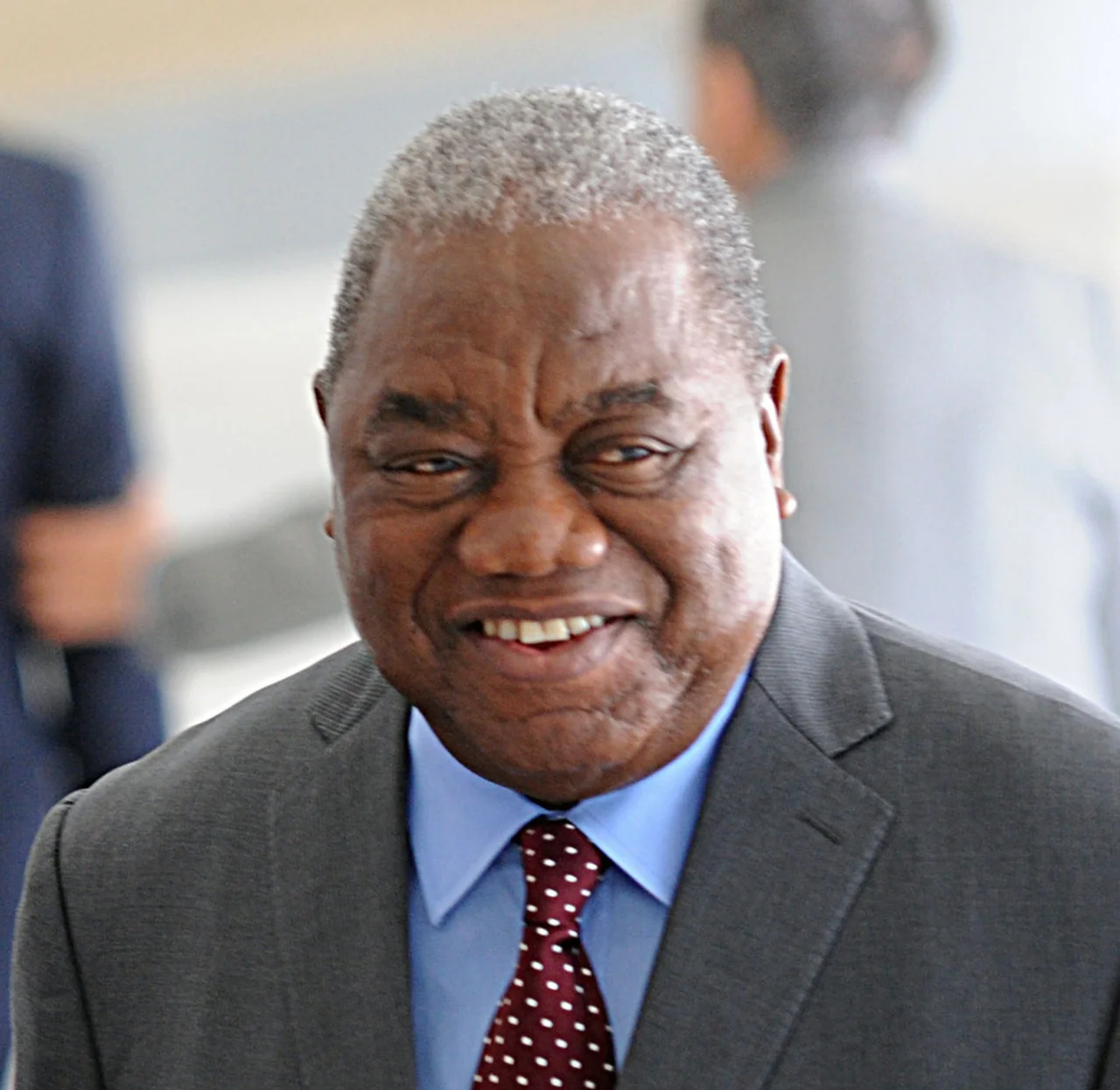

Rupiah Banda
A preacher sponsored his schooling first. Later, it was a family from India. Rupiah Bwezani Banda was born on 19 February 1937 in Miko, in the Gwanda area of what was then Southern Rhodesia, now Zimbabwe - his parents had crossed the border from Northern Rhodesia to find work before he was born. Education was not automatic for a Zambian child growing up in 1940s colonial Africa, and Banda's came through a Dutch Reformed Church preacher and later the family of B. R. Naik, an Indian-origin family who took it upon themselves to see him through. He went on to Rusangu University in Zambia, and then to a political career that would stretch across every decade of his country's independent life. By the time he died in 2022 at the age of 85, he had been an ambassador, a UN representative, a vice president, and for three years the fourth president of Zambia.
The Diplomat
Banda joined the youth wing of the United National Independence Party in 1960, during the movement that would carry Zambia to independence under Kenneth Kaunda. In the early 1960s he served as UNIP's representative in Northern Europe. By 1965 - just months after independence - he was Zambia's ambassador to Egypt, then known as the United Arab Republic. It was in Cairo that he met Jonas Savimbi, leader of the Angolan UNITA movement, and Banda's influence is cited in Zambia's decision to let UNITA open offices in Lusaka at the time. On 7 April 1967 Banda took up his next post as ambassador to the United States, serving for roughly two years. He returned home to run the Rural Development Corporation, then the National Agriculture Marketing Board, and then circled back to diplomacy as Zambia's Permanent Representative to the United Nations, where he also headed the UN Council for Namibia - a body working toward that country's eventual independence. Cease-fire efforts in Angola occupied much of that period. For a man whose formal education had depended on the kindness of strangers, his later career took him into rooms where policy shaped the fates of entire nations.
Vice President in a Hospital Vigil
In October 2006, President Levy Mwanawasa appointed Banda as Zambia's vice president - a choice widely read as rewarding the support of eastern Zambians who had backed the ruling MMD in the election. Banda's appointment was also a foreign policy decision: in August 2007, before a planned Southern African Development Community summit, Mwanawasa sent him to Harare to repair relations with Robert Mugabe after Mwanawasa had publicly criticized the Zimbabwean leader. Less than a year later, Mwanawasa suffered a stroke at an African Union summit in Egypt on 29 June 2008. Banda became acting president and spent the next seven weeks delivering public updates on the president's condition - updates that were optimistic, vague, and widely disbelieved. Banda insisted he had no reason to lie. On 19 August, Mwanawasa died in a Paris hospital. Banda announced the death to the nation with what he called immense grief and deep sorrow, urging Zambians to mourn their president with dignity. The constitutional clock started: a new election had to be called within ninety days.
A Two-Point Margin
The 2008 election was close enough to keep counting rooms awake all night. Banda ran as the MMD candidate after winning the party's nomination with 47 votes to 11 for Finance Minister Ng'andu Magande. His main opponent was Michael Sata, the populist Patriotic Front leader. Early results favored Sata. As the vote from rural constituencies came in, Banda steadily closed the gap. The final tally on 2 November showed Banda with 40 percent against Sata's 38 - a margin of just two percentage points, the kind of election where every ballot box mattered. Banda's presidency focused on economic development and foreign investment. He traveled to Egypt in December 2010 to meet Hosni Mubarak. He positioned Zambia as a trade partner. He also, critics pointed out, dismantled much of the anti-corruption infrastructure his predecessor had built - a decision that would shape how his presidency was remembered. The MMD selected him as its 2011 candidate over internal objections, and he lost to Sata in September of that year. The three-year presidency ended in a peaceful transfer of power, which in much of the region was itself a meaningful achievement.
After the Presidency
On 15 March 2013, under President Sata, Banda became only the second Zambian head of state ever to have his presidential immunity revoked - stripped on accusations of abuse of authority, corruption, and misappropriation of oil revenue. Banda denied the charges and spent much of his later life contesting them. He remained a visible figure in Zambian politics, and he retained respect across much of the region for his long diplomatic service. When he died of colorectal cancer on 11 March 2022 at the age of 85, the Zambian government declared seven days of national mourning with flags at half-mast. Namibia - a country whose independence Banda had worked toward during his UN years - declared three days of its own mourning. He is survived by sons from his first marriage to Hope Mwansa Makulu, who died in 2000, and by his second wife Thandiwe Banda, a political science teacher more than thirty years his junior who served as First Lady from 2008 to 2011. The preacher's student had, in the end, shaped a country.
From the Air
Rupiah Banda's life trajectory connected multiple southern African cities. Born in Miko, near Gwanda, Zimbabwe (approximately 20.94°S, 29.00°E). His political career centered on Lusaka, Zambia (15.42°S, 28.31°E), where he served as vice president and then president from Government House. Representative coordinates 15.42°S, 28.31°E place you over Lusaka. Nearest major airport: Kenneth Kaunda International (FLKK/LUN), about 26 km southeast of central Lusaka. Banda's diplomatic postings took him to Cairo, Washington, and New York. He was buried with state honors in 2022. Recommended altitude for viewing Lusaka 5,000-10,000 ft AGL.
Nearby Stories
- Northern Rhodesia 13 km away
- Rhodesia (region) 15 km away
- Lusaka Province 19 km away
- Mazabuka 25 km away
- Chirundu Bridge 44 km away
- Zambezian flooded grasslands 80 km away
- Kafue Flats 81 km away
- Lukanga Swamp 101 km away