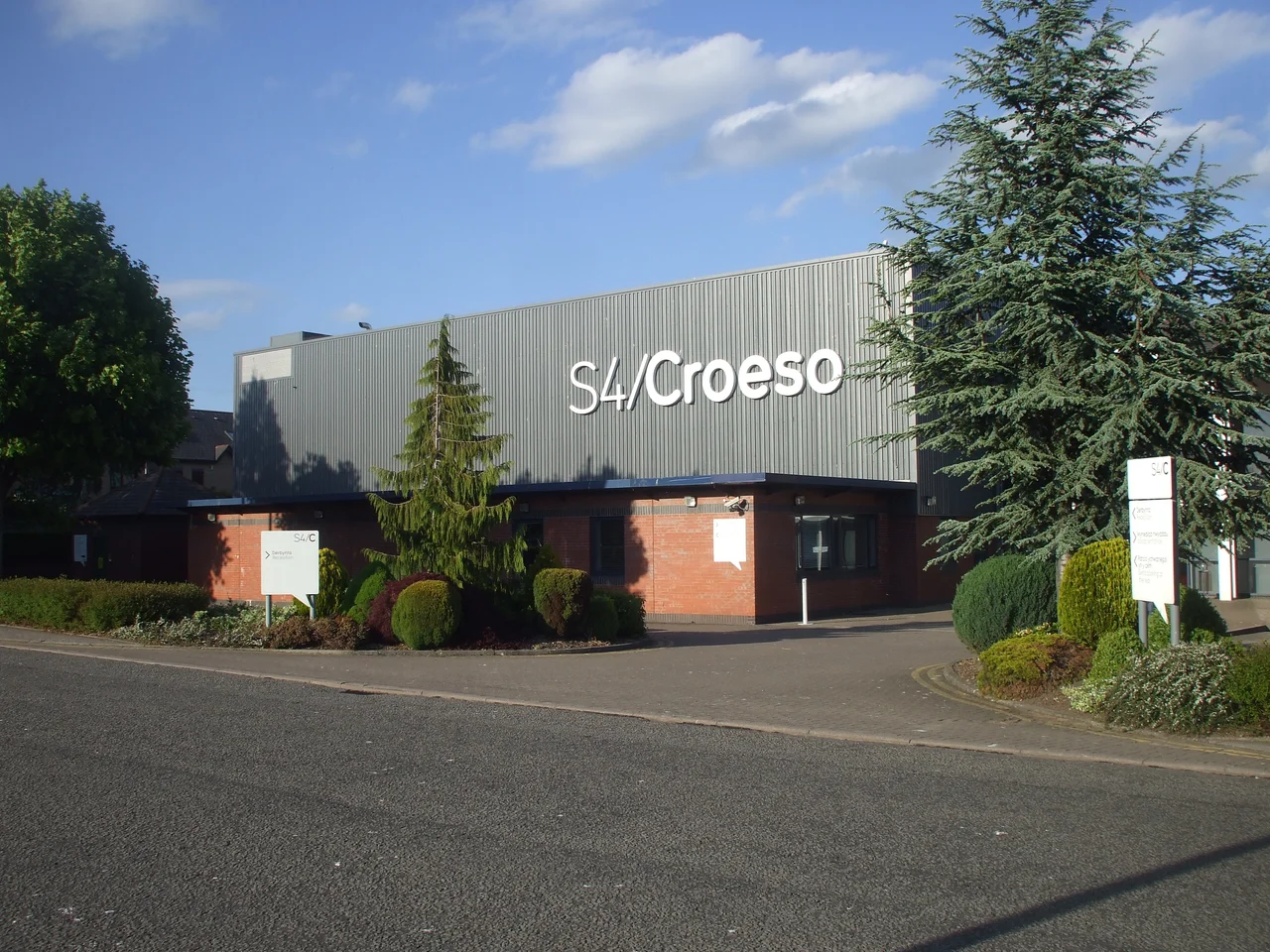

S4C
On 17 September 1980, Gwynfor Evans, the founding president of Plaid Cymru and the first Welsh nationalist ever elected to Westminster, announced that he would refuse food until the Conservative government honoured its manifesto pledge to create a Welsh-language television channel. He was 68 years old. He had spent his life in the slow, patient work of trying to keep the Welsh language alive in a world that had no obvious use for it. He had now run out of patience. Margaret Thatcher's government had won the 1979 election promising the channel, then dropped the promise within months. Evans set a date for the strike to begin. Two years later, on 1 November 1982, the channel that he had nearly starved to make happen went on the air.
The Bargain in the Land
For most of the twentieth century, Welsh speakers had been treated as an afterthought by broadcasters. The BBC and HTV ran occasional Welsh programmes at off-peak hours, satisfying nobody. Welsh speakers felt patronised; English speakers in Wales found their own scheduled programmes bumped to make room. Through the 1970s, as the rest of the UK debated what to do with a fourth television channel, a Welsh-language pressure group argued that this fourth channel, in Wales, should be entirely in Welsh. The 1979 Conservative manifesto agreed. After the election, William Whitelaw - the new Home Secretary - changed his mind. Civil disobedience followed. People refused to pay the television licence fee. Activists climbed transmitter masts. Some attacked transmitter equipment. None of it shifted the government. Gwynfor Evans, the elder statesman of Welsh nationalism, watched the campaign and concluded that something more extreme was needed.
The Threat
On 17 September 1980, Evans announced that he intended to fast unto death from the autumn forward unless the channel were granted. He was not a young man, and he was not bluffing. He had survived prison for his pacifism, sustained Plaid Cymru through three decades of electoral failure, and won the Carmarthen seat in a 1966 by-election that for the first time put a Welsh nationalist in the House of Commons. The threat worked. Whitelaw reversed himself within a few weeks. The Welsh fourth channel was approved. The name S4C - Sianel Pedwar Cymru, Channel Four Wales - was settled at a meeting in Gregynog on 31 January and 1 February 1981. There were no other names considered. The channel launched on 1 November 1982, the day before Channel 4 began broadcasting in the rest of the UK. Its first night opened at 6 pm with a bilingual preview programme presented by Owen Edwards, and featured the first episode of SuperTed.
What S4C Made
S4C was structured like Channel 4 - it commissioned everything, produced almost nothing in-house - but had a Welsh-language remit and a Welsh audience. BBC Cymru Wales contributed news and Pobol y Cwm, the soap opera that has now run continuously since 1974, longer than EastEnders or Coronation Street's modern continuous run. Independent producers contributed animation. SuperTed, made in Cardiff, became a global hit and was dubbed into 38 languages. Fireman Sam, Wil Cwac Cwac, the Animated Shakespeare series - all came out of the S4C commissioning model. The Welsh-language film Hedd Wyn was nominated for the Best Foreign Language Oscar in 1994; Solomon and Gaenor was nominated again in 2000. For a channel whose target audience numbered around half a million Welsh speakers, the cultural reach was extraordinary, and it became a model for minority-language broadcasters across Europe.
The Move to Carmarthen
S4C spent its first decades headquartered in Cardiff. In March 2014, after a long search for a way to anchor more of the Welsh-language creative industry outside the capital, the channel announced it would move to Carmarthen. The University of Wales Trinity Saint David led the bid; it owned the land where the new media campus, Canolfan S4C Yr Egin, would be built. The Welsh Government contributed three million pounds, the Swansea Bay City Deal another three. The first staff moved in from September 2018. Fifty-four jobs relocated from Cardiff; many staff chose not to move. A presentation and library team eventually returned to the new BBC Wales headquarters at Central Square in Cardiff in January 2021. Yr Egin sits today on the eastern edge of Carmarthen, on the A40 toward Abergwili, and it is from there that most of the channel's commissioning and editorial decisions are now made.
An Existential Threat
The channel's funding history is unhappy reading. In 2010, S4C received about £102 million from the Department for Culture, Media and Sport. In 2013, the new Coalition government cut that by around 93 per cent and transferred responsibility to the BBC licence fee. By the early 2020s, S4C's total funding was about £82 million in nominal terms, or perhaps £40 million less in real terms than a decade earlier. The cumulative loss between 2011 and 2022 has been estimated at around £450 million. In 2022 a Welsh political scientist, Professor Richard Wyn Jones, called the funding squeeze an 'existential threat' to the Welsh language. Whether the channel reaches enough Welsh speakers is a perennial argument; in March 2010 a leaked report showed that 196 of 890 programmes had registered zero viewers, although most were children's shows that BARB ratings did not measure. The channel's biggest audience in 2022-2023 was 456,000 viewers, for the Wales-Belgium UEFA Nations League match. The figure was not a peak. It was the country still showing up for itself.
What the Channel Still Carries
Gwynfor Evans died in 2005. The channel he forced into existence is now in its fifth decade. The Welsh language he wanted to save has continued its slow demographic retreat - 39.9 per cent of Carmarthenshire spoke Welsh at the 2021 census, down from 50.3 per cent in 2001 - but the schools are bilingual, the road signs are bilingual, and at six in the morning the cartoons on Cyw are still in Welsh. The channel still operates from a building in a county town that, when Evans was born in 1912, was one of the strongholds of the language. Somebody once asked Evans whether he would really have starved himself to death. He answered, in essence, that he had not intended to bluff. The channel is, in the end, the negotiated outcome of a particular kind of courage.
From the Air
S4C's Carmarthen headquarters at Canolfan S4C Yr Egin sits at roughly 51.86°N, 4.33°W on the University of Wales Trinity Saint David campus on the eastern outskirts of Carmarthen, just off the A40 toward Abergwili. The building is a modern glass-and-steel media centre, distinctive against the small-town Georgian and Victorian fabric of the rest of Carmarthen. From altitude the most prominent local feature is the broad curve of the River Towy below the town. Nearest civil airfields are Pembrey (EGFP) about 14 nm to the south on Carmarthen Bay, Swansea (EGFH) about 25 nm to the southeast, and Haverfordwest (EGFE) about 25 nm to the west.
Nearby Stories
- New Quay 2.5 km away
- RNAD Trecwn 2.9 km away
- Neath Abbey 3.5 km away
- Castlemartin Training Area 6.7 km away
- Strata Florida Abbey 7.9 km away
- Burry Port Lifeboat Station 10 km away
- Cantre'r Gwaelod 15 km away
- Waterfall Country 29 km away