.jpg)
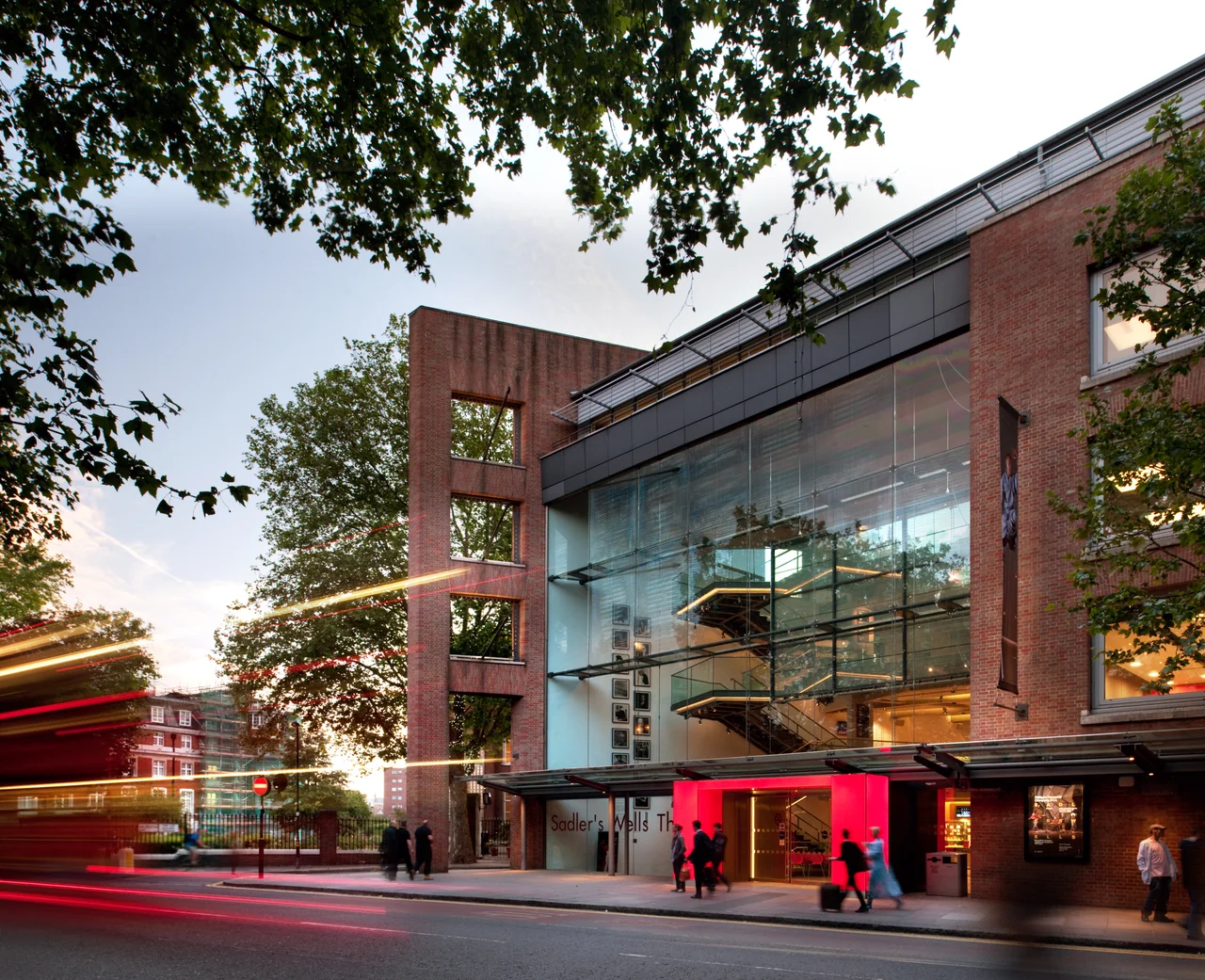
Sadler's Wells Theatre
In February 1914, a drama critic wrote of Sadler's Wells: "Poor wounded old playhouse! Here it stands even now, shabby and disconsolate, its once familiar frontage half hidden with glaring posters." The theatre had been closed the previous year, used intermittently as a cinema, and was well on its way to being forgotten. Then the First World War ended any plan to save it, and the building fell further into dereliction. It would stay closed for sixteen years. What happened next is one of the more extraordinary stories in British theatre history.
What Baylis Built
Lilian Baylis had been running drama and opera at the Old Vic in south London since 1914, charging prices that working-class audiences could actually afford. In 1925 she began campaigning to reopen the derelict Sadler's Wells on the same basis. She raised the money. She commissioned architect F.G.M. Chancellor to design a new theatre. And on 6 January 1931, Sadler's Wells reopened with a gala production of Shakespeare's Twelfth Night — John Gielgud as Malvolio, Ralph Richardson as Toby Belch.
Acquiring Sadler's Wells gave Baylis what she had wanted since 1926: the space to establish a proper dance company. She engaged Ninette de Valois to develop it. The three companies Baylis founded over the next years — opera, drama, and ballet — would eventually become, respectively, English National Opera, the National Theatre, and the Royal Ballet. She died in 1937, before any of them achieved their eventual form. The scale of what she built is only visible in retrospect.
Centuries on the Same Site
The current Sadler's Wells building dates to 1998, but the theatre's presence on the Rosebery Avenue site in Islington traces back to 1683, when a music room was established near a medicinal well owned by Richard Sadler. There have been five separate theatres on or near this spot. The fourth, a substantial Victorian structure built in 1879, was the one that attracted the "ruffians" of the Saturday night gallery and the sympathetic alarm of theatre critics. The fifth — the one Baylis rebuilt in 1931 — was the one that changed British theatre.
Each rebuilding reflected the Islington neighborhood's changing fortunes. The area moved from isolated pleasure gardens, to inner-city suburb, to deprived slum, to bohemian enclave, to the gentrified quarter it is today. Through all of it, a theatre has operated on this site more often than not.
The Roller Rink Years
Between the third and fourth theatres lies a period of institutional humiliation that says something about how precarious performing arts have always been. After the theatre closed in 1874, plans were drawn up to convert it into public baths and washhouses. Those plans fell through. Instead, the building served as a roller-skating rink. Then lectures. Then boxing and wrestling matches. The theatrical newspaper The Era had recently declared Sadler's Wells "one of the largest and most conveniently-constructed London Theatres." Now it was hosting prizefights.
Sidney Bateman, who had been running the Lyceum Theatre in the West End, bought the lease in 1878 and brought in architect C.J. Phipps to rebuild the auditorium. The fourth theatre reopened in October 1879. Bateman hoped to restore it as a classical playhouse. She died in 1881, before that hope was realized.
A Home for Dance
The current building — the sixth on this site if you count the original music room — opened in 1998. It is Grade II listed. As a producing house for dance, it occupies a position in British dance culture that has no real parallel: not just a presenter of work but an institution that actively develops choreographers and companies, that commissions and premieres, that sends productions on international tours.
With the 2025 opening of Sadler's Wells East in the Queen Elizabeth Olympic Park, the organization now operates two venues with identical stage dimensions — a deliberate choice that allows productions to transfer between Islington and Stratford without technical adjustment. Three centuries after Richard Sadler's medicinal well drew visitors to Islington, the institution bearing his name is still finding new ways to attract an audience.
From the Air
Located at 51.5294°N, 0.1061°W on Rosebery Avenue in the London Borough of Islington. The Angel tube station is approximately 0.3 miles to the north. Nearest airports: London City (EGLC, ~6nm east), Heathrow (EGLL, ~15nm west). King's Cross and St Pancras stations are about 0.7 miles to the northwest.
Nearby Stories
- Stevenage 5.7 km away
- Malling Abbey 5.7 km away
- 1952 Farnborough Airshow Crash 7.7 km away
- Ingatestone Hall 8.2 km away
- Hellfire Caves 9.1 km away
- The Carrington Event: The Solar Storm That Could Happen Again 9.8 km away
- Bletchley Park 16 km away
- Castle Hedingham 23 km away