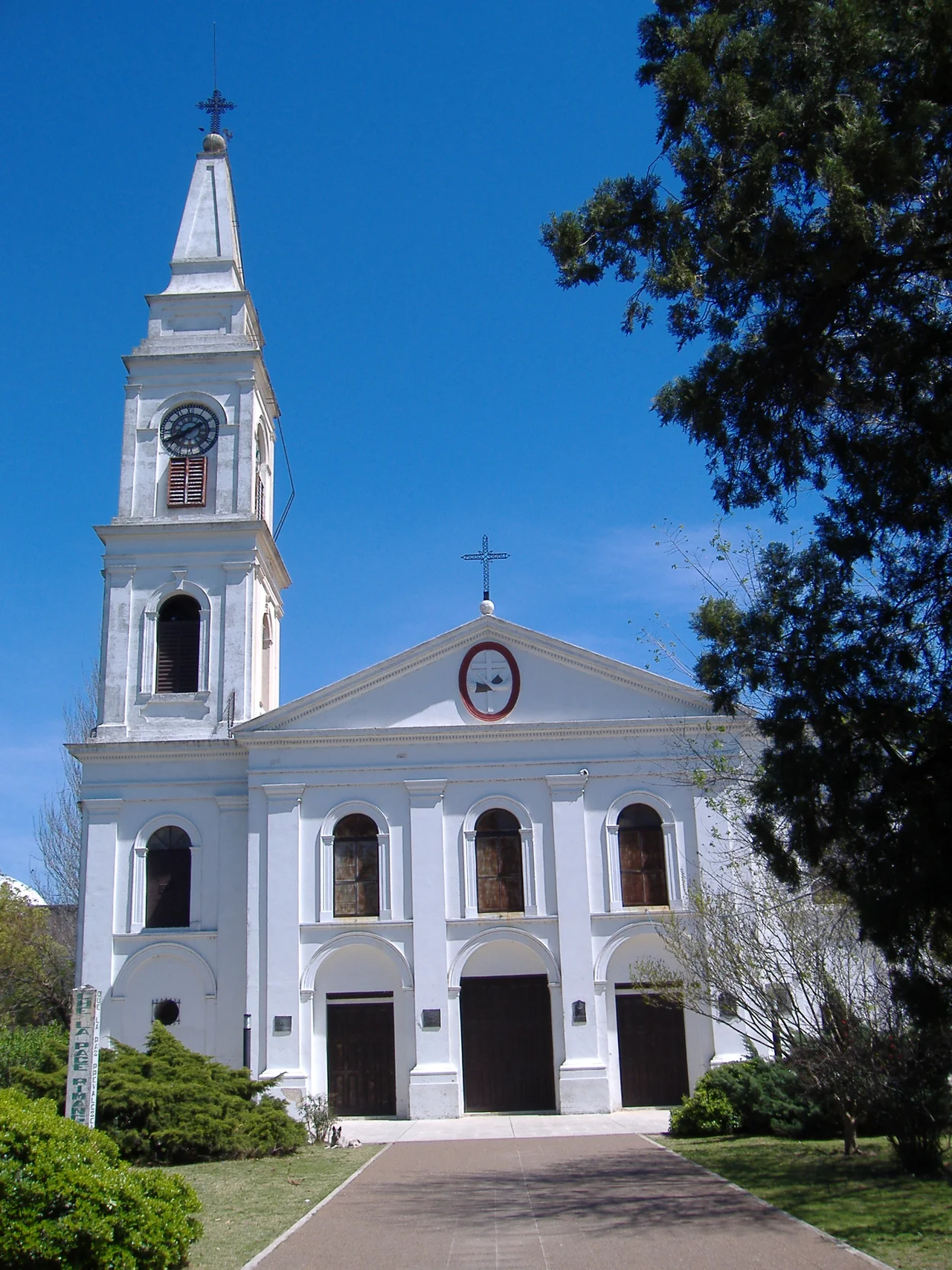

San Carlos Convent
The Franciscans chose this spot in 1790 precisely because it was quiet and a little removed from the Paraná River. They could not have known that, twenty-three years later, that quiet would matter for an entirely different reason - that a colonel would march an army through the night to hide it inside their chapel, study an enemy fleet from the shelter of their walls, and then carry his wounded back through their doors at dawn. The San Carlos Convent was built for prayer and labor. History made it a fortress, a watchtower, and a field hospital, all within a single morning.
A Quieter Place to Pray
The convent's story begins with displacement. When the Jesuits were expelled from the Viceroyalty of the Río de la Plata, Franciscan friars moved to a chapel at San Miguel del Carcarañal. In 1790, seeking somewhere farther from the river, they were granted this land by governor Félix Aldao. That first year they built a chapel, a well, a house for the resident monk, and a shed for laborers. The shed was enlarged in 1792 and the chapel fenced. The friars themselves did not move in until 1796 - six years of patient construction for a community that measured time in generations, not seasons.
The Cradle of the Flag, Nearby
The convent sat close to events that shaped a nation. Manuel Belgrano, the man who created the Argentine flag, visited in 1811 on his way back from the Paraguay campaign, and the following year the chapel helped him build the Independencia and Libertad gun batteries at what is now Rosario - the same stretch of riverbank where, in February 1812, he first raised the blue-and-white flag. The friars, in other words, were neighbors to the birth of Argentine symbols. Their chapel was not a passive bystander to the revolution but a quiet participant in its logistics, supplying and sheltering the men who built its defenses. For a religious house meant to stand apart from worldly affairs, San Carlos kept finding itself at the center of them - chosen, again and again, by the accident of where it sat on the river.
One Morning in February
On the night of February 2, 1813, José de San Martín hid the Regiment of Mounted Grenadiers inside these walls. He had tracked royalist ships up the Paraná and knew they meant to land and pillage the chapel itself. From the convent he watched and waited; at dawn his cavalry charged and broke the raiders at the Battle of San Lorenzo. Then the building changed roles again. The chapel that had nearly been plundered became the place where the wounded were carried and treated - patriot and royalist soldiers alike, for San Martín tended both. Six years later, in 1819, the same chapel hosted the signing of an armistice among Belgrano, Estanislao López, and Francisco Ramírez.
Still a Working Convent
What is remarkable is how little the place has surrendered to memory. It remains a working Franciscan convent, even as part of it has become a museum of the battle fought at its threshold. Visitors can see the cell San Martín used, the room where the injured were treated, and urns holding the remains of soldiers who died here - a reminder that the men of San Lorenzo were not abstractions but young soldiers whose bones rest in the chapel that tried to shelter them. Declared a National Historic Monument of Argentina in 1940, the convent has hosted a permanent detachment of the Regiment of Mounted Grenadiers since a 2008 agreement with the armed forces - the descendants, in spirit, of the men who once sheltered here. Beside it stands the Historic Pine, the stone pine under which San Martín wrote his report, now more than two hundred years old and itself a protected monument. Prayer and remembrance share the same roof, as they have for more than two centuries.
From the Air
The San Carlos Convent stands in San Lorenzo, Santa Fe, at about 32.75 degrees south, 60.73 degrees west, set back a short distance from the high west bank of the Paraná River and roughly 24 km north of Rosario. It is a low, historic chapel complex best picked out at lower altitudes in clear weather; from the air, orient on the wide Paraná and the adjacent Campo de la Gloria battlefield, with its monument and eternal flame. The nearest airport is Rosario - Islas Malvinas International Airport (ICAO: SAAR, IATA: ROS), about 30 km to the south. Follow the river north from Rosario through the port towns of Greater Rosario to find it.
Nearby Stories
- Battle of Cepeda (1859) 38 km away
- Predelta National Park 41 km away
- Battle of the Tonelero Pass 43 km away
- Ramallo Massacre 80 km away
- Sa Pereira Rail Disaster 106 km away
- San José Palace 150 km away
- Battle of Quebracho Herrado 169 km away
- The Pampas 230 km away