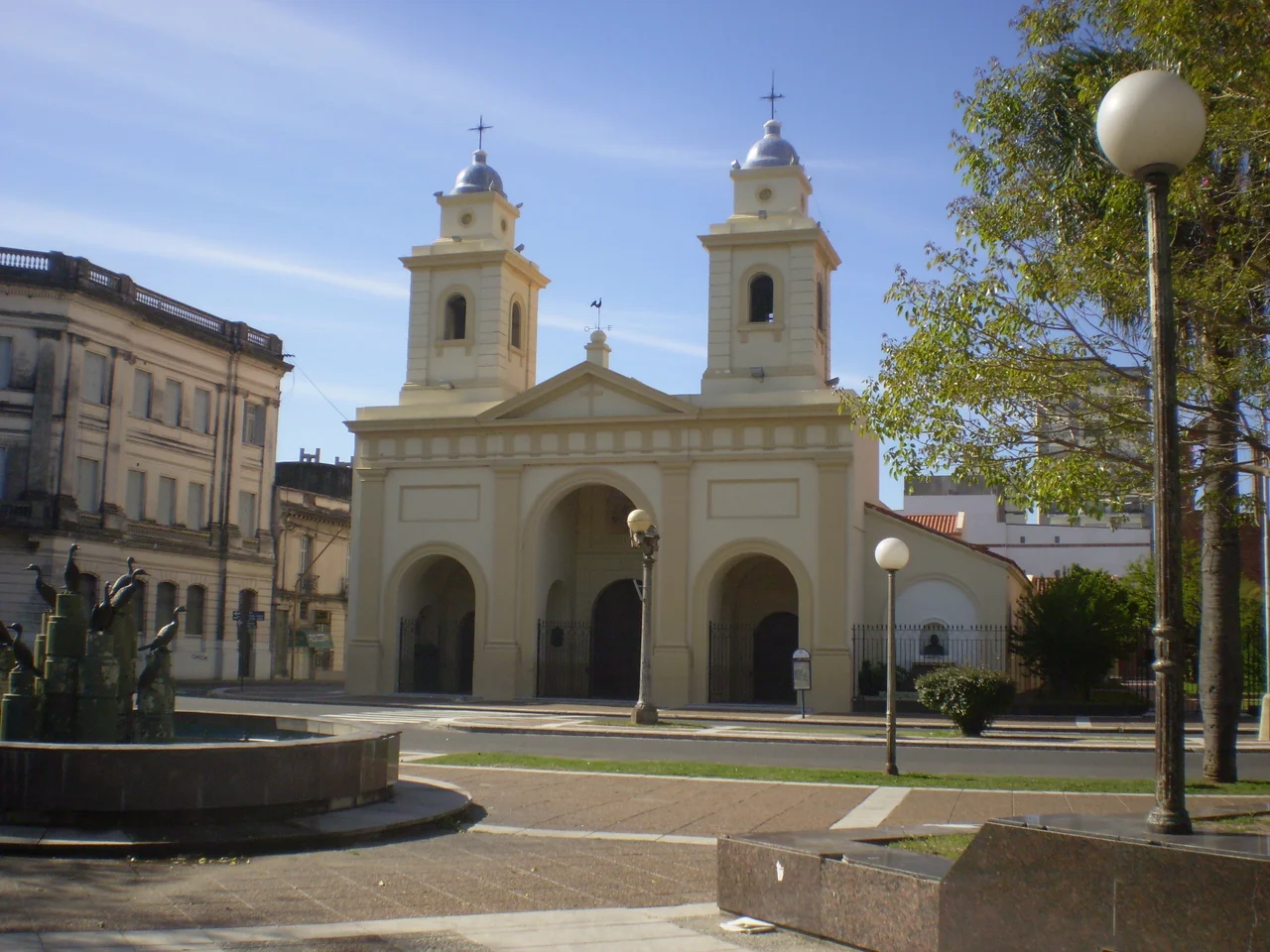

Santa Fe (city, Argentina)
Every Argentine learns the date in school: May 1, 1853, the day a constitution was sanctioned in this riverside city, and July 9 of that same year, when thirteen provinces swore to obey it. The men who drafted it met in Santa Fe's old Cabildo because the city sat on neutral ground between the warring factions of a young nation, close enough to the centers of power but belonging to none of them. Buenos Aires, sulking in its own separate state, refused to sign. The other thirteen did. The document hammered out here became the backbone of modern Argentina, and the city has carried that weight quietly ever since, a place where national history was written and then largely left to get on with ordinary life.
A Capital That Faces the Water
Santa Fe is the capital of the eponymous province, a city of roughly 390,000 people with about 650,000 across the metro area, and it lives in conversation with rivers. The Paraná runs some 18 kilometers east, reachable by National Route 168, while the Laguna Setúbal laps the city's eastern flank, broad enough to rank among the largest lagoons of its kind. Locals treat the shore as a public living room: a patio chair, a cold drink, the slow brown water sliding by. The city is the commercial and transport hub for a fertile farming belt that ships grain, vegetable oils, and meat, and it educates its young at the National University of the Littoral, the National Technological University, and the Catholic University of Santa Fe, founded in 1959.
Heat, Storms, and Hungry Mosquitoes
This is the Argentine littoral, and the climate plays no small games. Winters are mild but can dip below freezing on the coldest nights; summers turn hot and heavy, with heat waves that have pushed the thermometer past 45°C. Rain comes year-round, heaviest in summer, and the thunderstorms arrive with real menace, frequent lightning, sudden downdraughts, and drenching cloudbursts. Then there are the mosquitoes, voracious along the brackish pools and the river edge, ready to make a meal of any visitor who lingers at dusk without thinking. To live here is to make peace with water in all its forms, the generous and the maddening alike.
A Small City With a Restless Pulse
For its size, Santa Fe runs hot with culture. The National University of the Littoral mounts a week-long music and arts festival that the city's young people prize, and the calendar fills with theater, poetry, choirs, and dance. The local rock scene refuses to quiet down despite a shortage of stages, sprawling from folk-inflected sounds to the heavy and experimental. Best of all are the peñas folklóricas, informal gatherings where the truest local culture surfaces: empanadas and wine, and the old country dances, zambas and chacareras, gatos and cielitos and the stately pericón. Two serious museums anchor the southern quarter, the Rosa Galisteo art museum and the Etnográfico, both within easy walking distance of downtown.
Asado, River Fish, and a Cold Liso
At the table, Santa Fe is unmistakably Argentine and unmistakably its own. Asado, grilled meat over coals, comes with salads and red wine as it does across the country, but the local prize is river fish pulled fresh from the surrounding waters, best eaten as chupín, a hearty stew of fish, potato, and tomato. Italian and Spanish roots flavor nearly every menu, with traces of half of Europe layered in. And then there is the beer. Santa Fe hosts one of the country's largest breweries, and locals take their cerveza seriously, poured into a tall straight glass called a liso and drunk almost ice-cold at an outdoor table on a blistering January afternoon. It is, in its way, the most honest portrait of the city: unpretentious, sociable, and entirely at home in its own heat.
From the Air
Santa Fe sits at roughly 31.63°S, 60.70°W on the western Argentine littoral, where the Paraná River fans into a maze of channels, islands, and lagoons. From altitude the city reads as a grid pressed against the broad Laguna Setúbal on its eastern side, with the main Paraná channels glinting further east toward Paraná city. The slender line of the Puente Colgante marks the lagoon edge. Approach Sauce Viejo airport (ICAO SAAV, local SFN), about 15 km south of the city; Paraná airport (ICAO SAAP) lies across the river to the east, roughly 25 km away. Expect clear, stable air in the mild winter; in summer, plan around afternoon thunderstorms with strong downdraughts, lightning, and reduced visibility in haze.
Nearby Stories
- Sa Pereira Rail Disaster 20 km away
- Rafaela 30 km away
- Predelta National Park 37 km away
- Cayastá 47 km away
- San José Palace 165 km away
- El Palmar National Park 173 km away
- Federación 212 km away
- Villa General Belgrano 321 km away