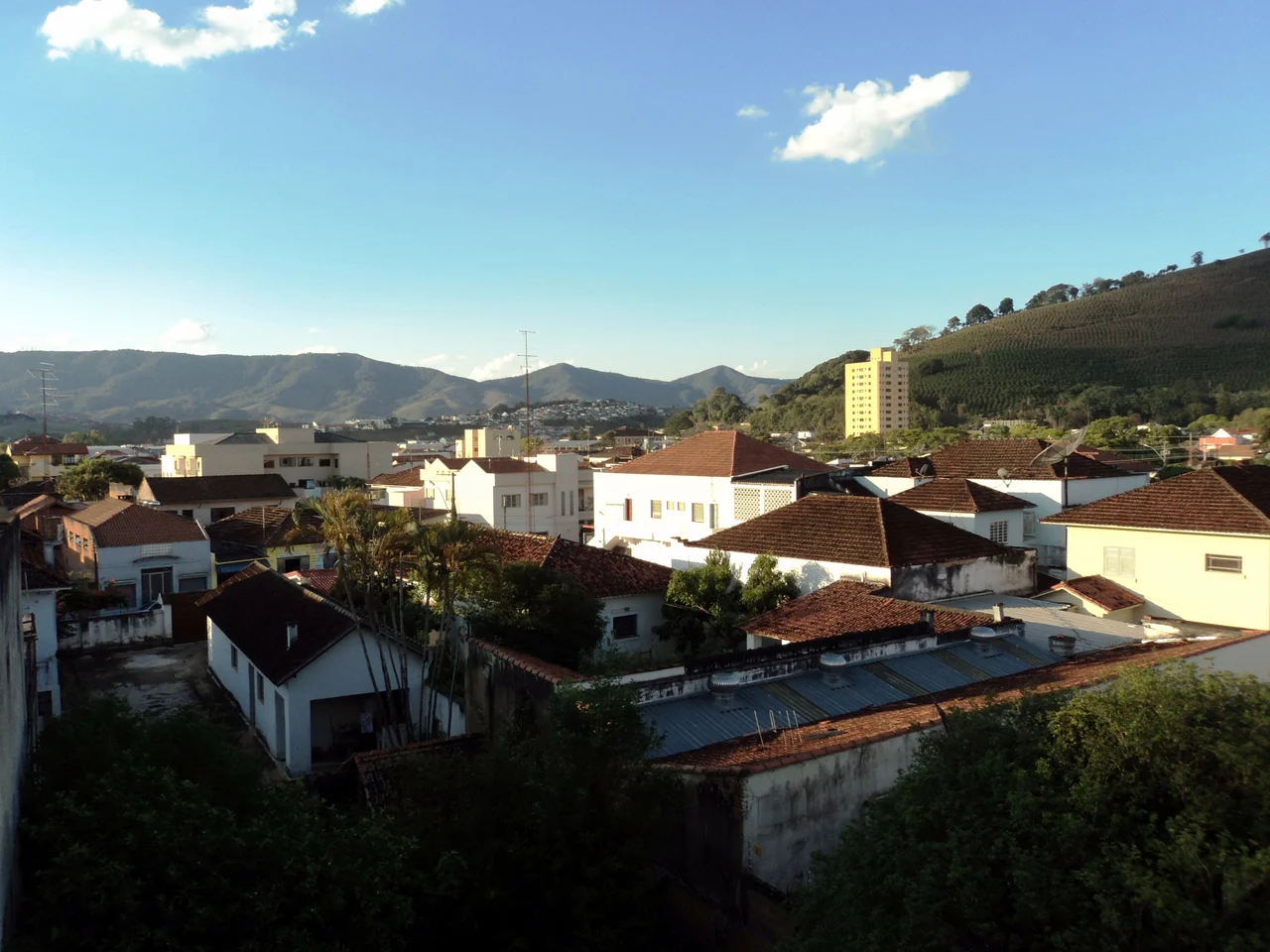

Santa Rita do Sapucaí
In 1959, a woman named Sinha Moreira founded an electronics school in a small coffee town in southern Minas Gerais - the first technical school of its kind anywhere in Latin America. The Escola Tecnica de Eletronica Francisco Moreira da Costa was named for her husband. Six years later came a full university, INATEL, the Instituto Nacional de Telecomunicacoes. Together the two institutions reshaped a town of 43,000 people into what Brazilians now call the Vale do Silicio Mineiro - the Mineiran Silicon Valley - the only small city in Latin America where more than 110 technology companies have clustered around two local schools.
Sinha Moreira's Decision
Santa Rita do Sapucai was a coffee town in 1959. The national grid of technical education barely existed. Higher education was concentrated in state capitals like Rio de Janeiro, Sao Paulo, and Belo Horizonte. When Sinha Moreira decided to establish an electronics school in a town that most Brazilians had never heard of, the choice looked like eccentricity. She endowed the school with her husband's name and her own determination. Graduates began emerging who could design and build electronic equipment at a moment when almost nobody else in the country could. The ripples took time to spread. By the 1980s the school's alumni were founding companies nearby, drawn back by the familiar geography and the steady supply of new graduates. The Mineiran Silicon Valley did not begin as a plan. It began as a school, built by a widow, in a town in the mountains.
INATEL and the Cluster
The Instituto Nacional de Telecomunicacoes opened in 1965, offering engineering degrees in telecommunications, electronics, and computer science. Together with the technical school, INATEL now anchors a cluster of more than 110 technology companies in and around Santa Rita do Sapucai. Many are small or medium-sized, working in niches like embedded systems, telecommunications hardware, and medical devices. A few have grown into national suppliers. The cluster defies a Brazilian pattern in which high-tech work concentrates in the big coastal cities. Here, in a town of 43,000, young engineers can walk from the university gates to a startup or a contract manufacturer in five minutes. The city is close enough to Sao Paulo (a few hundred kilometers south) and to Belo Horizonte that clients and investors can arrive by road within a day. A third university, FAI, offers degrees in administration and informatics alongside the engineering pipeline.
Prisoners on Bicycles
In a local plaza, the street lamps are powered in part by inmates pedaling stationary bicycles. The program lets prisoners shorten their sentences by hours pedaled - each bicycle's generator feeds a car battery, which then feeds the plaza's lighting grid. The arrangement began as a rehabilitation experiment and drew international attention when it was first reported. It is a small-scale version of what works elsewhere in correctional systems: provide a concrete task, measure it, credit it against time served. In Santa Rita, it also produces free electricity. Whether by intention or coincidence, a town that built itself around electronic engineering found a hand-powered way to light a public square using the labor of people the justice system had taken out of circulation.
A First in Minas
In July 2012, Santa Rita do Sapucai became the first municipality in Minas Gerais to adopt same-sex marriage, and the first municipality anywhere in Brazil to legalize it individually - before the Supreme Federal Tribunal's 2013 ruling that brought equal marriage to the country as a whole. The decision surprised observers who expected such a move to come first from a coastal metropolis, not from an interior town in a culturally conservative state. It was in keeping, though, with the town's history of doing things early. The first electronics school in Latin America was founded here in 1959. The first electronic engineering university followed in 1965. The first municipal recognition of same-sex marriage in Brazil came in 2012. In Santa Rita, there is a pattern of getting there ahead of the rest of the country.
Roque Junior's Hometown
The 2002 FIFA World Cup-winning Brazilian team had a defender named Roque Junior, who played alongside Cafu and Lucio in the backline. He was born in Santa Rita do Sapucai and began his professional career with the local club, Santarritense. Former Brazilian president Delfim Moreira spent much of his life in Santa Rita though he was not born here. Olavo Bilac Pinto, who rose to president of the Chamber of Deputies in 1965 and then served as ambassador to France from 1966 to 1970, was a Santa Rita native. The town also produced the serial killer Pedro Rodrigues Filho, born on the banks of the Rio Sapucai, whose case became one of the most notorious in Brazilian criminal history. The civic ledger here contains, by turns, soccer glory, political prominence, engineering innovation, and darkness. The 305-hectare Santa Rita Biological Reserve, a strictly protected conservation area created in 1980, sits just outside town as an older and quieter counterpoint to all of it.
From the Air
Coordinates: 22.25 S, 45.70 W. Southern Minas Gerais at approximately 900 meters elevation, tropical-de-altitude climate in the Sapucai River valley. No commercial airport in town; nearest is Pouso Alegre Airport about 25 km southwest. Major commercial airports: Sao Paulo/Guarulhos (SBGR) 190 km south, Belo Horizonte/Confins (SBCF) 390 km north, Campinas/Viracopos (SBKP) 220 km southwest. Visual landmarks: the Sapucai River, Santa Rita Biological Reserve (305 ha) just outside town, BR-381 Fernao Dias highway 25 km southwest. Mountainous terrain surrounding the valley requires attention to local minimum safe altitudes.
Nearby Stories
- Serra da Mantiqueira 25 km away
- Campos do Jordao 27 km away
- Cambuquira 28 km away
- Poços de Caldas 56 km away
- Our Lady of the Rosary Church, Lavras 81 km away
- Itapira 82 km away
- Campinas Cathedral Shooting 113 km away
- Christ the Redeemer: The Statue Built from Soapstone Carried Up a Mountain 190 km away