.jpg)
Sedniv
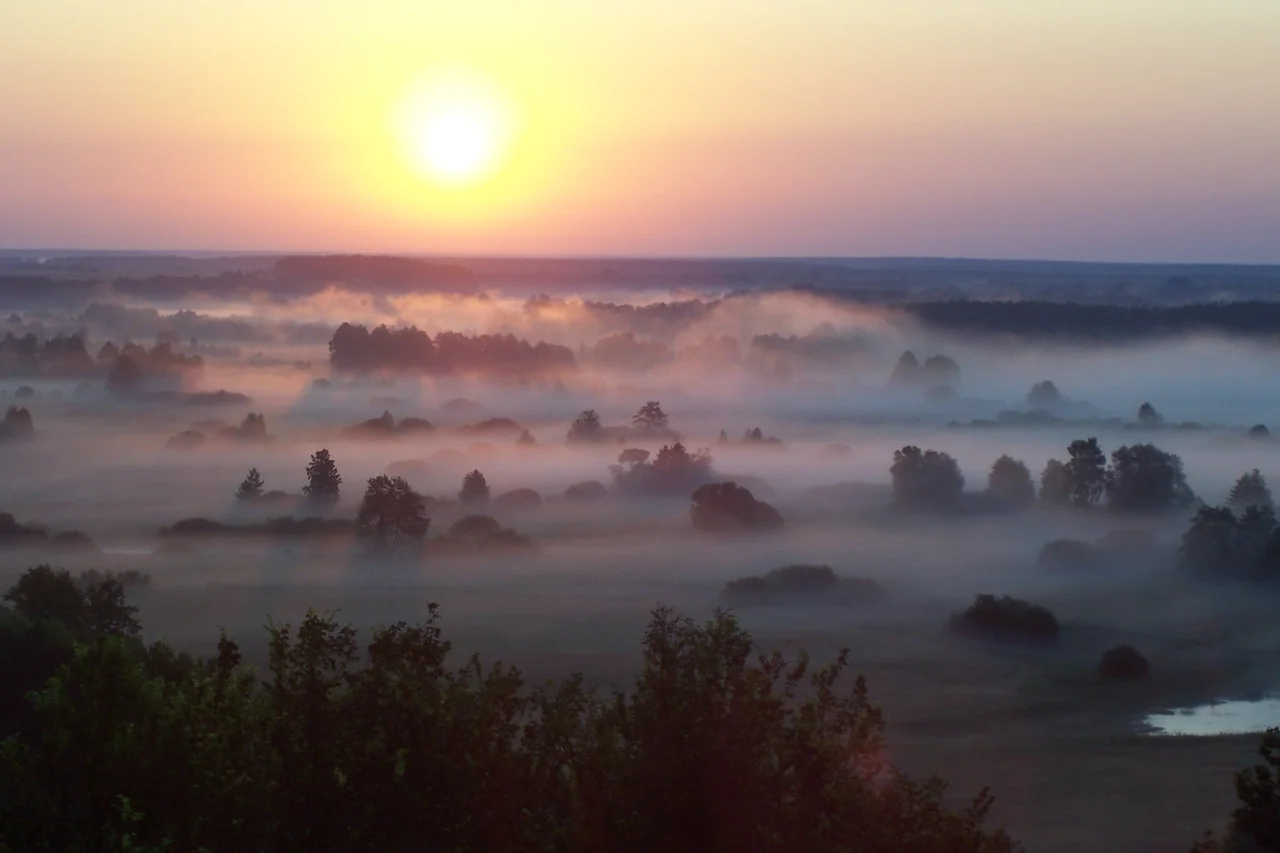
The painter Taras Shevchenko came to this quiet town on the River Snov in 1846 and set up his easel among the old Cossack houses. What drew Ukraine's greatest poet here was the same thing that draws visitors still - a gazebo on a bluff, an ancient stone house, a river winding through wooded slopes, and the layered memory of a place that has been a fortress, a Cossack seat, and a martyr to famine. This is Sedniv, and its history reaches back long before the poet, to a walled city the medieval chroniclers called Snovsk.
The Fortress on the Snov
Sedniv stands on the site of Snovsk, a fortress city of Kievan Rus' that guarded the river whose name it bore. In 1068, according to the chronicles, Prince Sviatoslav rode out from near here with three thousand men and defeated a Cuman army of twelve thousand - a lopsided victory long remembered in the region. For centuries Snovsk was a stronghold of Rus' and then part of the Chernihiv Principality, until the Mongol invasion destroyed it in 1239, as it destroyed so much of this land. When and why the name changed from Snovsk to Sedniv nobody knows for certain. One folk legend claims the Crimean Tatars, unable to take the fortress, called it something meaning evil and brave, and the name stuck.
The Lyzohubs' Town
In the age of the Cossacks, Sedniv found its most famous family. Between 1648 and 1781 it was a sotnia town of the Chernihiv Regiment, a district seat in the Cossack Hetmanate, and at the end of the 17th century it became the estate of the Lyzohub family - Cossack officers whose name runs through Chernihiv's whole story. Their 17th-century stone house, the Kamianytsia, still stands, along with a family crypt church of the Resurrection built in 1690. By the 19th century the town had grown prosperous on leather: divided into the districts of Mlyny and Kozhumiaky, it counted ten tanneries, eleven mills, and works turning out lard and candles. It was the kind of thriving country town where a wandering poet might happily linger.
Famine, and the Weight of the Twentieth Century
The 20th century fell hard on Sedniv. After a turbulent passage through the Ukrainian People's Republic and the Ukrainian-Soviet War - twenty-five soldiers of the young republic died defending it in January 1919 - the town came under Soviet rule. Then came the Holodomor, the man-made famine of 1932 and 1933. Because Sedniv's people resisted forced collectivization, the authorities placed the town on the punitive black boards, cutting it off from supplies. At least a hundred and forty-five people perished, and the town itself was stripped of its township status, only restored decades later. Sedniv lost that status once more in 2024, becoming officially a rural settlement. Yet it remains an honoured historic place of Ukraine - the poet's town, the Lyzohubs' town, still keeping watch over the Snov.
From the Air
Sedniv lies at 51.6424 N, 31.5624 E on the River Snov, about 25 km northeast of Chernihiv. From 2,000 to 3,500 feet, look for the river's wooded valley and the observation bluff on its bank, with the green domes of the Trinity Church marking the settlement. Nearest airport is Chernihiv Shestovytsia (UKRR) to the southwest; Kyiv Boryspil (UKBB) is roughly 150 km south.
Nearby Stories
- Principality of Chernigov 10 km away
- Slavutych 15 km away
- Kruty Heroes Memorial 30 km away
- Oster 42 km away
- Nizhyn 43 km away
- Principality of Novgorod-Seversk 89 km away
- Novhorod-Siverskyi 125 km away
- Battle of Lesnaya 188 km away