.jpg)
Sevenoaks School
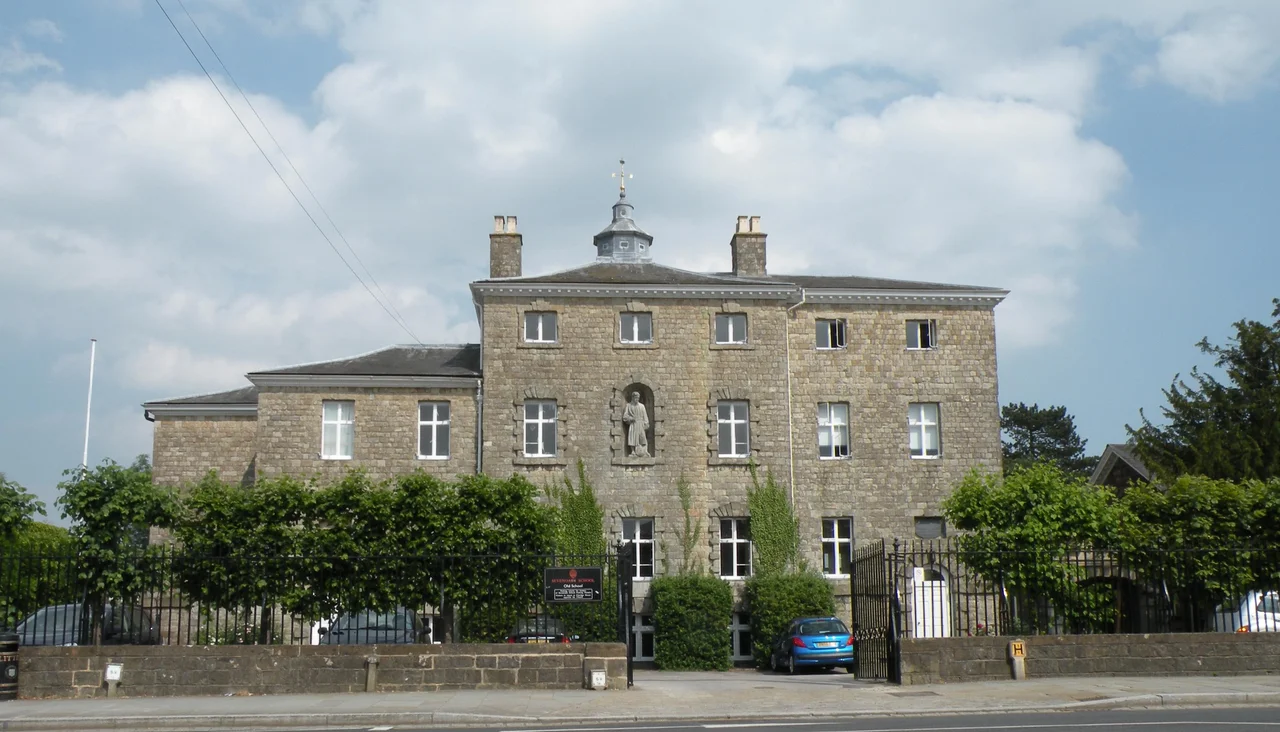
A foundling abandoned in the streets of Sevenoaks grew up to become Mayor of London - and then, in his will of 1432, he gave the town the gift that had given him everything: an education. William Sevenoke specified that the school he was founding be free of charge and free of church control, both radical ideas in fifteenth-century England. Nearly six centuries later, Sevenoaks School still stands at the south end of the High Street, the second-oldest non-denominational school in the United Kingdom and one of the most academically distinguished. The boy who arrived in the world without parents created an institution that has educated Daniel Day-Lewis, mathematician Simon Donaldson, and the children of European royalty.
A Foundling's Bequest
The exact circumstances of William Sevenoke's birth are unknown - that is the nature of foundlings - but a child abandoned in the medieval town was taken in by its residents, raised among them, and went out into the world bearing their name. He prospered in London, becoming a successful merchant, then alderman, sheriff, and eventually Lord Mayor in 1418. As a friend of Henry V, he moved in the highest circles of English power. When he came to write his will, he chose to thank the town that had given him a life. The school he founded would educate local boys without fees and without religious restrictions, an unusual freedom in an age when education almost always carried church oversight. He provided almshouses too, for poor men and women, completing a circle of care that mirrored the kindness he had once received.
Letters Patent and a Royal Name
In 1560, Elizabeth I issued letters patent incorporating the school and lending it her name - it became known for centuries as Queen Elizabeth's Grammar School. The petition that secured this honour came from Ralph Bosville, Clerk of the Court of Wards and owner of the nearby Manor of Bradbourne, who has been called the school's second founder. He chose the motto Servire Deo Regnari Est, to serve God is to reign, and embedded a curious condition in the letters patent: he and his heirs would govern the school for as long as they lived in Kent. The building was rebuilt in 1631 and then again in 1724 to designs by Lord Burlington himself, friend to the headmaster Elijah Fenton, the celebrated poet and translator. The school had attracted serious architectural talent and royal favour, yet remained, for centuries, small.
From Four Boys to Two Thousand
Decline came in waves. Between 1716 and 1748, under the Reverend Simpson, numbers collapsed from a great many to just four. The Revd Simpson resigned. Recovery was slow. By the 1860s there were perhaps sixty pupils, hardly more than there had been a century earlier. The change came in 1884 when Daniel Birkett took the headmastership with a vision of a First Grade Classical School. He cut free places for townsfolk, expanded boarding, and rebuilt the school's ambitions. George Heslop continued the work. Then came James Higgs-Walker in 1924, who introduced day houses, expanded sports, and partnered with the school's benefactor Charles Plumptre Johnson to add Thornhill, Johnson's Library, and the Park Grange estate. The school had finally become what its founder might have wanted: large enough to matter, ambitious enough to lead.
The IB Revolution
In 2006, Sevenoaks did something no other major UK school had done: it abandoned A-levels entirely and switched to the International Baccalaureate. Kim Taylor, who served as headmaster from 1956 to 1968, had laid the groundwork decades earlier with his enthusiasm for innovative teaching - the New Maths, current-affairs lectures from speakers including philosopher A.J. Ayer, astronomer Patrick Moore, and boxer Henry Cooper. The IB gamble paid off. By 2025, the average IB Diploma score at Sevenoaks was 39.4 points, roughly ten above the world average, with 245 students in the cohort and eleven achieving the maximum possible 45. The school ranked among the top five IB schools in the United Kingdom and top fifteen globally. In 1976, the school had finally admitted girls, ending five centuries as a boys-only institution. The class now numbers around 1,200, split nearly evenly between boys and girls.
Old Sennockians
The school has its alumni, called Old Sennockians, and they trail an impressive variety. Daniel Day-Lewis trained as a cabinetmaker before he became one of cinema's most rigorous method actors. Simon Donaldson reshaped four-dimensional topology and won the Fields Medal. Jonathan Evans rose to lead MI5. Brett Goldstein wrote and starred in Ted Lasso. Paul Greengrass directed the Bourne films. Sarah Harrison worked at WikiLeaks. The school is not without controversy. It was the orchestrator of a fee-fixing cartel between 2001 and 2004 that involved fifty independent schools and drew a guilty verdict from the Office of Fair Trading. In 2020, The Guardian reported that the school had codified the inflation of predicted grades in its staff handbook. The Department for Education had to remind it that schools should not be inflating predicted grades. Founded by a man who gave to the town that took him in, the institution he created has, six centuries on, become one of the most expensive schools in the country, charging over £53,500 a year for boarding.
From the Air
Located at 51.27 degrees N, 0.20 degrees E, at the south end of Sevenoaks High Street in Kent. The school occupies a campus near Knole Park, twenty-one miles southeast of Charing Cross. Nearest airports: London Biggin Hill (EGKB) twelve miles north, London Gatwick (EGKK) twenty-two miles southwest. Best viewed from cruising altitude on clear days, with Knole House visible in the same field of view to the southeast.
Nearby Stories
- Southall rail crash 1.6 km away
- Southend Pier 2.3 km away
- The Mermaid Inn, Rye 3.6 km away
- RAF Hornchurch 4.3 km away
- Kent 5.9 km away
- Surrey 6.9 km away
- Hellingly Hospital Railway 12 km away
- Amberley Museum & Heritage Centre 16 km away