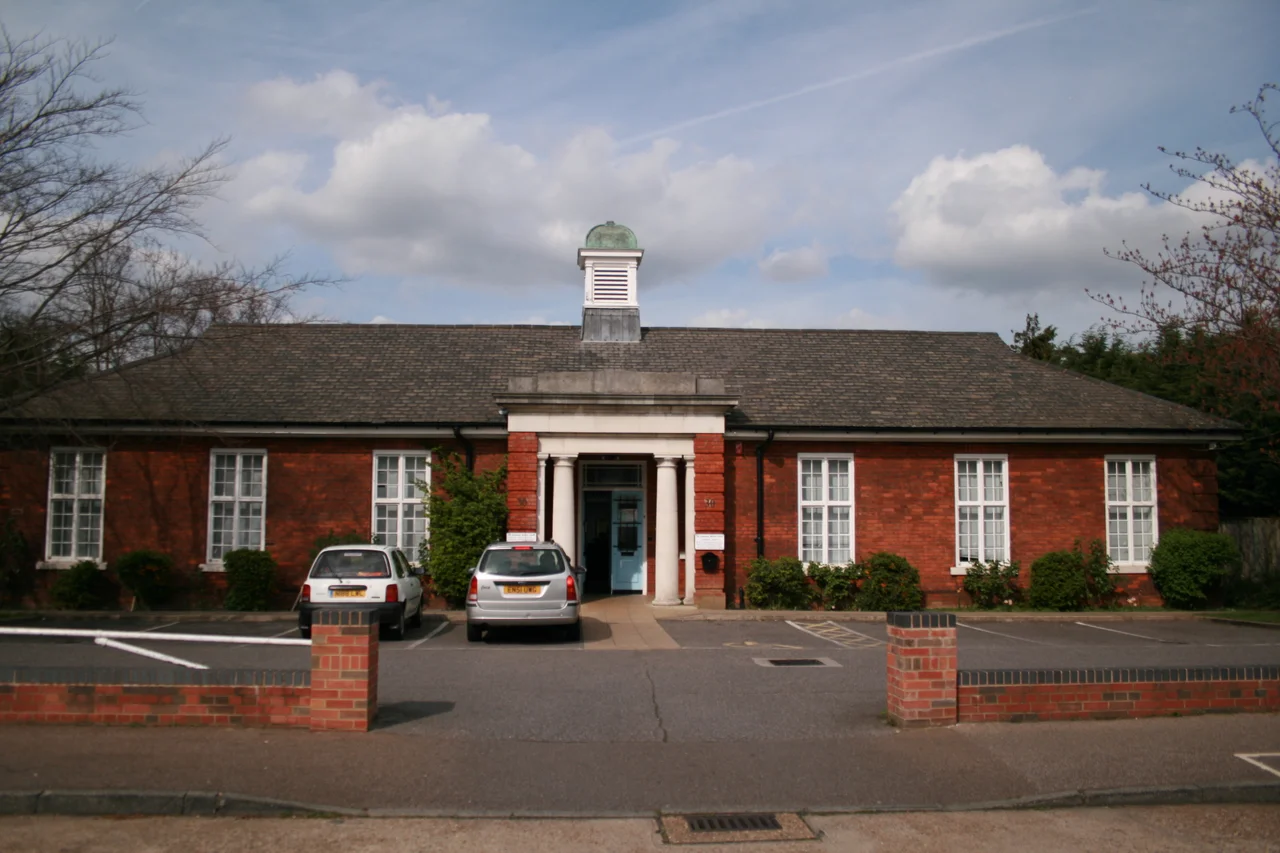
.JPG)
RAF Hornchurch
On the night of 2 September 1916, a 21-year-old pilot named William Leefe Robinson took off from a 90-acre farm field in Essex with a mixture of incendiary ammunition that was technically illegal under the Hague Convention. He found a German airship - the Schütte-Lanz SL11, one of sixteen raiders over London that night - and set it on fire from below. The wreckage came down at Cuffley, visible from much of north London, and the next morning Robinson was a national hero. He won the Victoria Cross for it. The airfield he flew from was called Sutton's Farm. Twelve years later, after the land was reclaimed and the place rebuilt, it would be renamed RAF Hornchurch and become one of the most consequential fighter stations in the defence of Britain.
Zeppelins Over London
The First World War brought a new kind of fear to British cities: the airship, drifting in from the North Sea at altitudes that early fighters struggled to reach, dropping bombs on a population that had never been bombed from the sky before. In 1915 the London Air Defence Area was established, and Sutton's Farm was selected as one of the ring of airfields that would defend the capital. The field went operational on 3 October 1915 with two BE2c aircraft. The aircraft evolved - BE12, Sopwith Pup, Bristol Fighter, SE5a, Sopwith Camel - and so did the threat, as the Germans shifted from airships to heavy bombers. The pilots commemorated by street names in South Hornchurch today include Frederick Sowrey and Wulstan Tempest, both DSO winners for destroying Zeppelins. Tempest's victory was particularly extraordinary: he engaged and destroyed an enemy airship while his fuel pump was broken, pumping fuel by hand with one arm while flying with the other, then found his way home through thick fog. He was 25 years old.
From Farm Back to Field
Shortly after the war ended, the airfield was decommissioned, the buildings demolished, and farming resumed on the same fields where Zeppelin hunters had taken off. It was a strange peacetime reversal. But the Royal Air Force expanded again in the 1920s, the old First World War airfields were inspected for their suitability, and Sutton's Farm came back. After four years of construction the new airfield opened in April 1928 - larger than the original, with more permanent buildings - and was renamed RAF Hornchurch two months later. The first commander was Squadron Leader Keith Park, then in his mid-thirties, who would later command 11 Group at the height of the Battle of Britain. The bombers and biplane fighters came and went: Bristol Bulldogs, Gloster Gauntlets, Gloster Gladiators. In March 1939 the first Supermarine Spitfires arrived. Five months later Britain was at war.
The Battle of Barking Creek
On 6 September 1939, three days into the war, the Chain Home radar station at Canewdon misidentified friendly aircraft as German raiders. Hurricanes from North Weald were scrambled. Then the Hurricanes themselves were misidentified, and more aircraft were sent up to intercept the supposed enemy. Spitfires from 74 Squadron, led by the South African ace "Sailor" Malan, lifted off from Hornchurch and engaged what they had been told were hostile fighters. They shot down two of their own side's Hawker Hurricanes. Pilot Officer Montague Hulton-Harrop was killed - the first British pilot to die in the air war, killed by other British pilots. Pilot Officer Tommy Rose bailed out and survived. The Hornchurch pilots responsible, John Freeborn and Paddy Byrne, were arrested on landing, court-martialled in October, and acquitted. The judge said the case should never have been brought to trial. The records of the proceedings have never been made public.
The Summer of 1940
Hornchurch was a sector airfield of 11 Group during the Battle of Britain, defending London and the southeast against the Luftwaffe. The Germans understood its importance: the airfield was raided no fewer than twenty times that summer. Richard Hillary - young, vain, brave, and ultimately the author of the war's most famous fighter pilot memoir, The Last Enemy - arrived at Hornchurch on 27 August 1940 and claimed five kills in a week. On 3 September he was shot down, badly burned, and pulled from the Channel. He never flew from Hornchurch again. The school later built nearby was named the R. J. Mitchell School, after the engineer who designed the Spitfire. Another local school was renamed Sanders Draper School in 1973, in memory of an American pilot, Flying Officer Raimund "Smudge" Sanders Draper, who had stayed at the controls of a failing aircraft on takeoff to keep it from crashing into the school building - which was full of children at the time. He died in the crash. The school still bears his name.
After the Spitfires
Following the Battle of Britain, Hornchurch shifted to offensive operations - cross-channel sweeps, fighter sweeps over France, the disastrous Dieppe Raid of 19 August 1942 in which three of Hornchurch's squadrons took part. As the war moved towards the continent, the centre of gravity moved with it. By late 1944 barrage balloons had been deployed nearby to counter V-1 flying bombs, which made the airfield unsafe for flying operations. Hornchurch was reduced to a marshalling base, then closed for good in 1962, by which point fighter aircraft had become jets and runways needed to be far longer than the field could provide. Today, the site is mostly housing estates and open ground. The RAF Hornchurch Heritage Centre opened in June 2021 in Suttons House on Suttons Lane - the same grounds that had housed the Air Ministry hospital during the war. The Good Intent pub, where the aircrews drank, is still on Southend Road. The concrete planetarium-like dome next door, once used for training airgunners, is gone. The names on the street signs - Sowrey, Tempest, Slessor - belong to pilots who flew from a field that no longer exists, defending a country that no longer remembers their faces.
From the Air
RAF Hornchurch was located at 51.54°N, 0.20°E in the London Borough of Havering, southeast of Romford and 14 miles east-northeast of Charing Cross. The airfield site is now mostly housing and the Hornchurch Country Park - the original outline of the runways can still be traced from the air in the grid of streets and parkland. London City Airport (EGLC) is 6 miles to the southwest; Stapleford Aerodrome (EGSG) is 6 miles to the north. Best viewed from 2,000-4,000 feet to read the airfield's footprint in the modern landscape.
Nearby Stories
- Waytemore Castle 2 km away
- Prittlewell Royal Anglo-Saxon Burial 4.2 km away
- Sevenoaks 5.6 km away
- Central line (London Underground) 6.4 km away
- River Lea 9.7 km away
- Surrey 11 km away
- Mercury Theatre, Colchester 14 km away
- Faversham Munitions Explosion Memorial 14 km away