
Shaftesbury Abbey
When Thomas Cromwell's commissioners drew up the lists of monasteries to be dissolved in 1539, Shaftesbury Abbey ranked second in England by wealth. Only Syon Abbey in west London was richer. The joke at the time - attributed to no one in particular but recorded by William of Malmesbury and repeated for centuries - was that if the abbess of Shaftesbury could marry the abbot of Glastonbury, their son would be richer than the King of England. It was the kind of joke that Henry VIII did not find funny. On 23 March 1539 the last abbess, Elizabeth Zouche, signed the deed of surrender. The buildings were stripped, the lead pulled from the roofs, and within a generation the chief glory of south Wessex - in Thomas Hardy's phrase - had been swept away.
Alfred's Daughter
King Alfred the Great founded the convent at Shaftesbury around 888 and installed his own daughter Aethelgifu as the first abbess. This was not an unusual arrangement - royal daughters were regularly placed in religious life, and royal foundations gained both prestige and political insurance from having their princesses run them - but Shaftesbury was a particularly important establishment from the start. Alfred's grandson Edmund I married a woman named Aelfgifu, who chose to be buried at Shaftesbury when she died and was almost immediately venerated as a saint. The abbey came to regard her, rather than Alfred, as its true founder. The original community was Benedictine, female, and aristocratic - the kind of place where the daughters of West Saxon nobility went to pray, study, manage estates, and occasionally write.
The Murdered King
The event that made Shaftesbury famous was the arrival of a body. On 18 March 978, the young king Edward, son of Edgar the Peaceable, was murdered at Corfe Castle - probably on the orders of his stepmother Aelfthryth, who wanted her own son Aethelred on the throne. Edward was buried hastily at Wareham. Three years later, on 13 February 981, St Dunstan and Aelfhere, Ealdorman of Mercia, oversaw the translation of his bones to Shaftesbury Abbey in a great procession that took seven days. The account of the journey records a miracle: when two crippled men were brought to the bier and the carriers lowered the body to their level, the cripples were restored to full health. Edward was buried with royal honours on the north side of the altar. Reports of further miracles - healings of lepers and the blind - turned the abbey into one of medieval England's major pilgrimage sites. The young king became Saint Edward the Martyr.
A Self-Rising Tomb
In 1001 it was recorded that the tomb in which Edward lay had begun, regularly, to rise out of the ground. King Aethelred - the same brother whose accession had required Edward's death - instructed the bishops to raise the relics to a more fitting place. On 20 June 1001 the bones were placed in a casket alongside other relics in the holy place of the saints. The abbey was rededicated to the Mother of God and St Edward. Anselm of Canterbury, soon to become archbishop, wrote to Abbess Eulalia in 1093 asking for the community's prayers; ten years later he wrote again thanking them for praying for him during his exile and asking for continued intercession. The medieval historian Katie Ann-Marie Bugyis has noted that the correspondence demonstrates Anselm's 'confidence in the promptness and solicitude' of the Shaftesbury nuns' prayers - he wrote to them the way one writes to a trusted firm of lawyers.
The Dissolution
Cromwell's men came in 1539. The abbey was demolished and its lands sold off; the town of Shaftesbury - which had grown up around the institution as its pilgrim and supply hub - went into temporary economic decline. Sir Thomas Arundell bought the abbey and much of the town in 1540, but he was later exiled for treason and the lands were forfeit to the crown again. They passed through the Earls of Pembroke, then to Anthony Ashley Cooper, 7th Earl of Shaftesbury, and finally to the Grosvenor family. The relics of St Edward the Martyr disappeared at the dissolution and were assumed lost. In 1931 archaeologists excavating the nave discovered bones that were tentatively identified as Edward's - the identification has been disputed for decades, but the bones are now interred at the Russian Orthodox Church of St Edward the Martyr in Brookwood, Surrey, where they remain a pilgrim destination for Orthodox Christians.
What Remains
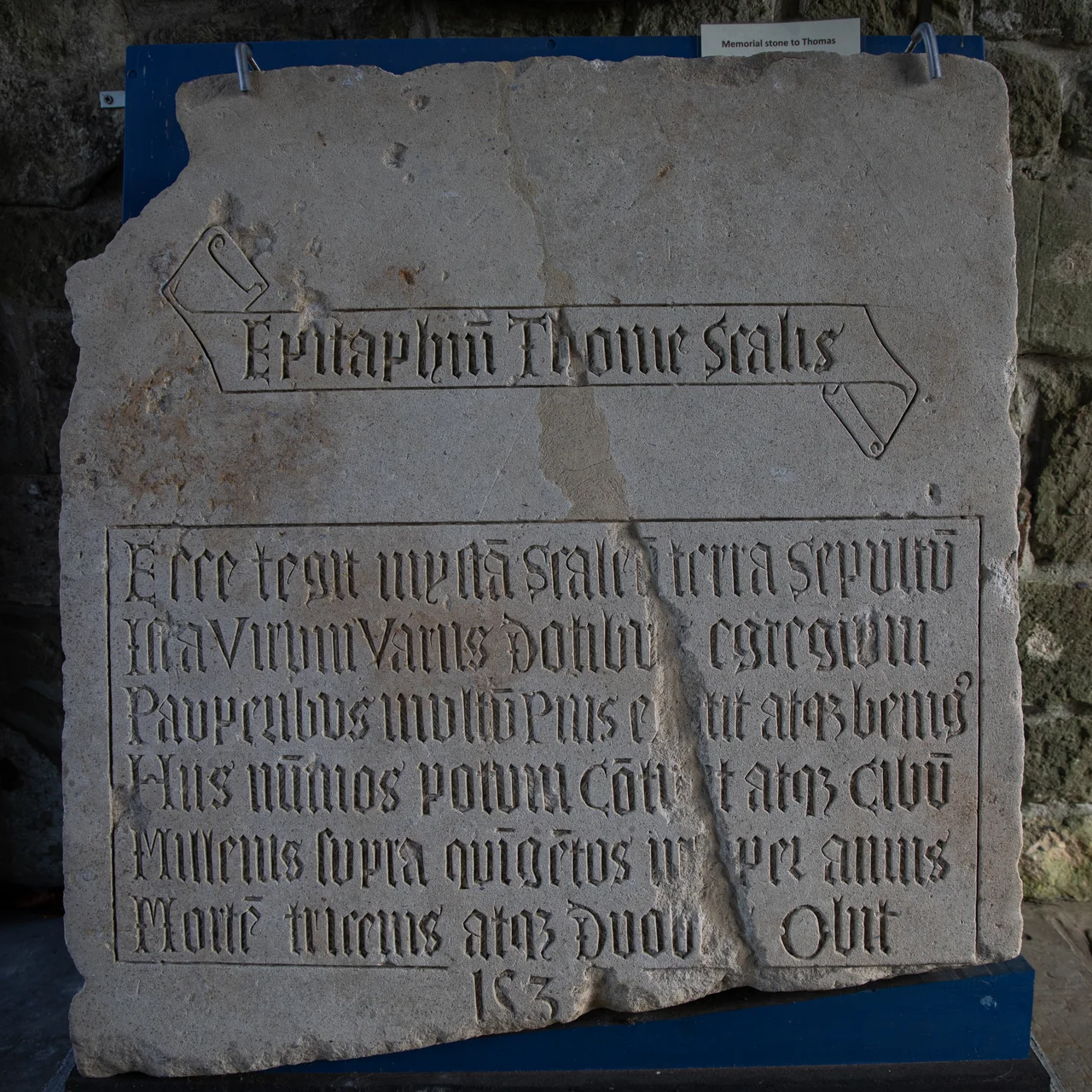
Walk up Gold Hill in Shaftesbury - the steep cobbled street that became famous for a 1973 Hovis bread television advertisement - and you reach the abbey site at the top of the hill. The buildings are gone. What survives is the footprint: foundations, low walls, fragments of the nave, all preserved in a walled garden with a medieval-style herb plot and an orchard. The Shaftesbury Abbey Museum on the site displays the stonework that excavators have recovered: Anglo-Saxon carvings, medieval floor tiles, a coffin lid with a defaced effigy of a priest, a stone head with long flowing hair that may have been part of a royal effigy. Thomas Hardy walked through these ruins and wrote of being thrown 'into a pensive melancholy which the stimulating atmosphere and limitless landscape around him can scarcely dispel.' Hilary Mantel set a scene of The Mirror and the Light here - Cromwell meeting the abbess Elizabeth Zouche, weighing the dissolution that was already underway. Lauren Groff's novel Matrix imagines Abbess Mary of Shaftesbury as the poet Marie de France. The abbey is gone. The conversations about what it meant continue.
From the Air
Shaftesbury Abbey ruins sit on a hilltop at the western edge of the town of Shaftesbury, Dorset, at 51.005 degrees north, 2.199 degrees west. The town occupies a ridge with panoramic views west across the Blackmore Vale. From the air, look for the abbey site near the famous Gold Hill - a steep cobbled street descending from the abbey grounds to the south, much-photographed and instantly recognisable. Nearest airports: Bournemouth (EGHH), 25 nm southeast; Bristol (EGGD), 35 nm northwest. Best viewed from 3,000-5,000 feet AGL on a clear day.
Nearby Stories
- Muchelney Abbey 4.9 km away
- American Museum and Gardens 5.7 km away
- Highcliffe Castle 7.6 km away
- Marlborough Castle 10 km away
- Woodspring Priory 12 km away
- Lyme Regis 12 km away
- The Tank Museum 12 km away
- Mottisfont Abbey 16 km away