
Shaw Air Force Base
Lieutenant Ervin David Shaw never came home. On July 9, 1918, three German aircraft caught his Bristol F.2B fighter returning from a reconnaissance run over the Western Front, and the South Carolinian who had volunteered with the Royal Canadian Flying Corps and the Royal Air Force's No. 48 Squadron - one of the first Americans to fly combat missions of the First World War - died in the air. He was a Sumter County native. Twenty-three years later, when the U.S. Army Air Corps opened a basic flying school on a stretch of South Carolina farmland west-northwest of Sumter, they named it Shaw Field in his honor. The base he never saw has now operated, in one configuration or another, for over eighty years. It is the home of the 20th Fighter Wing and a headquarters node for the modern American way of war.
BT-13s and the First Class
Shaw Field activated on August 30, 1941, with three 4,500-foot runways and several auxiliary fields scattered across the Sumter and Wedgefield countryside - Burnt Gin Airfield, Rembert, Monaghan, the Sumter Airfield. Cadets started training on October 22, 1941, flying the orange-and-blue Vultee BT-13 Valiant, the famous 'Vibrator' on which a generation of Army pilots learned to handle horsepower. The first class of cadets entered training on December 15, 1941 - eight days after Pearl Harbor - and finished in February 1942. The concrete parking ramp was completed that May. Shaw became a permanent Army Air Forces installation in April 1945. With the Air Force becoming an independent service in September 1947, Shaw Field was renamed Shaw Air Force Base on January 13, 1948.
Reconnaissance Capital
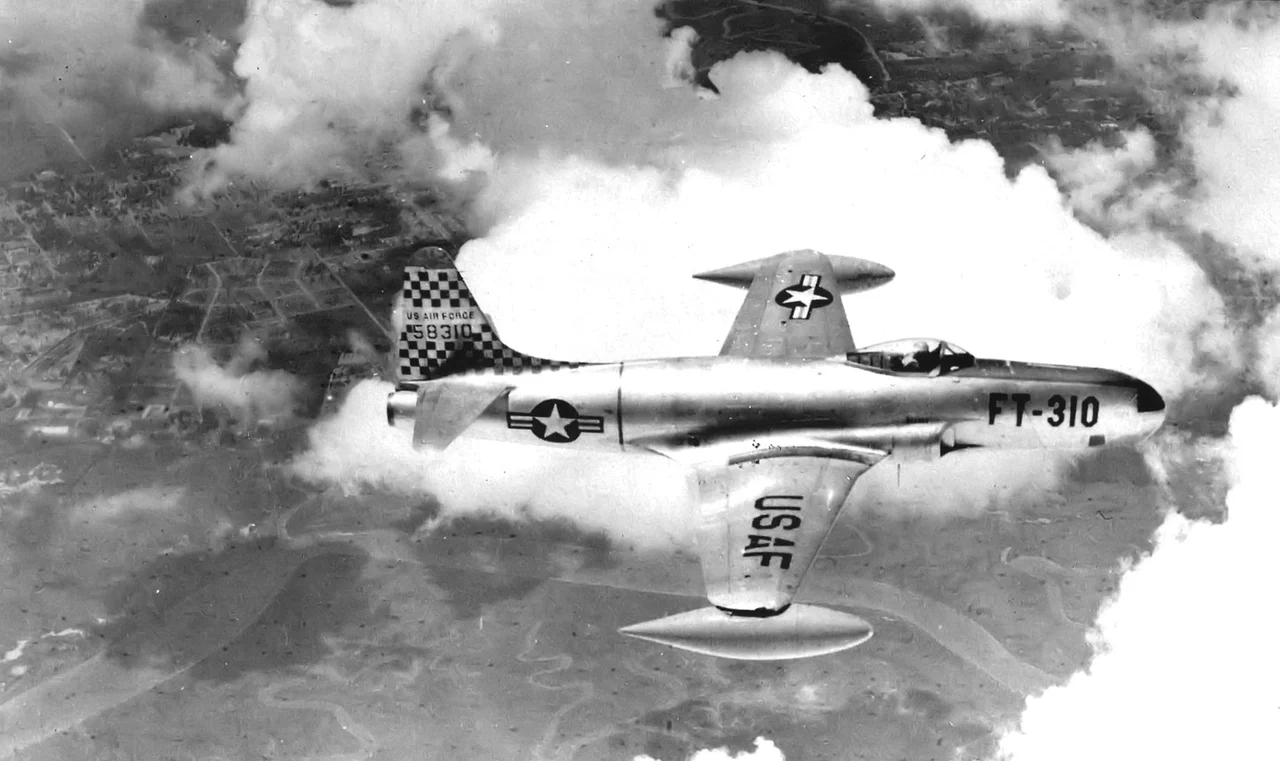
For four decades after the Second World War, Shaw was the Air Force's center for tactical reconnaissance training. Nearly every reconnaissance aircrew in the service was trained or stationed here. The aircraft made a parade through the decades: the Martin RB-57A Canberra, the Douglas RB-66 Destroyer, the McDonnell RF-101 Voodoo, the McDonnell Douglas RF-4C Phantom II. The 363d Tactical Reconnaissance Wing was the long-running host. The 432d Tactical Reconnaissance Group reactivated here in 1953 and stood up as a wing in 1958. The 'SW' tail code became Shaw's calling card. In March 1982 the 363d received its first F-16 Fighting Falcon. The transition from reconnaissance to multirole fighter operations was underway.
Desert Shield, Desert Storm
On August 9, 1990, just a week after Iraq invaded Kuwait, the 17th and 33d Tactical Fighter Squadrons of the 363d became the first F-16 squadrons deployed to the United Arab Emirates for Operation Desert Shield. Flying from Al Dhafra Air Base alongside the 10th from Hahn, they fought through the air campaign of Desert Storm from January 17 to February 28, 1991. After the shooting war, the 19th and 33d kept rotating into the Persian Gulf for Operation Southern Watch - the patrols enforcing the no-fly zone south of the 32nd parallel. One of the 33d's pilots made history during Southern Watch by downing an Iraqi aircraft with an AIM-120 AMRAAM missile - the first combat firing of that missile and the first U.S. F-16 air-to-air kill. The 20th Fighter Wing took host duties from the 363d in subsequent reorganizations.
Patton Hall
On June 1, 2011, the Army opened a $100 million, 320,000-square-foot command facility on Shaw and called it Patton Hall. It became the new home of U.S. Army Central - Third Army - which moved roughly 3,000 service members, civilians, and families to the Sumter area as part of the transfer. Patton Hall has 42 conference rooms, a 200-seat auditorium, and capacity for 1,500 personnel. It is the headquarters from which Army components in the Middle East are commanded. Today Shaw houses the 20th Fighter Wing with three squadrons of F-16C/D Fighting Falcons (the 55th, 77th, and 79th), the 9th Air Force, the 15th Air Force, the 25th Attack Group flying MQ-9 Reapers as a geographically separate unit, U.S. Air Forces Central Command, U.S. Army Central, the 363d Intelligence Surveillance and Reconnaissance Wing, and elements of the 557th Weather Wing. The 20th Mission Support Group looks after 5,400 military and civilian employees, 11,000 family members, and a 12,000-acre electronic combat range about ten miles southwest of the base.
From the Air
Shaw Air Force Base (KSSC) sits at 33.97N, 80.47W, about 8 miles west-northwest of downtown Sumter. The base hosts F-16C/D Fighting Falcons of the 20th Fighter Wing flying from a single long runway oriented roughly 04/22. Nearest airports: Sumter Airport (KSMS) 9 nm east, Columbia Metropolitan (KCAE) 28 nm west, Florence Regional (KFLO) 50 nm northeast. Expect significant restricted areas including the Poinsett Electronic Combat Range 10 miles southwest of the base. Recommended viewing from cruise altitude 6,000 ft AGL or above, well clear of base traffic patterns and the restricted airspace. Mind active warning areas.
Nearby Stories
- Florence County, South Carolina 8.8 km away
- Allen University Historic District 15 km away
- Hartsville, South Carolina 25 km away
- Fairfield County, South Carolina 28 km away
- Marlboro County, South Carolina 38 km away
- UFO Welcome Center 55 km away
- Francis Marion National Forest 66 km away
- Graniteville Train Crash: The Night Invisible Death Came to a Mill Town 90 km away