.jpg)
Shipbourne
Walter Gropius designed a house in Shipbourne in the 1930s and the villagers called it the Chicken House. The Bauhaus founder, the man who had reshaped twentieth-century architecture in Germany before fleeing the Nazis, had built a timber and weather-board home on the edge of the village green for Jack and Frankie Donaldson. It was his last work in the United Kingdom. To Kentish eyes accustomed to oast houses and timber-framed cottages, the modernist lines and unpainted boards looked agricultural in the wrong way - utilitarian, like a coop. The Wood House, as it was properly called, weathered the criticism along with the seasons. It is now a Grade II listed local landmark. The villagers came around.
The Ghost in the Crypt
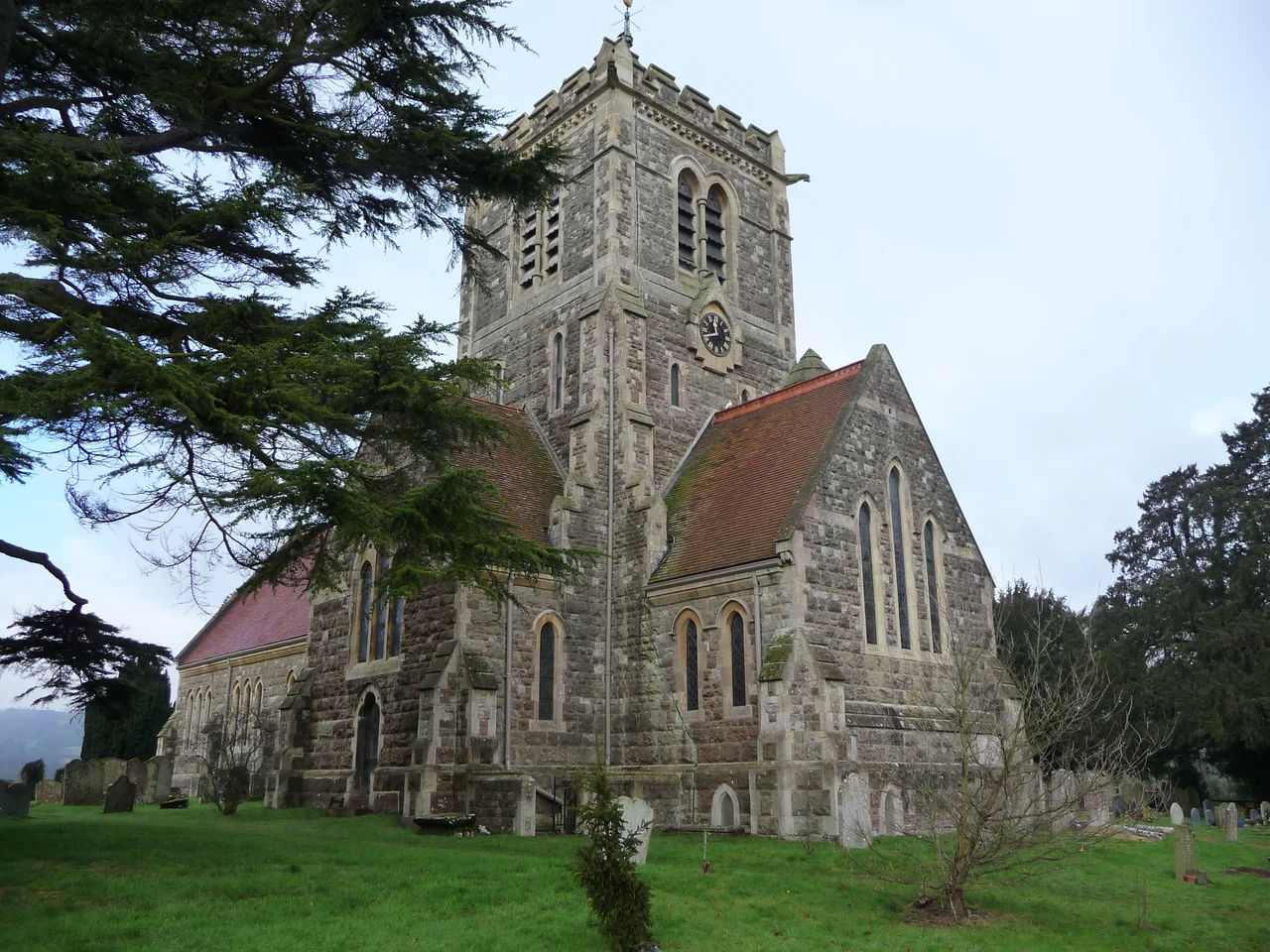
Sir Henry Vane the Younger sleeps in the crypt of St Giles' Church at Shipbourne in an anthropoid lead coffin - shaped to the human form, like the cast of a body. He was buried there in 1662 after his execution for high treason. Vane had governed Massachusetts at the age of twenty-three. He returned to England, became a leading Parliamentarian during the Civil War, and survived the Restoration only long enough for Charles II to find a charge that would stick. His father, Sir Henry Vane the Elder, had served as Secretary of State to Charles I. The family vault holds many of them. Vane's ghost, according to village tradition, still walks the lanes around Fairlawne. Whether that is shame or vigilance is unclear.
Cazalets and Queens
The Cazalet family followed the Vanes as masters of the Fairlawne Estate, and in 1880 Edward Cazalet rebuilt the village in his image: the Church of St Giles, a new pub called The New Inn (now The Chaser), and several cottages around the green. Major Peter Cazalet became one of the country's most distinguished racehorse trainers, and the horses he trained for Queen Elizabeth the Queen Mother helped define a generation of British steeplechasing. The Queen Mother visited Fairlawne often. The estate now sprawls across 1,000 acres into neighbouring Plaxtol, and was for years owned by the Saudi horse-breeder Prince Khalid Abdullah. In 2011, Shipbourne residents won a famous court case against the prince over footpath rights, a small village defeating one of the wealthiest men in horseracing.
Jane Austen's Father, the Curate
Before George Austen became Rector of Steventon in Hampshire and the father of the most influential English novelist who ever wrote about provincial life, he served as curate of St Giles' Church here until 1758. Jane Austen herself never visited - she was born seventeen years later - but her father's young manhood was shaped on this particular patch of Kentish ground. The church he served was a crumbling 1722 building, replaced by Cazalet's 1879 version. The poet Christopher Smart, who would later write Jubilate Agno in an asylum, was born at Fairlawne in 1722, where his father was steward. As a young man he wrote a 700-verse blank-verse poem about hop-growing. Smart's gift for cataloguing the world in obsessive devotional detail was already forming on this estate.
The Common, the Cricket, the War
Shipbourne Common, also called The Green, is the village's central feature: a large, open, dominant space at the heart of everything else. The cricket club was established in 1880, one of Kent's oldest, and originally played on the Common itself. Then came 1939. The Kent War Agricultural Committee ordered the Common turned over to crop production, despite warnings from villagers that nothing would grow. Nothing grew. The land was ruined for cricket. After the war, Peter Cazalet asked his gallops manager Joe Hills, who also captained Shipbourne CC, to find a new ground. He found a field behind St Giles at the bottom of Fairlawne Hill, where the club still plays. The Common recovered too, slowly, and now hosts a Thursday morning farmers' market in the church itself.
Most Expensive Village in Kent
In 2020, KentLive named Shipbourne the most expensive village in Kent. The Metropolitan Green Belt protects the parish from development. Much of it lies within the Kent Downs Area of Outstanding Natural Beauty. The central village - pub, church, school, and Common - is a Conservation Area. The result is a place that looks essentially as it did when Edward Cazalet was rebuilding it in 1880, except quieter and more expensive. Dene Park, 250 acres of mixed woodland stretching toward Tonbridge, is managed by the Forestry Commission now, but was once part of a 650-acre sporting estate where the equestrian artist F.M. Hollams grew up. The Wood House still stands beside the Common. The Chicken House, as some old residents still call it. Eight decades on, the joke has aged into affection.
From the Air
Located at 51.25 degrees N, 0.28 degrees E, between Sevenoaks and Tonbridge in the borough of Tonbridge and Malling. The village sits in a clay vale at the foot of the wooded Sevenoaks Greensand Ridge, traversed by the small streams of the River Bourne. Nearest airports: London Biggin Hill (EGKB) fourteen miles north-northwest, London Gatwick (EGKK) nineteen miles west-southwest. Best viewed at 2,000-4,000 feet on clear days, with the wooded Fairlawne Estate forming a dark, distinct mass to the east.
Nearby Stories
- Southall rail crash 1.6 km away
- Southend Pier 2.3 km away
- The Mermaid Inn, Rye 3.6 km away
- RAF Hornchurch 4.3 km away
- Kent 5.9 km away
- Surrey 6.9 km away
- Hellingly Hospital Railway 12 km away
- Amberley Museum & Heritage Centre 16 km away