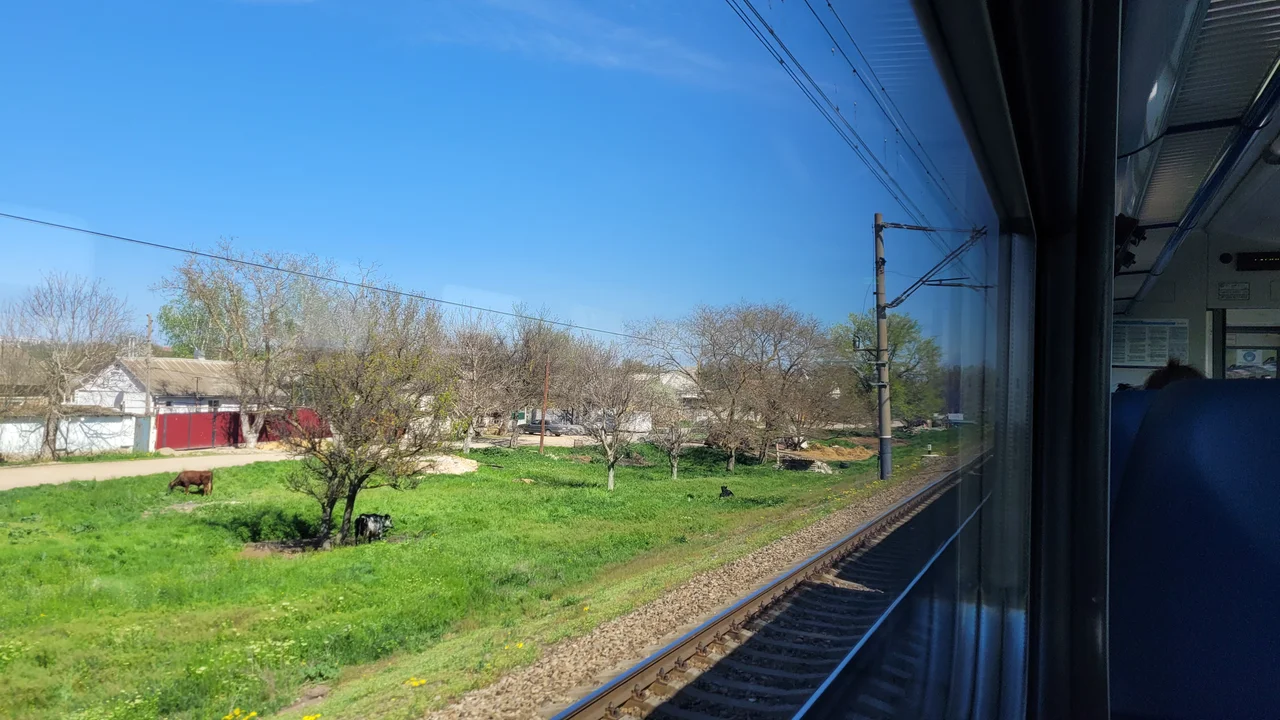

Simferopol
Everyone passes through Simferopol, and almost no one stops. Sitting in the middle of the Crimean peninsula, well away from the beaches and the mountains that draw the crowds, it is the place travelers change buses on the way to somewhere else. Yet the name itself hints that this crossroads was meant to matter. When Catherine the Great's officials christened the city in 1784, they reached for Greek and called it Simferopol, roughly "the city of common good" or "the gathering place." Two and a half centuries later, the name still fits: this is where all of Crimea's roads come together, and where its layered past sits quietly under the traffic.
The City of Common Good
Simferopol is a young city built on very old ground. Before the Russian Empire annexed the Crimean Khanate in 1784, the site belonged to a Crimean Tatar town called Aqmescit, meaning "White Mosque," clustered around a stronghold the Tatars knew as Kermenchik. Catherine's administration decreed a new capital here and gave it a classical Greek name, part of a fashion for dressing the empire's southern conquests in the borrowed prestige of antiquity. The old Tatar quarter and the new imperial grid grew side by side, and the seams still show. Walk from the Central Market, where vendors call out prices and shoppers hunt for a skidka, or discount, and the atmosphere shifts from Ottoman bazaar to Russian provincial capital within a few blocks. That doubleness is the honest character of the place.
Kings Beneath the Suburbs
Long before either the mosque or the empire, this ground held a capital of its own. On a plateau at the edge of modern Simferopol lie the ruins of Scythian Neapolis, the seat of a Scythian kingdom that flourished from roughly the third century BC into the third century AD. The Scythians were nomadic horsemen of the steppe, more often glimpsed in Greek histories than in their own words, and here they built something they meant to last: fortified walls, mausoleums, and a royal city that traded with the Greek colonies on the coast. Today the site sits almost casually among apartment blocks, its stone foundations exposed to the weather. For a city so often dismissed as a mere transit stop, it is a startling thing to stand on ground where kings were buried two thousand years ago.
The Longest Ride
Simferopol holds a title few would guess: it anchors the world's longest trolleybus route, a line that climbs 86 kilometers from the city across the mountains down to the coast. Electric buses have been threading these switchbacks for decades, humming along overhead wires at a pace that is unhurried by design. On the mountain turns the trolleys slow to a crawl, because taking a curve too fast risks pulling the poles loose from the cables above. Locals treat the route as ordinary infrastructure. For a visitor, it is a slow, panoramic descent from the dry interior toward the sea, the kind of journey that rewards the patient and frustrates the hurried, which is a fair summary of Simferopol itself.
Where the Roads Meet the Mountains
The city is also a gateway to the wild country just beyond it. Head southeast toward the Chatyr-Dag massif and you reach the Marble Cave, discovered in 1987 and opened as one of the peninsula's premier show caves, where a full tour runs about eighty minutes through halls of pale, folded stone. In the harsh summers, when the inland heat can climb brutally high, the caves offer cool refuge; in winter, when temperatures drop far below freezing, the mountains draw skiers instead. Simferopol's food carries the same crossroads flavor as its streets, from plov, the rich Turkic rice and meat dish sold cheap at the market, to charcoal-grilled shashlik and the noodle soup called lagman. It is a table set by many cultures, in a city that has always been a place people pass through and, occasionally, discover.
From the Air
Simferopol sits at 44.95 degrees north, 34.10 degrees east, on the central Crimean plain roughly halfway between the peninsula's north coast and the Black Sea shore. From altitude, look for the sprawling inland city ringed by dry steppe, with the Crimean Mountains rising sharply to the south. The main airport is Simferopol International (ICAO UKFF), just northwest of the city center.
Nearby Stories
- Juma-Jami Mosque 2.8 km away
- Kokkoz Jami Mosque 11 km away
- Taigan Safari Park 16 km away
- Kalamita Bay 19 km away
- Russian Battleship Ekaterina II 39 km away
- Battle of Eupatoria 44 km away
- Aeroflot Flight 6515 63 km away
- 1976 Anapa Mid-Air Collision 226 km away