.JPG)
Soulangh Cultural Park
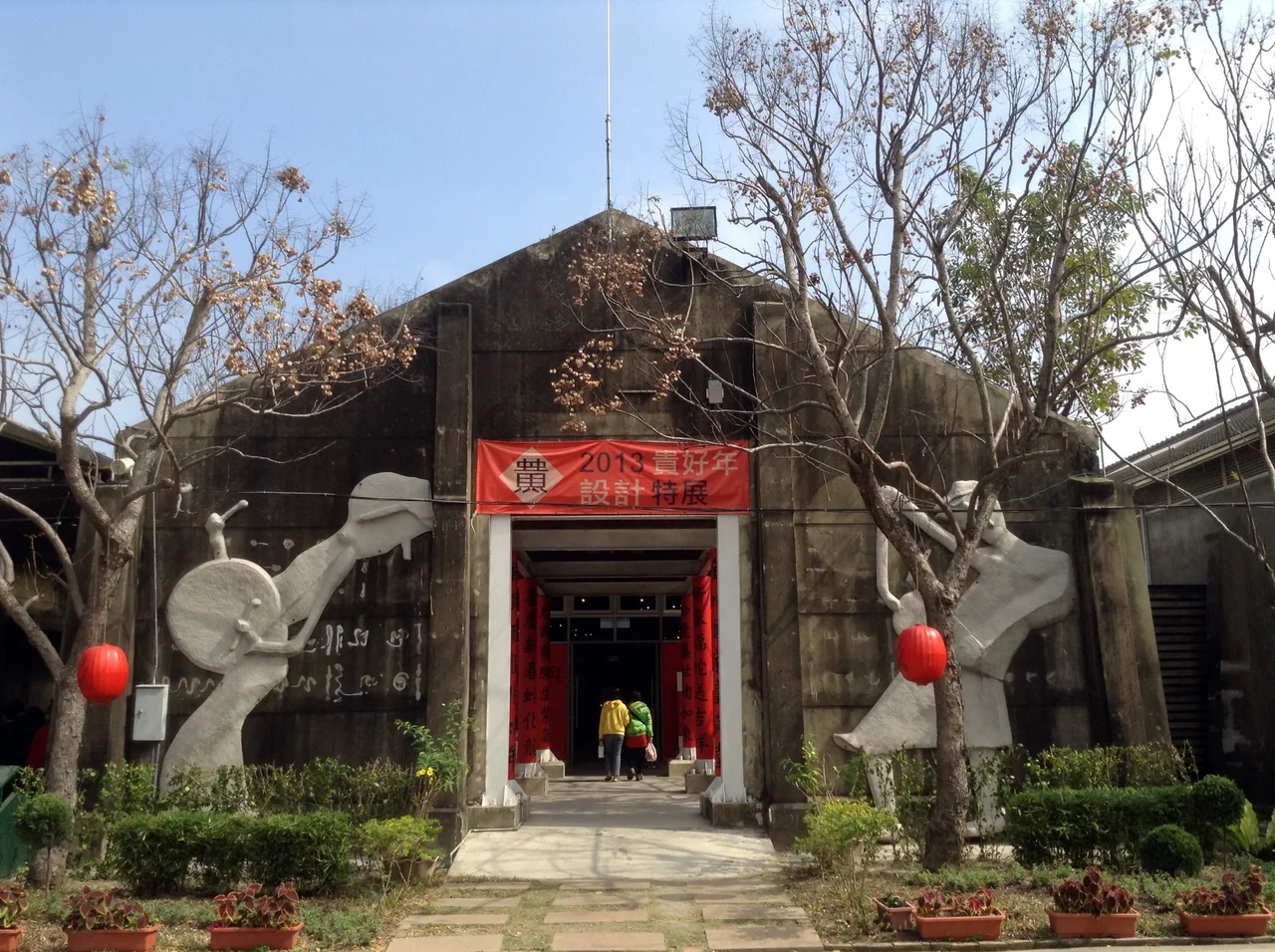
In 1906, during the early years of Japanese rule over Taiwan, a sugar factory opened in Jiali, a district north of Tainan. For nearly ninety years the Soulangh Sugar Refinery ran its operations, processing the sugarcane that grew thick across the southwestern Taiwan plain and shipping refined sugar into a colonial economy that depended on it. When the factory closed in 1995, it left behind 14 warehouses, a network of rail tracks, and several substantial industrial structures in a landscape that no longer needed them for their original purpose. What happened next is the kind of reinvention that post-industrial spaces occasionally manage when a city is paying attention: in 2005, after years of planning, Soulangh reopened as a cultural park.
Sugarcane and Empire
The Jiali Sugar Factory's construction in 1906 came just a decade after Japan took control of Taiwan from Qing China following the first Sino-Japanese War of 1895. The colonial government invested heavily in Taiwan's sugar industry, viewing the island's subtropical climate and flat coastal plains as ideal for plantation-scale cultivation. Sugar became one of Taiwan's defining industries under Japanese rule, and the landscape of southwestern Taiwan was reorganized around it: rivers were channeled, wetlands drained, and narrow-gauge rail lines built to carry cane from field to factory. The Soulangh refinery participated in this transformation. By the time it closed in 1995 — nearly a decade after sugar became economically marginal and after the island's agricultural priorities had shifted — it had operated for nearly nine decades and shaped the community of Jiali in ways that outlasted the industry itself.
What Fourteen Warehouses Became
The conversion of the sugar refinery into a cultural park took several years of planning after a preparatory office was established in 2003. When Soulangh Cultural Park opened in 2005, it offered something the surrounding Jiali District had never had: a large, multi-purpose public venue for exhibitions, performances, and community events. The 14 former warehouses became exhibition galleries, workshop spaces, and event halls — their industrial bones preserved, their interiors repurposed. The scale is generous in the way that only former industrial sites can be: high ceilings, wide spans, thick walls, and the particular acoustics of spaces designed for machinery rather than people. The park also accommodates a library and a playroom alongside its museum spaces, aiming at a breadth of use that distinguishes it from a conventional gallery.
The Siraya and Tainan Folk Art
Among the most significant aspects of Soulangh's permanent programming is its commitment to the Siraya people — the indigenous Taiwanese group whose ancestral territory encompassed the Tainan area long before Han settlement began in the 17th century. The Siraya were one of the Formosan plains peoples, and they faced centuries of displacement, cultural suppression, and assimilation as Han populations expanded. By the 20th century, Siraya identity had been substantially eroded — the language largely dormant, the traditional practices reduced to fragments. Soulangh's exhibitions on Siraya culture sit alongside displays of Tainan folk art, offering a layered account of the region's cultural inheritance: indigenous, Han settler, and Japanese colonial histories intertwined in the same landscape. The park does not resolve these layers into a simple story; it displays them.
The Artist Village
In 2013, eight years after the park's opening, Soulangh initiated its Artist Village — a residency program that invites artists to live and work on the grounds, bringing active creative practice into what could otherwise become a purely memorial space. The Soulangh Artist Village has hosted both Taiwanese and international residents, connecting the former factory site to contemporary art networks that extend well beyond Jiali District. Residency programs in post-industrial spaces have become common enough globally to constitute their own pattern, but Soulangh's version is notable for its setting: the artists work in a landscape that still shows the traces of its industrial past, against a backdrop of Siraya cultural heritage and the flat sugarcane plains of the Tainan hinterland. The combination is specific enough to produce work that could not be made anywhere else.
The Northern Tainan Plain from Above
Soulangh Cultural Park sits at approximately 23.173°N, 120.179°E in Jiali District — notably further north than most of Tainan's better-known historic sites, on the flat agricultural plain that stretches between the city and the Zengwen River. From the air, this part of Taiwan looks like a different country than the dense urban core around Tainan Station: open fields, fish ponds, and the occasional cluster of low buildings marking a district town. The former factory buildings at Soulangh are identifiable from low altitude as a compact industrial complex surrounded by greener, more open land. Kaohsiung International Airport (RCKH) is approximately 43 kilometers to the south-southwest. Tainan Airport (RCNN) is closer, roughly 17 kilometers south. Approaching from the south at low altitude, the sugarcane plain stretches to the north and west, and the contrast between Tainan's urban density and Jiali's agricultural quiet is visible in a single sweeping view.
From the Air
Located at 23.173°N, 120.179°E in Jiali District, approximately 17 km north of Tainan's urban center. Nearest major airport: Kaohsiung International (RCKH), approximately 43 km south-southwest. Tainan Airport (RCNN) is roughly 17 km south. The surrounding landscape is open agricultural plain — sugarcane fields and fish ponds — making the former factory complex clearly identifiable from low altitude. Best viewed from 2,000–3,000 feet on northbound departures from RCNN.
Nearby Stories
- Battle of Penghu 1.2 km away
- Xiaolin Village Memorial Park 7.1 km away
- Maolin National Scenic Area 12 km away
- Fenqihu 18 km away
- Republic of China Air Force Academy 23 km away
- Southern Branch of the National Palace Museum 26 km away
- Penghu Air Raids 42 km away
- Daya Bay 512 km away