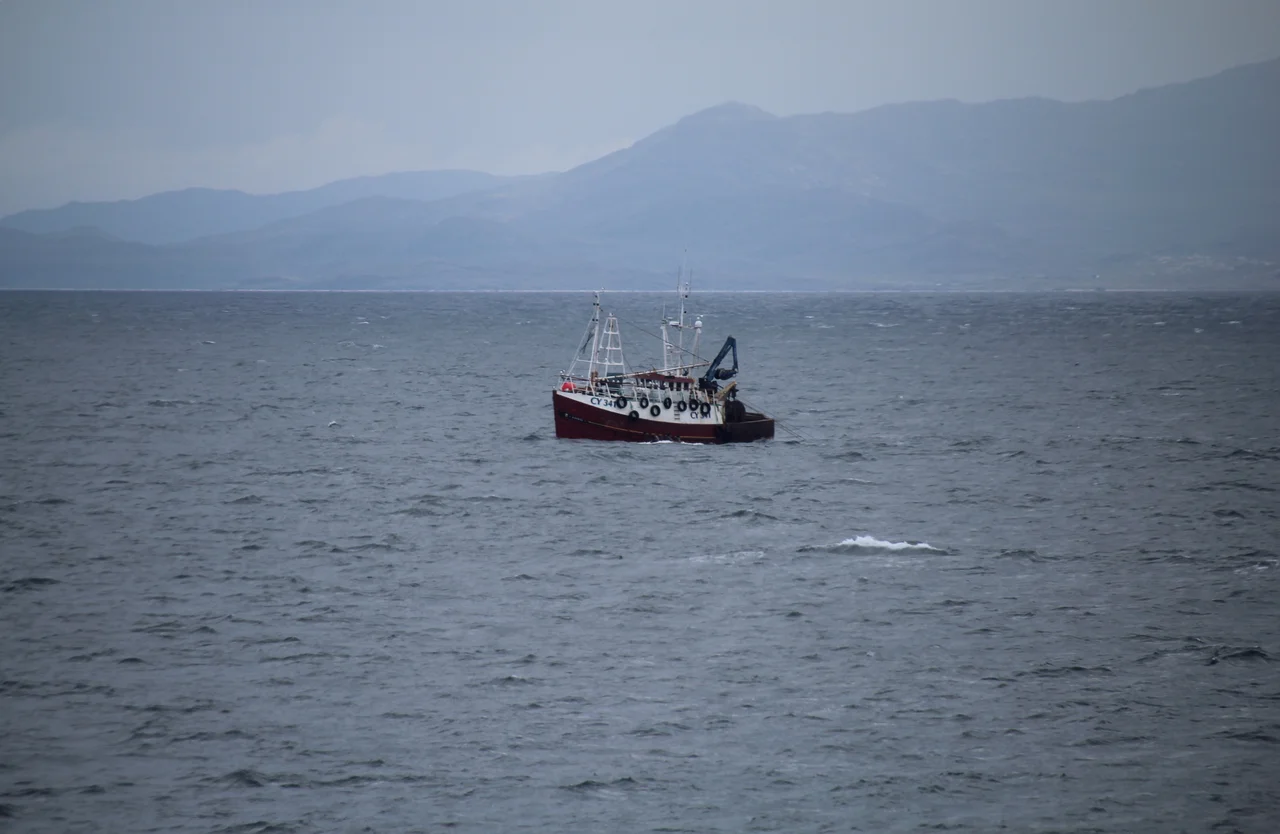

Sound of Mull
From the air, the Sound of Mull looks like a knife cut. Twenty-two miles long, three miles wide at its broadest, the channel runs northwest-to-southeast between the Inner Hebridean island of Mull and the mainland peninsulas of Morvern and Ardnamurchan. Its calm appearance is deceptive. Beneath the surface lie the wrecks of at least four ships that did not survive these waters - a Swedish cargo vessel, a Glasgow steamer, an Edwardian liner, and a Royal Navy fifth-rate from the reign of William and Mary. Divers from Bristol, Newcastle, and across northern Europe come here every summer for what is widely considered Scotland's finest wreck diving.
Three Castles Facing the Water
Standing on the shores of the Sound and looking out, you face one of the most contested stretches of medieval coastline in the western Highlands. Three castles ring the channel. Duart Castle on Mull, dating to the thirteenth century, is the seat of Clan MacLean and remains in family hands. Aros Castle, also from the thirteenth century, rises in ruins on Mull's east coast - originally a Clan MacDougall stronghold. Ardtornish Castle on Morvern was held by Somerled in the twelfth century and later became a principal seat of Clan Donald, the great Lordship of the Isles. The two whisky distilleries on the channel - Nc'nean on the Morvern shore and Ardnamurchan distillery on the peninsula to the north - are recent successors to a much older economy of cattle, fish, and kelp.
Lighthouses by the Stevenson Family
Three lighthouses mark the entrances to the Sound, and all of them carry the signature of Scotland's most famous engineering dynasty. At the western edge, Rubha nan Gall ('Stranger's Point' in Scottish Gaelic) was built in 1857 by brothers David and Thomas Stevenson - the latter the father of novelist Robert Louis Stevenson, who would chafe under the family expectation that he too become a lighthouse engineer. At the eastern end of the Sound, two more lights mark the way in. Eilean Musdile, on the small island of Lismore, was completed in 1833. Duart Point lighthouse, on the Mull side, was built in 1900 as a memorial to the Scottish novelist William Black. Together they bracket the channel - a Stevenson family quartet, save for Duart, that has guided shipping through these waters for nearly two centuries.
The Wrecks Below
The Sound of Mull is one of the best-known wreck diving sites in Britain. The Swedish cargo ship Hispania struck a rock and sank on 18 December 1954 - a date that still hangs over the local memory. The Glasgow steamer Shuna went down in May 1913 while carrying coal and iron to Gothenburg, hit on the Grey Rocks during a storm. The oldest of the wrecks is HMS Dartmouth, a fifth-rate ship-of-the-line built for the English Council of State that sank near Eilean Rubha an Ridire in 1690 during the Jacobite uprising. The wreck was rediscovered by Bristol divers in 1973, and on 11 April 1974 it became one of the very first sites designated under the new Protection of Wrecks Act. In 2013 the entire location was elevated to Historic Maritime Protected Area status - a recognition that what lies on the bottom here is national memory in iron and oak.
From the Air
Located at 56.53N, 5.90W. The Sound runs roughly northwest-to-southeast for about 22 nm between the Isle of Mull and the Morvern/Ardnamurchan peninsulas. Tobermory sits near the northern entrance; Craignure (the main Mull ferry port) is on the southern Mull shore. Nearest airport: Oban (EGEO), 12-25 nm depending on position along the sound. Glasgow (EGPF) lies roughly 80 nm south. Recommended viewing altitude 3,000-5,000 ft to take in the full length of the channel, the three castle sites along its shores, and the lighthouses at both entrances.
Nearby Stories
- Castle Tioram 1.9 km away
- Cairnburgh Castle 3.3 km away
- Lunga, Firth of Lorn 7.2 km away
- Bonawe Iron Furnace 8.8 km away
- West Highland Museum 11 km away
- Inveraray Castle 12 km away
- Bullough Mausoleum 22 km away
- Dubh Artach 23 km away