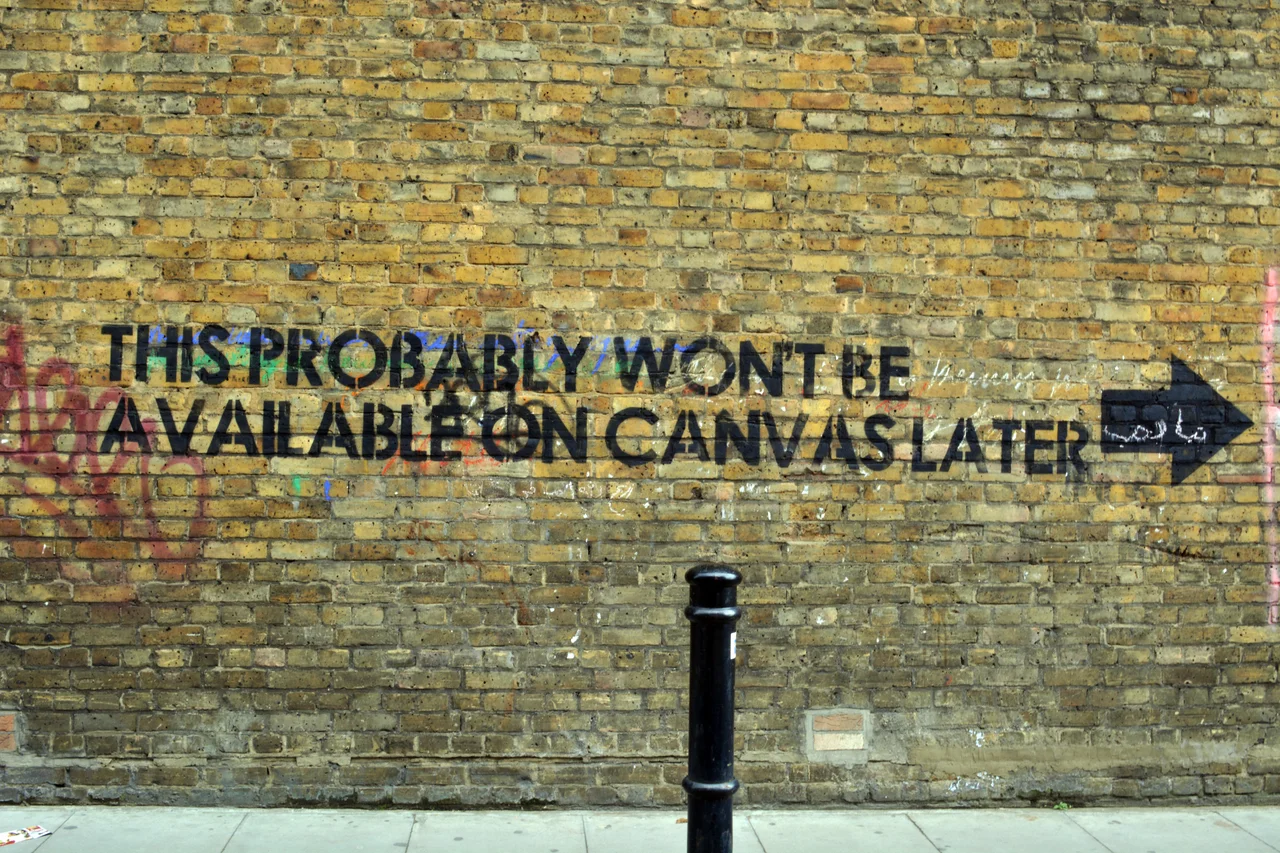

Spitalfields
In 1197, a priory hospital was founded just outside the City of London's eastern wall — a place for the sick poor, run by a religious order, on land that was still partly farmland. Eight hundred years later, the same few square miles in what is now the London Borough of Tower Hamlets hold the largest Bangladeshi community in Britain, some of London's most expensive Georgian townhouses, a market that receives 25,000 visitors every week, and a blog that has been documenting daily life here since 2009 with a promise of 10,000 essays. The name of the place comes from that medieval hospital: "spital" being a corruption of the word for hospital. Spitalfields has never entirely shed that original character — it remains a place of arrival and accommodation, of survival and reinvention.
The Huguenot Silk Weavers
The character of Spitalfields that shaped its built environment most profoundly came from the Huguenots — French Protestant refugees who fled to England after Louis XIV revoked the Edict of Nantes in 1685, destroying their legal protections. In December 1687, a committee established to help the refugees reported that 13,050 French refugees had settled in London, primarily around Spitalfields.
They chose the area deliberately: it lay just outside the City of London's boundaries, which meant they could practice their trade without being bound by the City guilds' restrictive regulations. Their trade was silk weaving, and they transformed Spitalfields. The grand terraced houses they built for master weavers still line streets like Fournier Street and Elder Street. Nicholas Hawksmoor's Christ Church Spitalfields, built during the reign of Queen Anne, was intended partly to demonstrate the power of the established church to the largely dissenting Huguenot community. It looms over the neighborhood still.
Little Jerusalem
By the Victorian era, the Huguenot silk industry had collapsed — a trade treaty with France in 1860 opened the market to cheaper French imports, leaving weavers unemployed across Spitalfields, Bethnal Green, and Shoreditch. The large-windowed weavers' houses proved well suited to tailoring, attracting a new wave of arrivals: Jewish refugees from Eastern Europe, fleeing pogroms and poverty. The area became known as "Little Jerusalem" in the 19th century.
By the 1880s, inner Spitalfields had also become notorious for poverty and crime. Flower and Dean Street was described in 1881 as "perhaps the foulest and most dangerous street in the metropolis." Dorset Street, nearby, earned its own grim fame in the autumn of 1888, when Mary Jane Kelly was murdered there — the final victim attributed to Jack the Ripper. The women who lived and died in Spitalfields during the Whitechapel Murders of 1888 were working-class women living in poverty in common lodging houses. They were mothers, wives, people with histories. Spitalfields has not forgotten them.
Brick Lane and Beyond
In the late 20th century, the Jewish community diminished and Bangladeshi immigrants arrived, working in the same textile trades and establishing what became known as the curry capital of London — Brick Lane lined with restaurants, its northern stretch hosting the weekly Brick Lane Market. By 1981, at least 60% of Spitalfields households were of minority ethnic origin.
From the 1960s onward, a parallel movement worked to save the old Huguenot merchant houses from demolition. The Spitalfields Historic Buildings Trust preserved many of them — an effort that succeeded in protecting the architecture but also contributed to significant gentrification. Property prices climbed. Artists, writers, and architects moved in alongside the communities already there. Gilbert & George live on Fournier Street. Jeanette Winterson runs a delicatessen on Brushfield Street. The area holds its tensions between preservation and affordability, between memory and development.
What Stays and What Changes
A remarkable detail about Fournier Street is that its most prominent building has been, in succession, a Huguenot chapel, a Methodist chapel, a Jewish synagogue, and now a mosque — the same structure serving successive waves of immigrant communities over three centuries. This continuity within change is Spitalfields in miniature.
The Spitalfields Mathematical Society, established here in 1717 by working weavers who gathered to discuss mathematics, merged with the Royal Astronomical Society in 1846. Samuel Gompers, founder of the American Federation of Labor, was born in Spitalfields in 1850 into a Jewish family of cigarmakers before emigrating to New York. Mary Wollstonecraft, the early feminist writer, was born here in 1759. The area has produced radicals, artists, activists, and scientists across its long history of receiving people who had nowhere else to go and finding ways to make something from that condition.
From the Air
Located at 51.5166°N, 0.0750°W in the London Borough of Tower Hamlets, East London. The area is bounded roughly by Bishopsgate to the west and Brick Lane to the east. Nearest airports: London City (EGLC, ~4nm east), Heathrow (EGLL, ~16nm west). Liverpool Street station, a major railway hub, is at the western edge of the area and identifiable from the air. The glass towers of Canary Wharf are visible 2 miles to the southeast.
Nearby Stories
- Stevenage 5.7 km away
- Malling Abbey 5.7 km away
- 1952 Farnborough Airshow Crash 7.7 km away
- Ingatestone Hall 8.2 km away
- Hellfire Caves 9.1 km away
- The Carrington Event: The Solar Storm That Could Happen Again 9.8 km away
- Bletchley Park 16 km away
- Castle Hedingham 23 km away