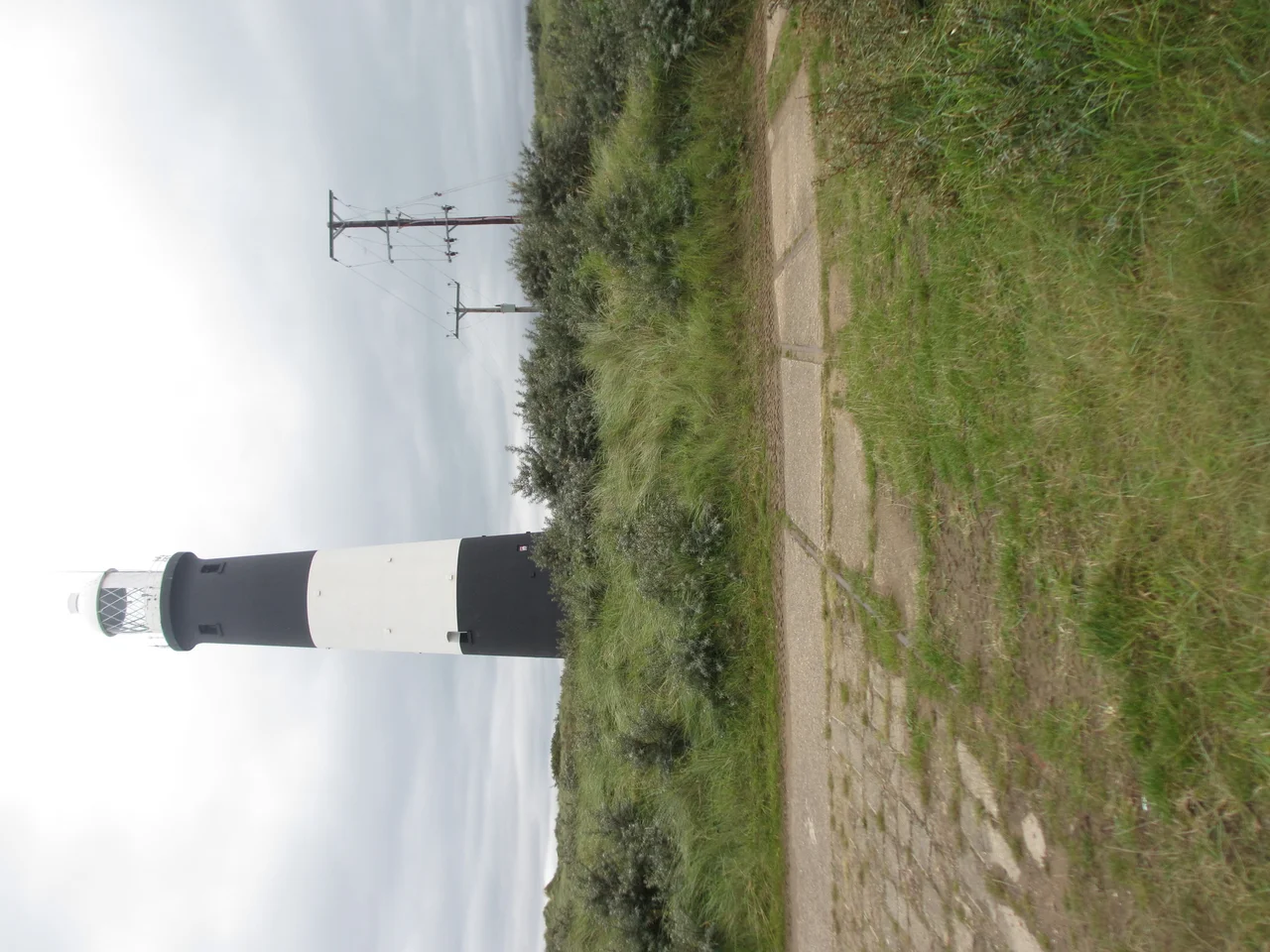

Spurn Point military railway
Standing at the lighthouse on Spurn Point today, you can see rusted lengths of railway track embedded in tarmac that bends towards the sea. The rails were laid in 1915. The line closed in 1951. In the seventy-five years since, the storms have shoved the surviving rails out of true, so that the track now appears to be running directly into the North Sea. It is misalignment by accident, but it tells the truth about this place: nothing here stays in line for long. The Spurn Point military railway was built on sand that the sea was always trying to move. While it was operating, the local residents made a hobby of catching the wind on home-made bogie wagons and 'sailing' them up and down the line - with predictable, sometimes serious, results.
Why a Railway on a Sand Spit
Spurn Point had been militarised since 1805, when the Napoleonic Wars made every spot of strategically important coast into a potential battery position. The point - a three-mile sandspit curving into the Humber's mouth - controlled the approach to Hull and Grimsby. When the First World War was declared in 1914, the number of soldiers on the spit increased overnight. They needed to be supplied. The roads were narrow, twisting tracks running across dune and shingle, washed out at every spring tide. A railway was the obvious answer. The War Department bought the necessary land from the local landowning family and commissioned C. J. Wills and Company to build the line.
Built from Second-hand Parts
Wills laid the track using rails and other material acquired second-hand from the Great Central Railway and the Manchester, Sheffield and Lincolnshire Railway - both being absorbed or reorganised at the time, both with surplus track to sell. The contractors also brought down five standard-gauge steam tank engines to help build the line. When the line opened in 1915, one of the engines was left behind to work the railway, and it stayed there for years afterwards. The track ran from Kilnsea at the inland end of the spit, down the length of the peninsula, all the way out to the jetty at Spurn Point itself. Goods came in by boat at the jetty - ammunition, coal, food, building materials - and went out by rail to the various fortifications and batteries along the spit. The line had no stations and was not connected to the rest of the British rail network.
Sailing Bogies
What officially appeared as a military supply line was, unofficially, also the main road for everyone who lived on Spurn Point - and the local people did something with it that no one had really planned for. They built home-made bogie wagons - small flatbeds on flanged wheels - and used the wind to sail them up and down the railway. With the prevailing westerlies running across the spit, a wind-driven bogie could move surprisingly fast. There are accounts of notable crashes when sailing bogies collided with trains coming the other way. The trains, slow but indifferent, generally won the encounters. The hobby persisted because the alternative was walking three miles each way across loose sand. The railway became, by improvisation, the only practical transport for civilians on a spit too small to need any other kind of road.
The Two-Track Engine Shed
A short distance north of the lighthouse stood the engine shed - two tracks under cover, where the tank engines waited between runs. There were no signalling complexities, no junctions of importance, just a single line running the length of the spit with passing loops where they were needed. The whole operation was, by railway standards, miniature. By Spurn Point standards, it was a major piece of infrastructure - the only piece on the entire peninsula that could move serious tonnage. During the First World War it kept the coastal defences fed. During the Second World War it did the same thing again. It outlasted both conflicts and ran on through the immediate post-war years.
Closure and the Crooked Rails
The line closed in 1951 as a post-war economy measure. A road replaced it - and the road was ironically built from materials brought in by the very railway it was about to make redundant. Between 1956 and 1959 Spurn Head was demilitarised in stages, the batteries and fortifications dismantled, the soldiers withdrawn. Many of the Cold War installations further north along the coast lingered for decades afterwards, but the spit itself reverted to civilian use, eventually becoming a Yorkshire Wildlife Trust nature reserve. Apart from a few short sections of rail sunk into tarmac and concrete around the lighthouse, almost nothing remains of the railway. The road sections with embedded rails get pushed out of alignment by every major storm. The track tilts. It curves. It points off into the sea, as if the line were still running and the destination had simply been washed away. Which, in a sense, is true. Materials from the dismantled road, the old military buildings and the railway itself have been re-purposed across Spurn Head, used to reinforce the washover section where the sea regularly breaches the spit. The railway, in fragments, now holds the spit together.
From the Air
The Spurn Point military railway ran approximately three miles down the spit from Kilnsea to the lighthouse at Spurn Point, centred around 53.60°N, 0.15°E. Recommended viewing altitude is 1,500-2,500 feet AGL to trace the spit and pick out the lighthouse and the line of the former track. The Humber Estuary lies to the west; the North Sea to the east. Nearest airport is Humberside (EGNJ) across the estuary to the south-west. The spit is now a Yorkshire Wildlife Trust nature reserve - watch for fragile habitats and seabird colonies. The deep-water channel and shipping lanes run close by. Best light is mid-morning easterly, when the spit shows clearly against the dark water of the estuary.
Nearby Stories
- Westermost Rough Wind Farm 2.5 km away
- Silver Pit 5.4 km away
- Beverley Minster 7.4 km away
- Lincoln Cathedral 13 km away
- 2004 Ingoldmells Bus Crash 14 km away
- Humber Bridge 21 km away
- Holkham National Nature Reserve 33 km away
- SMS Blucher 333 km away