.jpg)
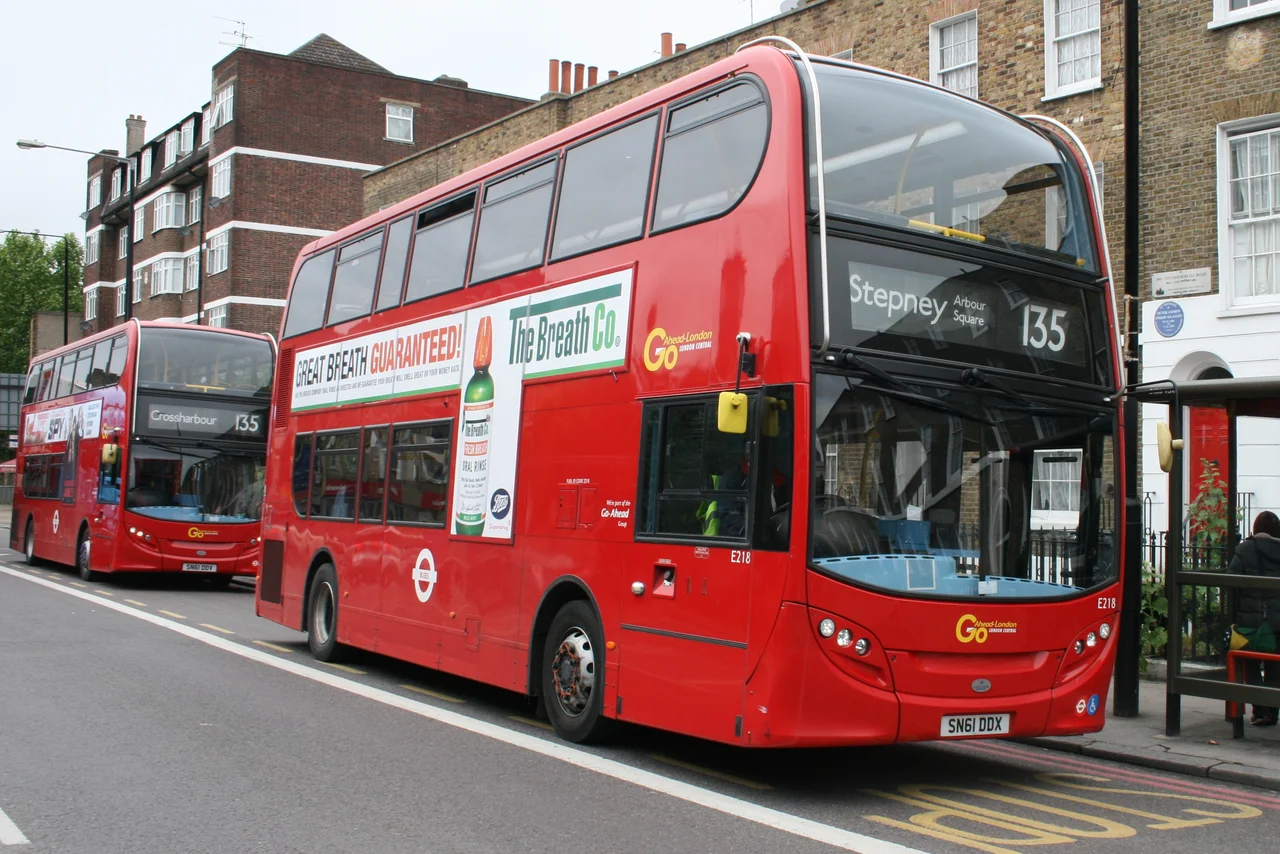
Stepney
Around the year 1000, in the will of a woman named Lady Aelfgifu, a place called Stybbanhyd is written down for the first time. It meant Stybba's landing-place — a hithe on the Thames where boats could be pulled ashore — and from that landing the parish of Stepney grew into something nearer a province than a parish. It once covered everything from the eastern walls of the City to the River Lea and from Stamford Hill to the Thames. By 1720 the historian John Strype thought Stepney should be "esteemed a province rather than a parish, due to its large population, area and the diversity of urban, rural and maritime industries." Today, after the slum clearances of the 1960s and the bombs of the Blitz, the name refers to a much smaller patch of east London. But walk past St Dunstan's Church, founded or rebuilt around 952, and you are standing where the East End began.
The Mother Church of the East End
St Dunstan's Church on Stepney Green calls itself the Mother Church of the East End, and the title is earned. Bethnal Green, Limehouse, Wapping, Shadwell, Poplar, Bow, Ratcliff, Mile End — all began as hamlets within Stepney's medieval parish before population growth made them parishes of their own. The bells of Stepney, cast at the Whitechapel Bell Foundry just up the road, are the ones that ring in the nursery rhyme Oranges and Lemons. The church was also known as the Church of the High Seas, because Stepney's parish registers held the records of British births, marriages and deaths at sea until the nineteenth century. If you were born aboard a ship and needed a parish to be from, you were from Stepney.
The Whitechapel Bells
Two of the most famous bells in the English-speaking world were cast a few minutes' walk from Stepney Green. The Liberty Bell, originally rung at Pennsylvania's State House in 1753, came from the Whitechapel Bell Foundry. So did Big Ben — properly the Great Bell of the clock tower at Westminster — cast in 1858. The foundry had been working in Whitechapel since at least 1570, making it Britain's oldest manufacturing company when its eighteenth-century premises finally closed in June 2017. Stepney was always a working district, and the bells were a working trade. The same furnaces that supplied the great clocks of empire turned out the smaller bells for a thousand parish churches, the handbells for street vendors, the ship's bells for the East India fleet. When you hear Big Ben strike, you are hearing east London.
Erasmus, Cable Street, and the Long Migration
At the turn of the sixteenth century, Erasmus came to stay with John Colet, the vicar of St Dunstan's, and wrote to a friend: "I come to drink your fresh air, to drink yet deeper of your rural peace." Stepney was countryside then. The Trinity Green Almshouses, built in 1695 to house retired sailors, are still the oldest almshouses in central London. By the nineteenth century the railways and the docks had transformed everything. The displaced poor and successive waves of arrivals — French Huguenots in the seventeenth century, Irish in the eighteenth, Ashkenazi Jews fleeing pogroms in the nineteenth, Bangladeshis from the 1960s — settled here because the housing was cheap and the work was close. The Battle of Cable Street in October 1936, when local residents blocked Oswald Mosley's fascist marchers, is part of the same story. So is the British communist Alf Salisbury, born in Stepney, who fought at Cable Street and later with the International Brigades in Spain.
Stepney City Farm
On a corner of land near St Dunstan's, a bomb fell in 1941 and destroyed the Stepney Congregational Church. The wasteland it left sat untouched for decades. In 1979 a local woman named Lynne Bennett, working with residents, schools, and community groups, opened a city farm on the site. They called it Stepping Stones. Today it is Stepney City Farm, with pigs, goats, chickens, beehives and a forge, run as a community resource and education space. Two minutes' walk from Whitechapel Road and Mile End, in a borough whose population density rivals anywhere in Europe, you can stand and watch a saddleback piglet root through straw. The Blitz emptied a square of ground here. Forty years later the neighbourhood filled it with animals.
Stepney Green
Stepney Green itself, the long strip of grass off Mile End Road, is what is left of a much larger common once called Mile End Green. It was here in 1299 that Edward I held a parliament at the house of Henry le Walleis and re-issued Magna Carta — the Stepney version of the great charter is the one that sits in the modern statute book. Stepney Green was the address of choice for prosperous merchants in the seventeenth century, and the eastern terrace of Georgian and Victorian houses largely survived both Blitz and slum clearance. The Stepney Green Conservation Area, designated in 1973, runs from Mile End Road south past Stepney City Farm to the medieval village around St Dunstan's. Walk it slowly. Almost every plaque tells the story of someone who came from somewhere else and decided to stay.
The People Who Stayed
Stepney has produced an extraordinary number of people for a borough so often described in terms of poverty. Monty Norman, who composed the James Bond theme. Lionel Bart, who wrote Oliver! Ledley King and Ashley Cole, who played for England. Anita Dobson and Terence Stamp. Wiley, considered the founding father of grime. The musician Jah Wobble. The playwright Arnold Wesker. Most of them grew up in council housing built after the Blitz, on streets where the previous generation had spoken Yiddish or Bengali or Sylheti. Stepney's pattern, then and now, is to take people in, give them somewhere to start, and watch them go. Some come back. The Mother Church of the East End is still there, ringing its bells over a neighbourhood that has been rebuilt at least three times in living memory.
From the Air
Stepney sits at 51.5152 N, 0.0462 W in the London Borough of Tower Hamlets, roughly two miles east of the Tower of London. From the air the area is bounded by Whitechapel Road and Commercial Road to the south, the River Lea to the east, and the open green spaces of Mile End and Victoria Park to the north. The Tower Hamlets cluster of high-rise estates is unmistakable, set against the spire of St Dunstan's and the smaller Stepney Green strip of trees. Nearest airports: London City (EGLC) three miles south-east, Biggin Hill (EGKB) eleven miles south, Heathrow (EGLL) twenty miles west. Best viewed at lower altitudes; Canary Wharf's towers, two miles south-east, are the easiest navigation landmark.
Nearby Stories
- Stevenage 5.7 km away
- Malling Abbey 5.7 km away
- 1952 Farnborough Airshow Crash 7.7 km away
- Ingatestone Hall 8.2 km away
- Hellfire Caves 9.1 km away
- The Carrington Event: The Solar Storm That Could Happen Again 9.8 km away
- Bletchley Park 16 km away
- Castle Hedingham 23 km away