.jpg)
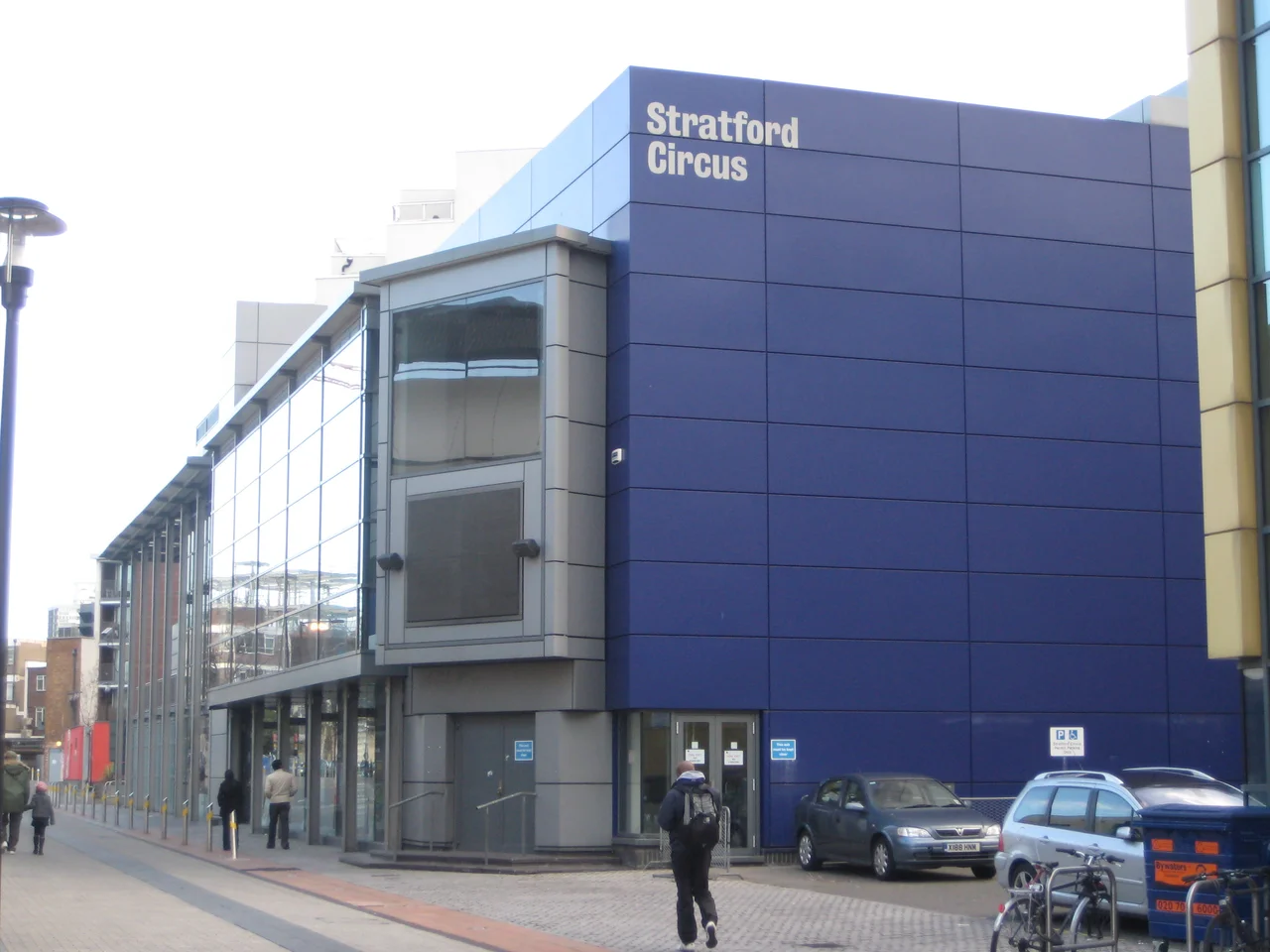
Stratford, London
The name Stratford appears in the historical record in 1067, just a year after the Norman Conquest. It means 'ford on a Roman road'—from the Old English *stræt* and *ford*. The crossing point over the River Lea had been essential since before the Romans came, but Stratford proper is a more recent invention: a place that industrialised fast, declined faster, and then reinvented itself in ways nobody predicted. When the 2012 Summer Olympics came to Stratford, athletes from 204 nations competed in a district that, just a decade earlier, had been a patchwork of derelict railway land and shuttered warehouses.
From Farmland to Factory Floor
Daniel Defoe visited Stratford in 1722 and found it filling with 'hansom large houses' belonging to wealthy City merchants escaping the smoke. The transformation had only just begun. In 1839, the Eastern Counties Railway drove through, opening a station on 20 June. Industry followed the railway. The Metropolitan Buildings Act 1844 pushed dangerous manufacturing east of the River Lea to escape London's regulations, and Stratford absorbed the chemical plants, pharmaceutical factories, and food processing works that the metropolitan area didn't want but couldn't do without. By 1886, The Times was describing 'factory after factory erected on the marshy wastes of Stratford and Plaistow.' The area had earned the nickname 'London over the border.' In 1847, Great Eastern Railway established a locomotive works north of the station. At its peak it employed over 2,500 workers and built 1,682 locomotives, 5,500 passenger coaches, and 33,000 goods wagons before the last section closed in March 1991.
Monks, Martyrs, and a Medieval Abbey
Long before the railways came, Stratford had its own claim to significance. In 1135, the Cistercian Order founded Stratford Langthorne Abbey—also known as West Ham Abbey—one of the largest and wealthiest monasteries in England, owning 1,500 acres locally and twenty manors throughout Essex. Henry VIII dissolved it in 1538, and local landowners carted away much of the stone for their own buildings. Nothing visible remains. The Church of England parish church of Stratford, St John's on Stratford Broadway, contains a memorial to the Stratford Martyrs: twelve men and women burned at the stake in 1556 during the reign of Queen Mary. The memorial was unveiled in 1878. Their names are recorded on terracotta plaques around an octagonal stone monument.
The Olympic Transformation
The late twentieth century brought severe de-industrialisation. The London Docks closed in the 1960s, the locomotive works shut in 1991, and Stratford's population contracted around a core of retail and light industry. Then came the announcement: London would host the 2012 Summer Olympics, with the main venue in Stratford. The Queen Elizabeth Olympic Park—560 acres spread across several boroughs—sits mostly within Stratford itself. The athletes' Olympic Village became East Village, providing 3,500 homes. Westfield Stratford City, one of the largest urban shopping centres in Europe with 350 stores, opened in September 2011. Stratford station, which had handled 40 million passenger movements annually in 2006, was handling 128 million by 2019. The University College London East campus and the London College of Fashion both opened new facilities in the Olympic Park in 2023. The transformation has been comprehensive, if not without its critics.
The ArcelorMittal Orbit and Other Landmarks
Rising 114 metres above the Olympic Park, the ArcelorMittal Orbit is Britain's largest public sculpture—a twisted red steel lattice observation tower designed by Anish Kapoor and Cecil Balmond. It opened to the public in April 2014. In Meridian Square outside the station stands Robert, a 38-tonne steam locomotive built in 1933 by the Avonside Engine Company of Bristol, on display since 1999. The Abbey Mills Pumping Station—built in 1868 as part of Joseph Bazalgette's London sewerage system—is a Gothic Revival masterpiece in cast iron, occasionally open to the public. It was used to portray a lunatic asylum in the 2005 film Batman Begins. And on Stratford Broadway stands a memorial drinking fountain: a 12.8-metre granite obelisk erected in 1861 in memory of Samuel Gurney, Quaker philanthropist and abolitionist, who died in 1856.
From the Air
Stratford lies at approximately 51.541°N, 0.002°W in the London Borough of Newham, about 6 miles northeast of Charing Cross. From altitude, the distinctive red spiral of the ArcelorMittal Orbit in the Olympic Park is the clearest landmark—visible on clear days from considerable height. The parallel lines of rail routes converging at Stratford station form another identifying feature. Nearest airport is London City (EGLC, about 4 miles southeast). The area sits at approximately 5–10 metres elevation across mostly flat terrain. The River Lea and its network of channels are visible as a water feature on the western boundary of the area.
Nearby Stories
- Stevenage 5.7 km away
- Malling Abbey 5.7 km away
- 1952 Farnborough Airshow Crash 7.7 km away
- Ingatestone Hall 8.2 km away
- Hellfire Caves 9.1 km away
- The Carrington Event: The Solar Storm That Could Happen Again 9.8 km away
- Bletchley Park 16 km away
- Castle Hedingham 23 km away