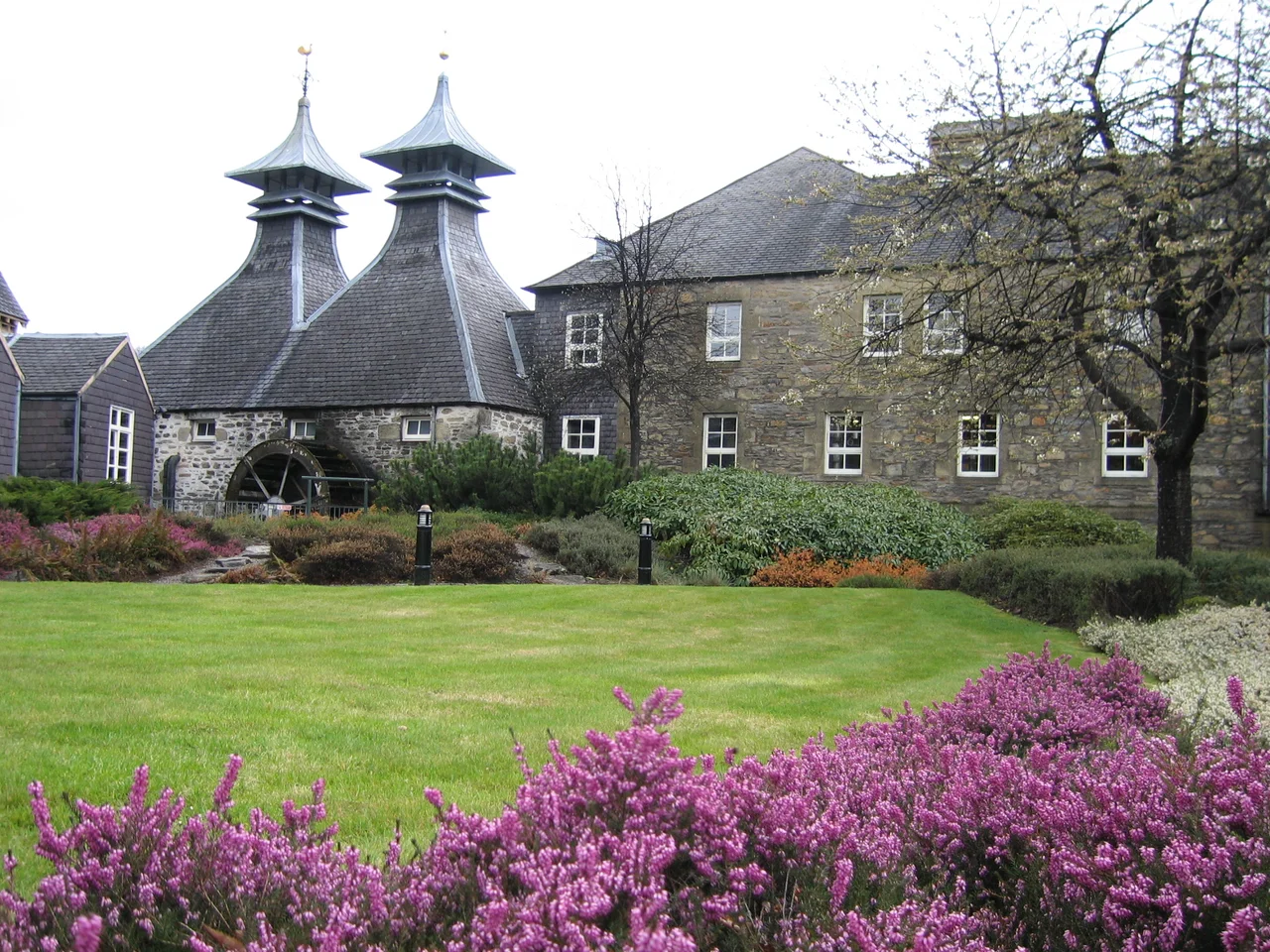

Strathisla Distillery
In 1786, two men named George Taylor and Alexander Milne stood in Keith and watched their flax-dressing business decline. Demand for the linen trade was falling away. They needed a new line of work, ideally one that used the same kind of grain stores, the same kind of water, and the same kind of patience. They leased land from the Earl of Seafield and built a distillery they called Milltown. Two hundred and forty years later, it is still running. Strathisla is the oldest continuously operating distillery in the Scottish Highlands, and its two pagoda-roofed kilns above the Isla are one of the most photographed sights in Speyside.
Why 1786
The year matters. In 1784, Parliament had passed the Wash Act, which finally distinguished Highland and Lowland distilling and made small licensed distillation viable in Scotland north of the Forth. A wave of legal distilleries opened in the years that followed; Strathisla was one of the earliest. Taylor and Milne picked a site fed by a hard spring called the Fons Bulliens, which Dominican monks were said to have used to brew ale in the medieval period. The water was the asset. The name they chose later honours both the Gaelic word strath, meaning a wide valley, and the small river Isla that loops past the kilns. Milltown became Strathisla once the modern road and rail network gave Speyside its identity as a whisky region rather than a string of unconnected glens.
The Heart of Chivas
Single malts get the romance, but for most of the 20th century the real money in Scotch was in blending. In 1950, Chivas Brothers - by then a subsidiary of the Canadian giant Seagram - bought Strathisla and made it the spiritual home of Chivas Regal, the world-famous blended whisky. Strathisla's mellow, honey-toned spirit became the cornerstone malt around which lighter grain whiskies and other Speyside malts were balanced. The distillery was modernised through this period, its capacity quietly expanded, but its hallmark pagoda roofs and stone-flagged stillhouse were preserved as a working visitor experience. When Seagram's empire was broken up in 2001, Pernod Ricard took over, and Chivas Brothers - and Strathisla - continued under new ownership.
The Cornerstone Dram
Strathisla as a single malt is not the showy bottle you see on supermarket shelves. Most of the spirit goes into blends. The single malt expressions that do reach drinkers are prized for what one BBC writer called a "distinctive mellow honey flavour, offering a full, nutty, balanced whisky." The fermentation runs long, the stills are small and stout, and the spirit comes off the second still richer and more viscous than is typical for Speyside. In the warehouses, oak casks - many of them ex-bourbon, some ex-sherry - hold spirit for ten, twelve, twenty-five years before bottling. The mellowness people taste at the end is the patience of those decades, captured in a glass.
On the Trail
Strathisla sits on Scotland's Malt Whisky Trail, a tourism route through seven working Speyside distilleries, the historic Dallas Dhu distillery museum, and the Speyside Cooperage at Craigellachie where casks are still made by hand. Visitors who walk through Strathisla's warehouse, with its earthen floor and the soft fungal smell that the industry calls the angels' share, are seeing a working factory that has changed less in two centuries than almost any other industrial site in Britain. The pagoda roofs over the kilns - the iconic Charles Doig design adopted across Speyside in the late 19th century - are now decorative. Modern kilns are heated by gas. But the shape of the building, the colour of the stone, and the rhythm of the malting floors are essentially what Taylor and Milne built in 1786 to escape the failing flax trade.
What You See From Above
From the air, Strathisla is a tight cluster of slate-roofed buildings on the south bank of the Isla, just upstream of central Keith. The two pagoda roofs are the giveaway. The bonded warehouses - the long, low buildings full of slowly maturing casks - are spread on the surrounding land. A short walk away are Strathmill and Glenkeith, the two other distilleries inside Keith itself, and Speyside's denser concentration of distilleries continues south toward Aberlour and Dufftown. The A96 runs east-west through the valley. In the right light, you can pick out the pale curling steam from the still house when production is running.
From the Air
Strathisla distillery sits at 57.55 N, 2.95 W in Keith, Moray. Inverness Airport (ICAO EGPE) is about 75 km west, Aberdeen International (EGPD) about 65 km south-east, and RAF Lossiemouth (EGQS) about 40 km north. Recommended viewing altitude 2,500-3,500 ft AGL. The pagoda roofs of the kiln are the clearest landmark; the river Isla and the A96 cross close by. In clear weather the Cairngorm massif rises to the south.
Nearby Stories
- Easter Aquhorthies Stone Circle 3.2 km away
- Delgatie Castle 4 km away
- Dallas Dhu Distillery 6.3 km away
- Kildrummy Castle 9.3 km away
- Loch Garten 13 km away
- Tarbat Ness Lighthouse 16 km away
- SS St Petersburg 26 km away
- Battle of Tarbat 49 km away