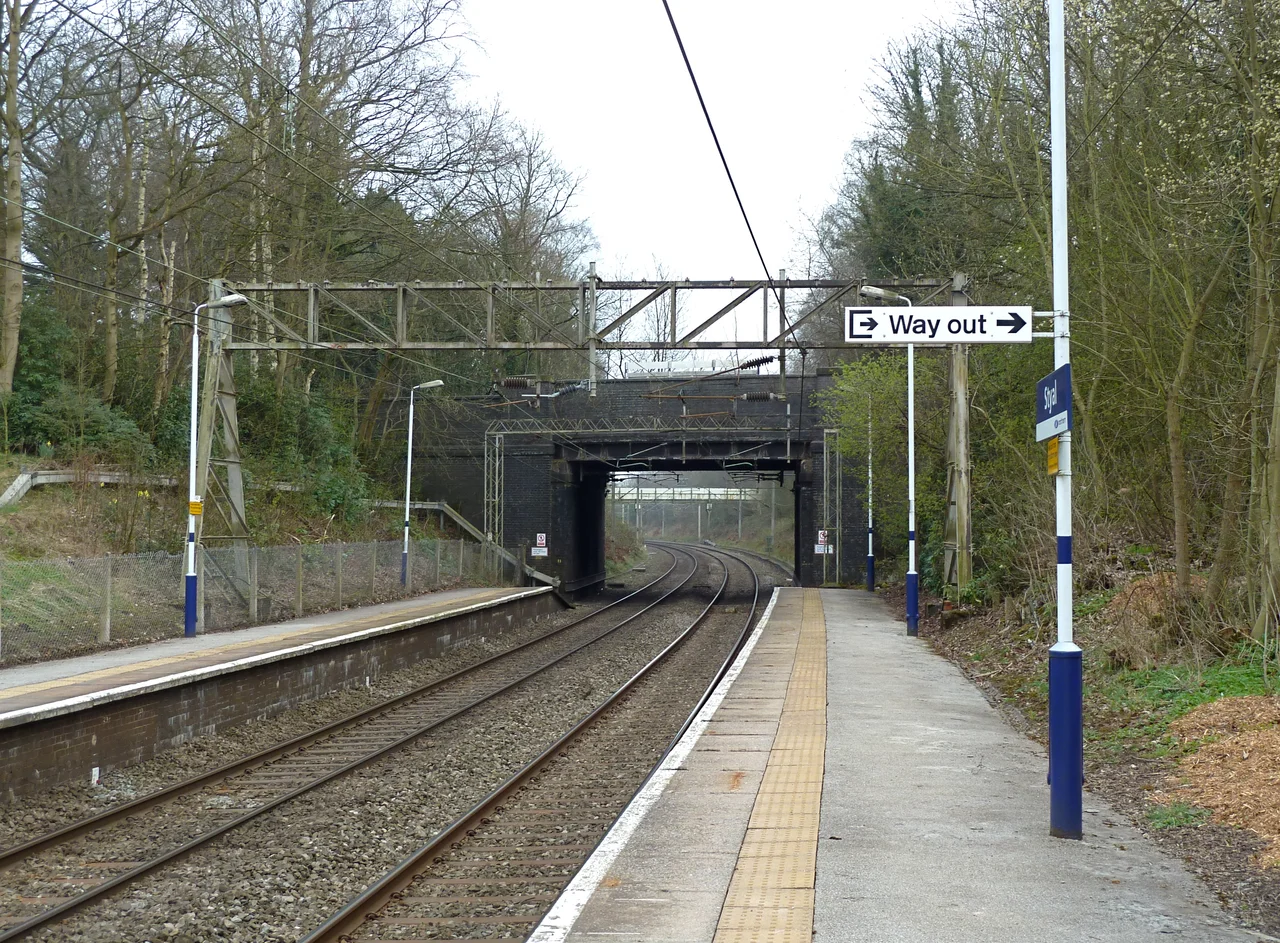

Styal
Walk into Styal village and the architecture starts speaking before any sign explains it. Rows of small terraced cottages, two-up two-down, each with a parlour, kitchen, two bedrooms, an outside privy and a strip of garden, line the lanes between the chapel and the school and the village shop. They were built in the 1820s, not by a council or a developer, but by one industrialist trying to plant a working community in the woods. Samuel Greg's mill at Quarry Bank needed workers, and Styal is the village he built to house them. The Council of Europe calls it the most complete and least altered factory colony of the Industrial Revolution anywhere.
A Village for the Mill
When Greg first leased the wooded gorge beside the River Bollin in 1784, there were only a handful of farm buildings on the site, scattered across what the deeds called three folds. As the mill expanded across the 1790s and into the 1820s, those farmhouses were converted into worker housing and then quickly outgrown. Greg's response was to build a planned settlement on the surrounding hillside. Forty-two new terraced cottages went up, including the Oak Cottages now Grade II listed. Each was simple, similar, and tied to a mill job. Rent was deducted directly from wages. In the years that followed, the cottages became crowded, with as many as 14 people sharing a single two-up two-down, and tenants sub-letting rooms to other mill workers; the architectural neatness on the outside concealed real overcrowding within.
Chapel, School and Shop
Samuel Greg modelled his approach partly on Robert Owen's better-known experiment at New Lanark. He built Oak School to educate the children, and Norcliffe Chapel, completed in 1822 to 1823, as a place of worship for the workers. The chapel started life as a Baptist meeting house but was changed in 1833 to a Unitarian church, because Greg himself was a Unitarian. The Gregs also built the village shop and kept it under their own ownership for roughly five decades. The mill itself ran what an article in the British Journal of Industrial Medicine has called the earliest recorded occupational health service in Britain, with the family doctor Peter Holland looking after both workers and the children of the Apprentice House. The whole pattern is paternalistic in the strict sense: care, order, education, and worship, all on the owner's terms, with the owner's name attached.
Norcliffe Hall and the Cross
In 1831 Samuel's son Robert Hyde Greg, who would run the mill for nearly forty years after his father's death, commissioned a larger family home, Norcliffe Hall, on the western edge of the village. It is Grade II listed today and now contains private flats. Close to the chapel stands the Styal Cross, a medieval wayside cross that originally stood at Cross Farm. In 1860 Robert Hyde Greg moved it to Holly Lane. In 1980 a car crash demolished it, leaving only the lower stones. Those remains were rebuilt on the lane in 1983, and after a fundraising campaign a replacement stone column and cross were added to the medieval base in 2010, joining the old fragments to new stone in much the same way the village itself joins its old farms to its newer cottages.
Greg, Slavery and the Mill
The story of Styal cannot be told without the wider story of the Greg family money. Samuel Greg's father Thomas and uncle John had interests in four estates in Dominica and St Vincent, and Samuel and his brother Thomas inherited the Hillsborough plantation in Dominica and other estates. One estate's records list 71 enslaved men and 68 enslaved women in 1818. Samuel did not draw directly on Caribbean earnings to finance Quarry Bank, but his brothers were owners of plantations worked by enslaved people, and the cotton spun in Styal was largely picked by enslaved hands in the American South. The National Trust now tells this history at the site, alongside the village's social experiment, and the two stories sit uncomfortably together as they should.
Cottage Homes to Prison
Styal continued to gather people the wider society had little use for. In 1898 the Styal Cottage Homes opened to house destitute children from Manchester. They closed in 1956. Six years later the buildings reopened as HMP Styal, the women's prison that still operates on the site today. The mill ceased commercial production in 1959, after 175 years of operation. National Trust ownership has preserved both the mill and the village, including Norcliffe Chapel and a range of listed buildings, and visitors today can walk the same lanes, look in at the same cottages, and stand in the same chapel where mill workers gathered every Sunday. Tyson Fury and Terry Waite both grew up here, in a place that has been many things to many people without ever quite losing the shape Greg gave it two centuries ago.
From the Air
Styal village lies at 53.3485 N, 2.2485 W, in the wooded valley of the River Bollin, immediately south of Manchester Airport (EGCC). The village and Quarry Bank Mill are inside the busy controlled airspace of EGCC, less than two miles from the airport boundary. Liverpool John Lennon (EGGP) is roughly 25 miles to the west. Styal's wooded estate creates a clear green pocket against the suburban sprawl when seen from the air. Recommended viewing altitude is 2,500 to 4,000 feet AGL, subject to ATC.
Nearby Stories
- Hope Cement Works 1.5 km away
- Liverpool John Lennon Airport 3 km away
- Diglake Colliery Disaster 3.4 km away
- Holt Castle 4.6 km away
- Bank Hall 6.9 km away
- Rochdale Pioneers Museum 8.3 km away
- National Coal Mining Museum for England 9.6 km away
- Belper North Mill 19 km away