.jpg)
Sunderland International Airshow
Concorde came over Sunderland in July 1993 at low altitude along the coast, twin afterburners trailing, and the crowd along Roker Beach put their fingers in their ears and watched it pass. The Sunderland International Airshow had been running for four years by then. It had started as a one-day experiment in 1989 that organisers expected to be a one-off. Two hundred and fifty thousand people came. By 1995 the crowds reached a million across the weekend. By the time it was last flown, in 2019, it was the biggest free airshow in Europe and the largest annual event of any kind in the North East of England.
The Accidental Tradition
On 7 August 1989, Sunderland Council put on a single-day airshow over the Roker and Seaburn seafronts. Free entry, anyone welcome, displays out over the sea so the beach itself became the grandstand. The organisers had not planned for what happened next: 250,000 people turned up. Council planners realised they had found something. From 1991 it was a two-day event. The Red Arrows made their first Sunderland appearance the same year. Soon it was three days, anchored on the final weekend of July, with displays beginning Friday evening and running through Sunday afternoon. Crews and aircraft came from across NATO and beyond - Russia, Hungary, Jordan, the United States, France, Belgium, the Netherlands all sending teams over the years. The Royal Navy traditionally stationed a warship offshore as backdrop, usually one of the vessels adopted by the city.
The Aircraft That Came
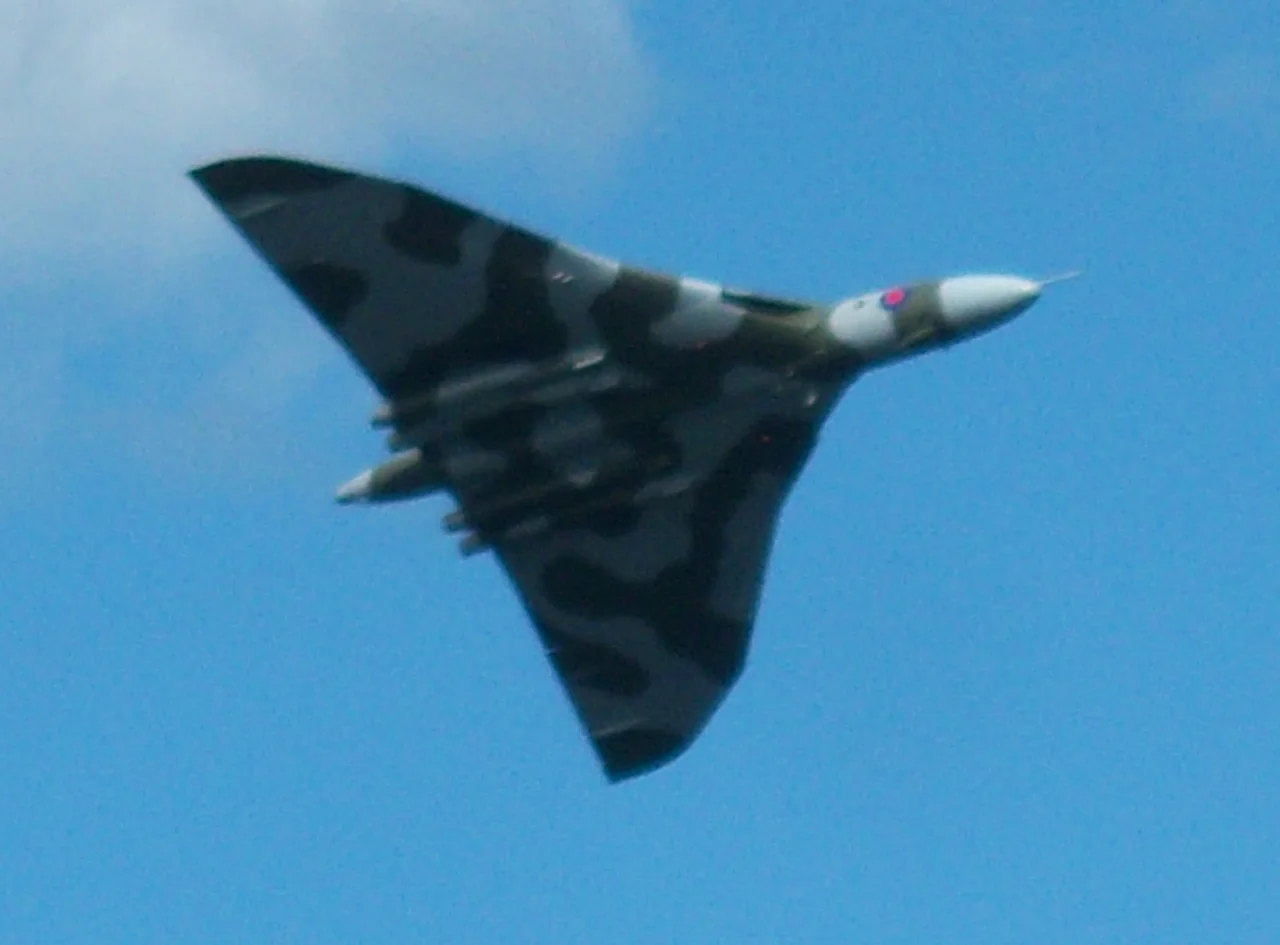
The Red Arrows became regulars. So did the Eurofighter Typhoon, the Harrier GR9 with its impossible hovering capability, the F-16s in various national markings including the orange of the Royal Netherlands Air Force, the Battle of Britain Memorial Flight with its Lancaster, Spitfire, and Hurricane. The RAF Falcons jumped in. The Royal Marines staged role demonstrations from 6 Assault Squadron. RAF Chinook display crews drawn from 18 and 27 Squadrons threw their twin-rotor helicopters through manoeuvres helicopters were not really supposed to do. The Black Cats Royal Navy display pair, The Blades aerobatic team, the Avro Vulcan XH558 in its preservation flying years - all of them appeared at some point. A Catalina flying boat, civil-registered G-PBYA, dropped its floats and made a water landing in 2007 in the kind of stunt that only really worked at a seafront airshow.
The Green Airshow
In 2007 Sunderland Council teamed up with Gentoo and CarbonNeutral North East to measure and offset the entire carbon footprint of staging that year's two-day show. There was a Green Village along the seafront with environmental stalls and educational displays. It was an unusual move for what was, after all, an event whose central attraction was burning aviation fuel above the North Sea. The exercise was partly serious and partly atonement. It also hinted at a tension that would, fifteen years later, kill the show. Newcastle International Airport was the main operating base for visiting aircraft through 2007, then Teesside took over for several years, then Newcastle came back in 2014 - the partnership with Newcastle was also a sponsorship, and the airshow benefited from the airport's marketing as well as its runway.
The Show That Didn't Come Back
The airshow was cancelled in 2020 because of the COVID-19 pandemic. It was cancelled again in 2021 and 2022 for the same reason. Then in October 2022, Sunderland City Council announced that there were no plans to hold the airshow again. The reasoning given was the global climate emergency and the city's commitment to be carbon neutral by 2040. Whether the council's mind was genuinely changed by the climate argument or whether COVID had simply offered a politically convenient pause for an event whose costs were also rising, the result was the same. The biggest free airshow in Europe, after 33 years and an estimated 30 million cumulative spectators across its lifetime, simply stopped. The Roker and Seaburn seafronts return to their normal late-July rhythm now - holidaymakers, ice cream vans, the smell of the sea instead of jet exhaust. Some Wearsiders watch the calendar that last weekend in July out of habit. There is no longer anything to look up for.
From the Air
The Sunderland International Airshow operated above the coastline between Roker (54.929N, 1.364W) and Seaburn, approximately 1 mile north of the River Wear mouth. From cruising altitude the broad sweep of beach, the Roker Pier and lighthouse, and the open sea immediately east define the former display airspace. Newcastle International Airport (EGNT), 14 miles north-west, was the main aircraft base; Teesside International (EGNV) is 27 miles south. Recommended viewing altitude 2,000-4,000 ft AGL on a clear day to take in the Roker/Seaburn seafront, Souter Lighthouse to the north, and the Wear mouth to the south.
Nearby Stories
- Seaton Carew 2.7 km away
- HMS Unity (N66) 6 km away
- George Stephenson's Birthplace 6.1 km away
- Raby Castle 9 km away
- Cragside 15 km away
- Whitby Abbey 21 km away
- German submarine U-2367 46 km away
- Alexander L. Kielland (Platform) 277 km away