.jpg)
Surfers Paradise International Raceway
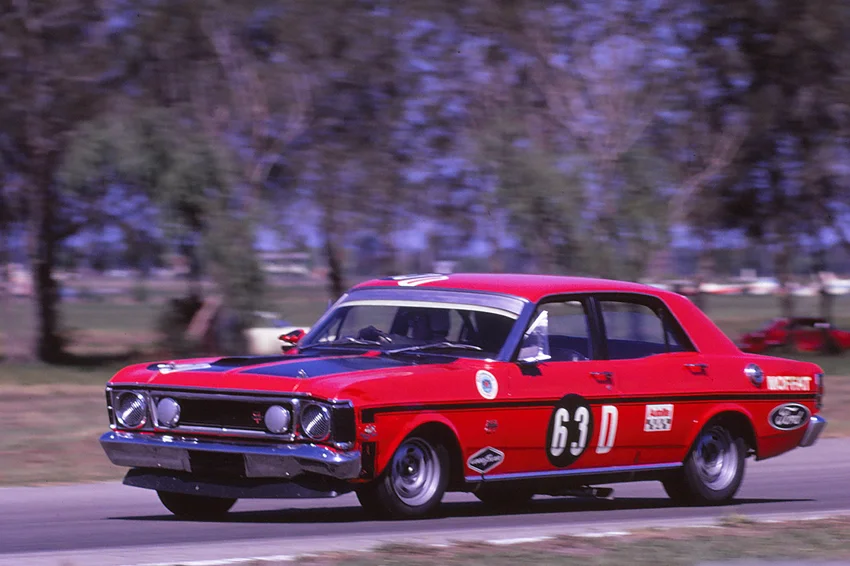
Drivers spoke of the corner under the Dunlop Bridge the way mountaineers speak of a particular pitch of rock. It was the fastest, most daunting turn in Australian motorsport, a flat-out right-hander taken on faith, and over the years it caught out even the best, sending the likes of Allan Moffat and John Harvey spearing off the road. For a circuit on table-flat coastal land at Carrara, with just one low rise the locals called Repco Hill, Surfers Paradise International Raceway packed an outsized reputation. From 1966 to 1987 it was one of Australia's great racing venues. Now it is gone, and where the cars once screamed there are quiet streets and still water.
The Man Who Built It Flat
Keith Williams was a motor-racing enthusiast with a developer's eye, and the 3.219-kilometre circuit he carved out at Carrara reflected both passions. He ran a dragstrip straight down the main straight, a feature he would later repeat at his Adelaide International Raceway in 1972, then strung together the fast right under the Dunlop Bridge, a quick left, and a series of rights and lefts skirting Repco Hill before a slow right fed the cars back onto the straight. Within the loop of track he tucked an airstrip and a quarter-mile dirt speedway. The complex sat opposite the old Surfers Paradise Ski Gardens, a slice of motorsport dropped into the swampy flats just inland from the beach.
The Largest Drag Meet Outside America
Drag racing fired up at Easter in 1966, and two years later the circuit launched the event that would define it. The Winternationals, first run in June 1968, grew into the largest drag-racing meeting anywhere outside the United States, drawing crowds and machinery from across the country to the Gold Coast every winter. The roar of the strip became part of the region's calendar. When the circuit eventually closed, the Winternationals did not die with it; the meeting moved to Willowbank Raceway near Ipswich in 1988, where it continues to this day, a living thread back to those first runs at Carrara.
Grand Prix in the Rain
The road circuit drew the international sets too. The Tasman Series arrived in 1968, and that year Jim Clark in his Lotus-Ford and Chris Amon in a Ferrari filled the top two places, with Clark's teammate Graham Hill third, names that read like a roll-call of the era's giants. Formula 5000 cars ran here through the early 1970s, and when the Tasman Series faded the Rothmans International Series stepped in to fill the gap. The Australian Touring Car Championship visited again and again across the 1970s and into the 1980s, and the circuit staged gruelling endurance contests, the Rothmans 12 Hour races among them. The Australian Grand Prix came just once, in 1975, and the weather made it memorable: Max Stewart splashed his Lola T400 to victory through torrential rain. A decade later, in 1986, John Bowe set the outright lap record of one minute and 4.3 seconds in the Chevrolet-powered Veskanda sports car, a mark that would stand as the circuit's fastest forever.
Erased, but Not Quite
Williams sold up in 1984, and the circuit closed at the end of 1987 after twenty-one years, the final meeting held on 27 August. The track was left to decay. In 1993 there came a curious afterlife: volunteers and Queensland police patched the old dragstrip back into service for "Operation: Drag," a Blue Light scheme offering young drivers a ten-dollar run against a mate on a sealed strip rather than racing on public roads. It was a brief revival. The asphalt was finally torn up in 2003, and the site reborn as the Emerald Lakes canal estate. Today, manicured lawns and quiet water cover ground that once trembled to V8s flat out under the Dunlop Bridge.
From the Air
The former raceway site sits at 28.02 degrees south, 153.38 degrees east, at Carrara on the Gold Coast flats, now occupied by the Emerald Lakes canal estate, its curving lakes and waterfront streets visible from the air just inland from the coastal high-rise strip. Stadiums and sporting venues at Carrara provide nearby landmarks. Recommended viewing altitude is 2,500 to 4,000 feet. Gold Coast Airport (YBCG) lies about 12 nautical miles to the south; Brisbane Airport (YBBN) is roughly 45 nautical miles to the north. The terrain is low and flat, so visibility is generally good outside of summer afternoon cloud build-up.
Nearby Stories
- Tweed Regional Gallery 7.7 km away
- Purga Aboriginal Cemetery 19 km away
- North Stradbroke Island 21 km away
- Deebing Creek Mission 43 km away
- Bald Rock National Park 105 km away
- HMS Porpoise (1799) 636 km away
- Wreck Reefs 665 km away
- SS Elingamite: Gold, Fog, and a Captain Wrongly Blamed 1833 km away