
Tarabya
According to tradition, Medea — the sorceress of Greek myth who fled Colchis with Jason and the Golden Fleece — named this bay Pharmakia, the Greek word for poison, after hiding toxic herbs along its shores. The name persisted for centuries. Then an Orthodox patriarch named Attikos, uncomfortable with the association between his community's home and poison, renamed it Therapia: healing. Whether the story is historically accurate matters less than what it reveals about Tarabya's character. This is a place where names carry weight, where the mythological and the practical have always coexisted, and where someone has always been trying to improve on what came before.
From Poison to Diplomats' Haven
The Ottomans took Therapia in 1453 during the first days of the Fall of Constantinople, when a Byzantine castle on the bay fell and 40 soldiers were executed. For the next two centuries, the settlement remained a Greek fishing village, gradually absorbing small numbers of Armenian and Muslim residents. The transformation came in 1655 when the village became the seat of the Terkos Metropolis, the Orthodox Christian ecclesiastical district, which elevated its religious status and drew wealthier inhabitants. The combination of a good harbor, clean air, distance from the city's summer diseases — particularly cholera — and the social prestige of the metropolitan seat made Tarabya irresistible to Istanbul's Greek aristocracy. Then the foreign embassies discovered it. By the 18th and 19th centuries, ambassadors from across Europe were maintaining summer residences here, and the village had become the unofficial diplomatic suburb of the Ottoman capital.
The Hotels That Rose and Burned
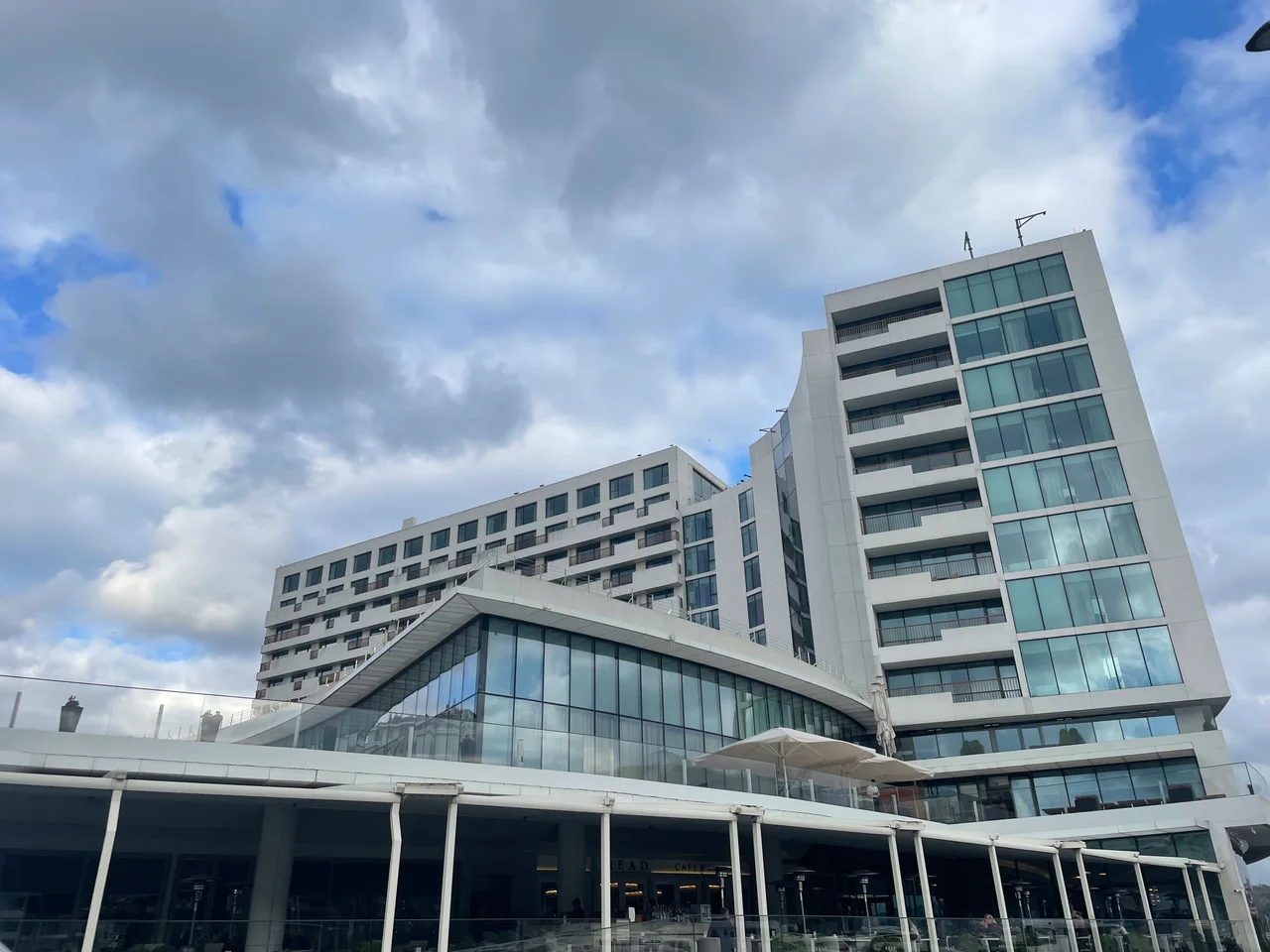
A community that attracted diplomats and aristocrats attracted hotels to serve them. The Sümer Palas, built in the 1890s, was one such establishment — a place of sufficient quality that it survived into the mid-20th century before being demolished in the 1950s, replaced by an apartment complex that kept the name. The Hotel d'Angleterre was built during the Crimean War, when British military and diplomatic presence in the region reached its peak. In its place eventually rose the Tokatlıyan Hotel, which burned down in 1954. The Grand Tarabya Hotel, opened in 1966 on that same site, is now the neighborhood's only hotel. Each of these buildings represents a different chapter in Tarabya's relationship with the outside world: the Crimean War era, the late Ottoman boom, the Republican period, the modern tourism economy. The shore has kept burning and rebuilding.
A Greek Village and Its Vanishing
The town remained predominantly Greek through much of the 20th century, long after the general pattern of Greek departure from Istanbul had already reduced communities elsewhere. Then the Istanbul pogrom of September 1955 changed things here too: a church built in 1796 and the metropolitan residence were set on fire during the violence that swept through the city's Greek, Armenian, and Jewish neighborhoods. Relations between Turkey and Greece deteriorated further in subsequent decades, particularly after the 1974 Cyprus crisis, and most of the remaining Greek residents were forced to leave. The Greek school closed in 1985. By then, roughly 50 Greeks — mostly elderly — still lived in Tarabya. The holy wells of Aya Marina, Aya Ioannis, and Aya Kiriaki remain, two of them still accessible. They are quiet evidence that a community existed here for a very long time, and then did not.
What the Bay Holds Now
Today Tarabya has a population of 17,852 and remains one of the more coveted addresses on the European Bosphorus shore. The Huber Mansion serves as the Turkish president's Istanbul residence. The Tarabya Cultural Academy, which occupies the former German Embassy summer residence, hosts international cultural events. The Yalı of Prince Ypsilantis — a noble mansion on the waterfront — later became the summer residence of the French Embassy. The bay's protected geography, which once shielded sailing ships from Bosphorus currents and winds, now shelters a marina full of yachts. Fish restaurants along the shore do a brisk trade. Above it all, the neighborhood carries an accumulated weight of myth, ambition, diplomatic intrigue, and loss that most waterfront villages could not imagine.
From the Air
Tarabya is located at approximately 41.139°N, 29.053°E on the European shore of the Bosphorus, between the neighborhoods of Yeniköy to the south and Kireçburnu to the north. From the air, the sheltered bay is clearly defined by the curve of the shoreline, with the marina visible inside it. The Grand Tarabya Hotel and the Huber Mansion grounds are identifiable landmarks on the waterfront. Looking north along the European shore, Rumelikavağı and eventually the Yavuz Sultan Selim Bridge come into view. Nearest major airport is Istanbul Airport (LTFM), approximately 20 km to the northwest. Recommended viewing altitude 2,000–3,500 feet to appreciate the bay's shape and its relationship to the strait.
Nearby Stories
- Kınalıada 6.2 km away
- Şile Castle 7.8 km away
- Second Battle of Çatalca 8.9 km away
- Hereke 20 km away
- 2025 Istanbul Earthquake 25 km away
- Battle of Constantinople (922) 61 km away
- Januarius MacGahan 87 km away
- Edirne 160 km away