.jpg)
Teatro del Libertador General San Martín
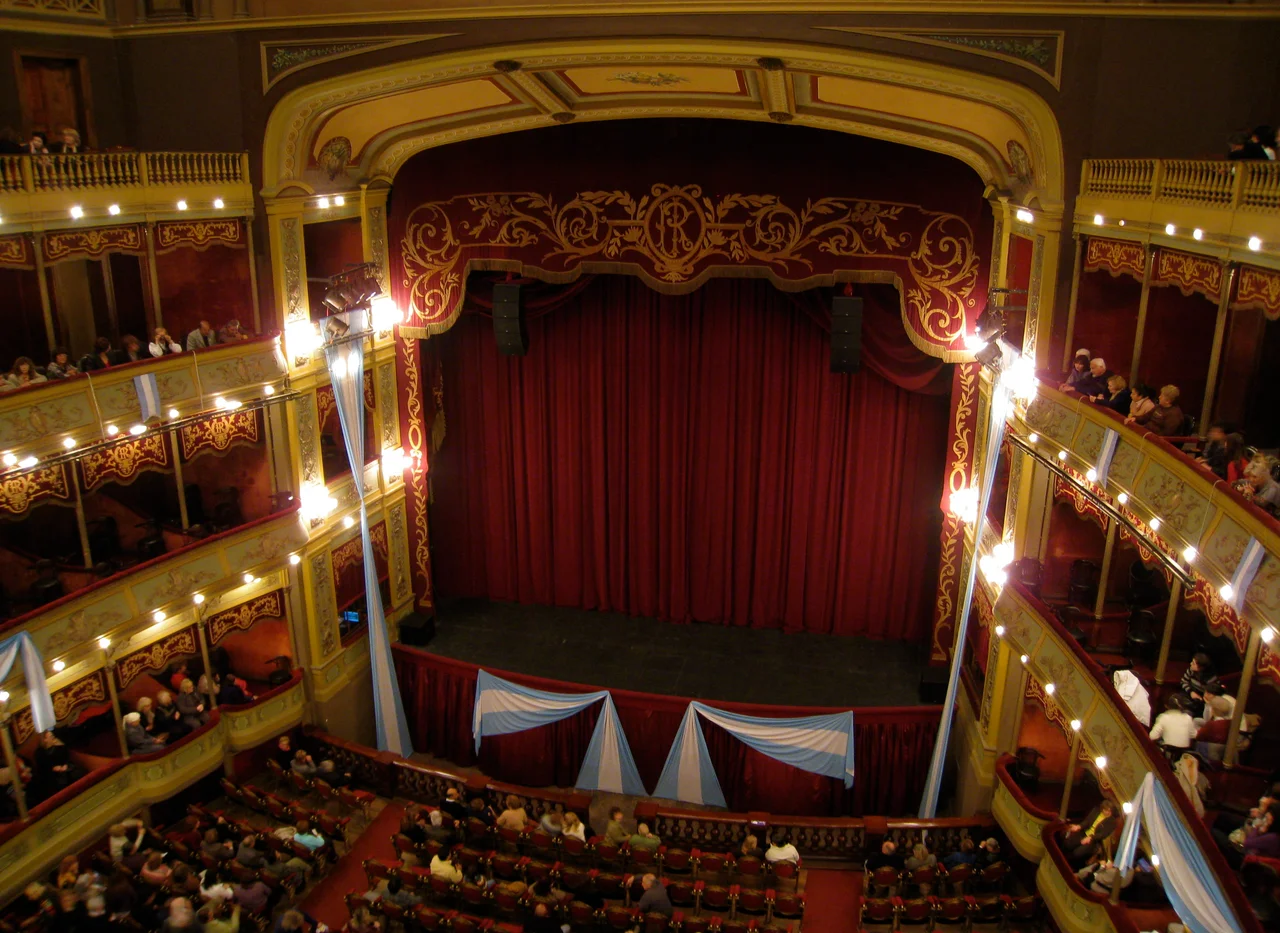
Everything inside it came by ship. When Córdoba decided to build itself a proper opera house in the late 1880s, the planners imported the entire interior from Europe - the fabrics, the fittings, the stage machinery, all of it crated across the Atlantic and reassembled on a broad downtown avenue. The man who designed it, the Italian architect Francesco Tamburini, died in 1891, the same year his Córdoba theatre opened its doors. He would never see his greatest commission, the Teatro Colón in Buenos Aires, completed. But here in Córdoba, the curtain went up on time.
The Minister Who Wanted Music
The theatre exists because one man noticed an absence. Ramón J. Cárcano, the provincial justice minister, was struck that his native Córdoba had no concert hall, and in 1887 he proposed building one to Governor Ambrosio Olmos. With the legislature's approval and funding secured, Cárcano turned to a fellow Italian Argentine: Francesco Tamburini, born in Ascoli Piceno in 1846, who had arrived in Argentina in 1881 and risen to Inspector General of National Architecture. Tamburini gave Córdoba an eclectic Italianate design, its façade crowned by a quadriga - the four-horse chariot of classical triumph - and softened with verdigris accents and sculptural reliefs by Arturo Nembrini Gonzaga, the Beaux-Arts vocabulary that wealthy Argentina craved. Tamburini was simultaneously designing the Teatro Colón and enlarging the Casa Rosada in Buenos Aires. He would die in 1891 with the Colón still unbuilt - it was finished only in 1908, by other hands. Córdoba's house opened first, and outlived its maker.
A Floor That Rises
Inaugurated on April 26, 1891, the theatre first bore the name Rivera Indarte and was built for a thousand spectators. Locals called it the Teatro de la Calle Ancha - the Broad Street Theatre - after the avenue out front, later renamed for the jurist Vélez Sársfield. Its cleverest feature is hidden underfoot: the auditorium floor can be raised to stage level, transforming the hall from a place to watch performances into a vast ballroom for the social galas that have filled it for well over a century. A theatre that can flatten its own seats is a theatre confident it will be the center of the city's social life - and this one was right.
The Voices That Filled It
The roll of performers reads like a survey of a golden age. The actress and director María Guerrero brought the great drama of Spain to its stage after 1897. The tenor Enrico Caruso sang here, as did the baritone Titta Ruffo and the lyric tenor Tito Schipa. The pianist Arthur Rubinstein played its hall. For a provincial city far from the European capitals, drawing artists of that rank was no small thing - it announced that Córdoba intended to be taken seriously as a place of culture. Smaller rooms, the Luis de Tejeda and Rafael Grisolía halls, host seminars and the theatre's own Youth Orchestra, and a 1970 museum gathered the institution's deep collection of stagecraft.
A Name at the Mercy of History
Few buildings have worn Argentina's political turbulence so plainly. In 1950, President Juan Perón renamed the theatre for General José de San Martín, the liberator, marking the centennial of San Martín's death. After Perón was overthrown in 1956, the theatre reverted to Rivera Indarte. In 1973 it regained the San Martín name once more, which it keeps today - the Teatro del Libertador General San Martín. The shifting marquee is a small map of a turbulent century, each change of name a change of regime. Through all of it the work went on the same. The curtain rose, the imported European machinery turned, and the voices carried out over what was once Broad Street into the Córdoba night, as they still do.
From the Air
The theatre stands in central Córdoba, Argentina, at roughly 31.42°S, 64.19°W, on Vélez Sársfield Avenue a few blocks south of the Plaza San Martín in the dense downtown grid - the green of Sarmiento Park lies to the southeast as an orientation aid. The Sierras Chicas rise to the west of the city basin. The gateway is Ingeniero Aeronáutico Ambrosio L.V. Taravella International Airport (ICAO: SACO, IATA: COR), known locally as Pajas Blancas, about 9 km north-northwest of the center and the busiest airport in Argentina outside Buenos Aires. The compact downtown of low rooftops and church domes reads best on a low daytime approach in the region's typically clear, dry air.
Nearby Stories
- Jesús María, Argentina 16 km away
- Alta Gracia 26 km away
- Pampa de Achala 31 km away
- Mina Clavero 31 km away
- Mar Chiquita Lake 116 km away
- Battle of Quebracho Herrado 135 km away
- Villa San Agustín 271 km away
- Predelta National Park 289 km away