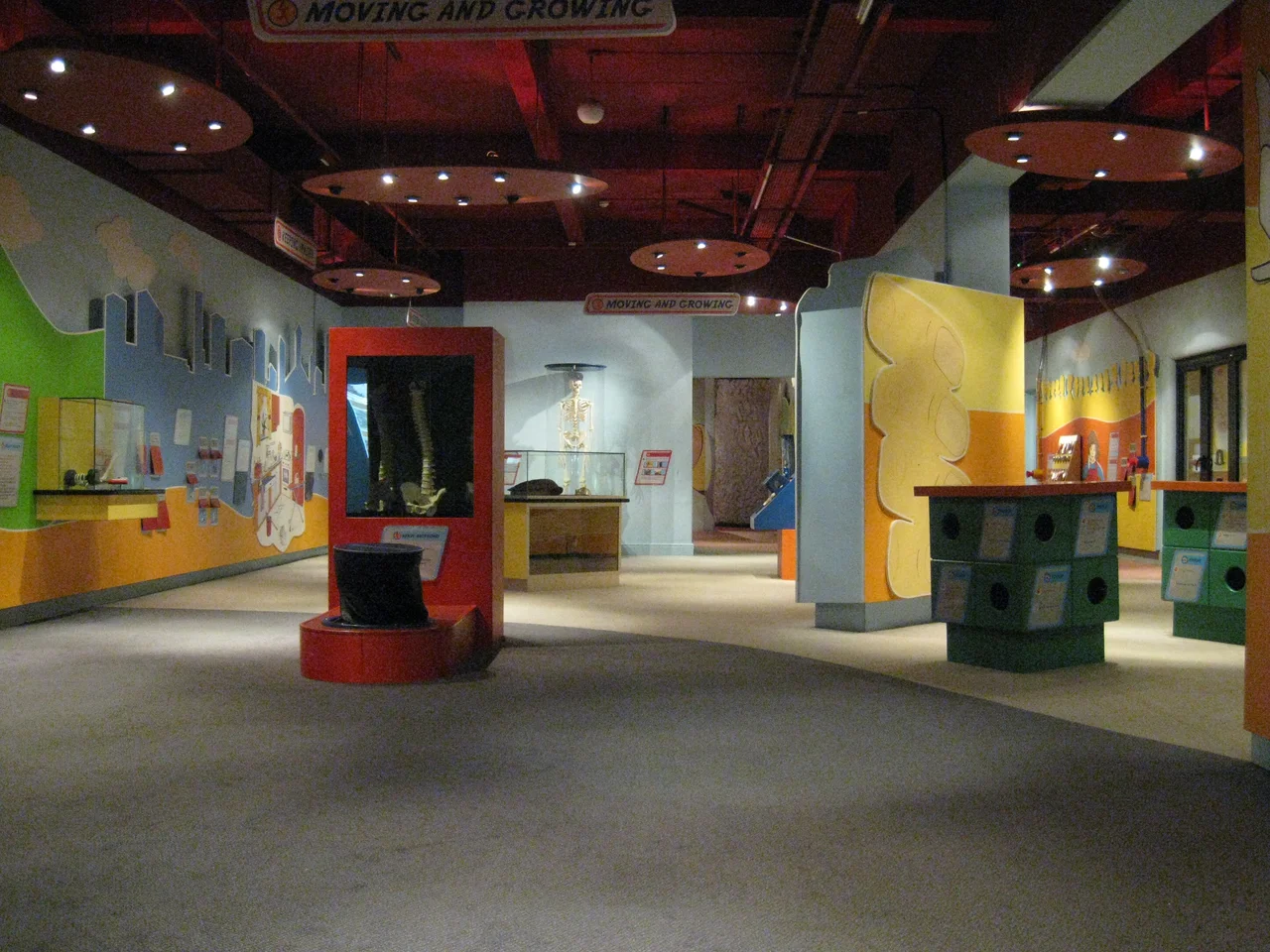

Thackray Museum of Medicine
Hannah Dyson lies on the surgical table. She is a mill girl. Her leg is being amputated, and this is 1842 - before antiseptics, before anaesthetics, before germ theory. The Thackray Museum of Medicine in Leeds recreates her ordeal in a film visitors can watch in the Victorian Operating Theatre gallery. It is unflinching. It is meant to be. Because this museum, housed in the very Victorian workhouse where 784 paupers once lived under conditions barely better than Hannah's surgery, refuses to let anyone forget how recent comfort is - and how thoroughly we owe that comfort to medicine.
Workhouse to Wonder
The foundation stone was laid in 1858. By 1861, the Leeds Union Workhouse stood ready to receive the destitute of the city - 784 paupers crammed into a building that the Victorian poor laws treated as both shelter and warning. By century's end, the building's purpose had quietly shifted. The workhouse became a hospital for the poor. In the First World War it served as the East Leeds War Hospital. Eventually it became the Ashley Wing, attached to St James's University Hospital until the 1990s, when the old Victorian structure was finally deemed unfit for modern medicine. But as a Grade II listed building, it could not be demolished. Parliament granted permission for the Thackray Medical Museum to occupy it instead. The doors opened in March 1997, and within a year the museum had won Museum of the Year. The workhouse had become a place of learning about the very systems of health and welfare that the workhouse itself had failed to provide.
The Chemist Who Built a Hospital Empire
The Thackray name traces back to a small chemist's shop on Great George Street, Leeds, opened in 1902 by Charles Thackray. In less than a century, that corner shop grew into Chas F Thackray Limited - one of Britain's principal medical companies, manufacturing drugs and surgical instruments. The firm's most consequential collaboration came with Sir John Charnley, the orthopedic surgeon whose total hip replacement procedure transformed millions of lives starting in the 1960s. Thackray manufactured the instruments and prosthetics that made Charnley's operation routine. In the 1980s, Paul Thackray - Charles's grandson - began saving the company's historical instruments as an archive. In 1990, that archive became a charitable trust. Seven years later, it became one of Britain's most distinctive museums.
Disease Street and the Plague Dress
The museum's redevelopment, a four-million-pound project, began in 2019. Then the world shut down. While the doors stayed closed through 2020, the Thackray did something no other UK museum had done: it became a COVID-19 vaccination hub. The first museum in Britain to administer doses, it later hosted Phase 3 trials for the Novavax vaccine. Examples of those vaccines now sit in the permanent collection alongside Prince Albert's personal medicine chest and an extraordinary expressionist sampler stitched by workhouse inmate Lorina Bulwer. When the museum finally reopened on 17 May 2021, the eleven new permanent galleries felt different. Disease Street recreates the sights, sounds, and smells of a Victorian Leeds slum. Disease Detectives explores microbiology. Bioartist Anna Dumitriu's Plague Dress, sewn with ancient bacterial DNA, drew worldwide attention. The collection now holds 47,000 objects spanning Roman times to last week.
Why It Stays With You
Most museums of medicine fall into one of two traps. They become triumphalist - look how clever we've become! - or grim, a parade of instruments designed to inflict suffering. The Thackray refuses both. Hannah Dyson is not a curiosity. She is a real mill girl, named, whose ordeal teaches that the woman in the surgical bed mattered then and matters now. The Disease Street slum is populated by Victorian Leeds residents whose stories you follow through the gallery, not statistics. Even the COVID gallery, telling the story of the pandemic that nearly destroyed the museum's reopening, frames itself around individual people choosing to help. The building - the old workhouse - constantly reminds you that medical history is not a story of inevitable progress but of choices, some humane and some cruel, made by people not unlike ourselves.
From the Air
The Thackray Museum of Medicine stands at 53.808°N, 1.518°W in the Harehills district of east Leeds, adjacent to St James's University Hospital. The nearest airport is Leeds Bradford (ICAO: EGNM), 8 miles north-west. From altitude, the museum reads as a long Victorian brick block at the south-eastern edge of the St James's hospital complex, with the modern hospital towers rising just to its north. Leeds city centre sits 2 miles west, marked by the cluster of high-rise buildings around the railway station. The M1 motorway loops around to the south and east of the museum.
Nearby Stories
- Hovingham Hall 6 km away
- RAF Elvington 7.6 km away
- Battle of Hatfield Chase 9.1 km away
- Wentworth Castle 11 km away
- Murder of Suzanne Capper 12 km away
- Pendle Hill 13 km away
- RAF Topcliffe 15 km away
- Hawes Junction Rail Crash 26 km away