
The Artillery Museum of Finland
Outside of Russia itself, no other museum in the world has assembled a more complete collection of Russian and Soviet artillery than the one in Hameenlinna. The reason is geography and history. Finland fought three wars against the Soviet Union between 1939 and 1944, and Finnish artillerymen captured (or held off) Soviet guns of every era from tsarist field pieces to Stalin-era howitzers. After 1945 the Finnish military preserved them rather than scrap them, and by the time the museum found its current home in 1997 the collection numbered over 90 different cannon, plus rocket launchers and heavy mortars, parked in a courtyard barracks the Russians themselves had built in the 19th century.
Niinisalo to Hameenlinna
The idea of a Finnish artillery museum had been kicked around in the 1930s, then shelved by the Second World War. It came back in the early 1970s. Proximity to a working artillery garrison was thought essential, and the empty Saloharju school in Niinisalo, deep in the rural province of Satakunta, sat next to the large Niinisalo artillery garrison. The Tykkimiehet (Cannon Men) Association rented the building from the borough of Kankaanpaa, and the museum opened on 2 July 1977 under the simple name Tykistomuseo, the Artillery Museum. It was a remote location and the public did not come in great numbers. By 1995 the decision had been made to find a more visited home. Linnankasarmi, the Castle Barracks at Hameenlinna, was vacant. The new Artillery Museum opened there to the public on 12 May 1997. The name was changed on 1 January 2004 to The Artillery Museum of Finland.
Built by Russia, Now a Finnish Museum
The buildings of Linnankasarmi are themselves part of the story. They were built during the Russian autonomy period of 1809-1917, when Finland was a Grand Duchy under the Russian crown and the imperial government was establishing garrison towns to support its forces. Construction of the barracks started in 1850 and finished in 1913, just four years before the Russian Empire collapsed and Finland declared independence. The whole site sits on the location of the medieval town of Hameenlinna, whose remains are still buried under the barrack yard. Hame Castle, the great brick stronghold built by the Swedes in the 13th century, stands directly next door. So the visitor walks through layers of military Finland: Swedish medieval fortress, Russian imperial barracks, and now a Finnish independence-era artillery collection, all on the same patch of ground.
Three Floors of Cannon
The permanent exhibition climbs three floors. The ground floor begins in the 15th century and follows artillery development through the Finnish War of 1808-1809, the Russian autonomy period, the Finnish Civil War of 1918, and the Jager Movement (the Finnish nationalists who trained in Imperial Germany during WWI to prepare for independence). One of the highlight pieces here is the Helvig, a muzzleloader cannon that fought in the 1808-1809 war that ended Swedish rule. The second floor focuses on the Winter War of 1939-1940 and the Continuation War of 1941-1944, the two conflicts that defined modern Finland's fight against the Soviet Union. The study of Artillery General Vilho Nenonen, the man who modernized Finnish artillery doctrine and developed the famously accurate Finnish fire-direction system, is reconstructed on this floor. Also on display: the personal uniform of Vaino Myllyrinne, the largest Finnish soldier ever recorded at 226 centimeters (7 feet 5 inches) tall. The third floor displays the life of Marshal of Finland Gustaf Mannerheim, the country's wartime supreme commander, and includes the honorary 105 H 37 light howitzer on whose gun carriage Mannerheim's body was carried at his 1951 funeral.
Ninety Cannons in a Courtyard
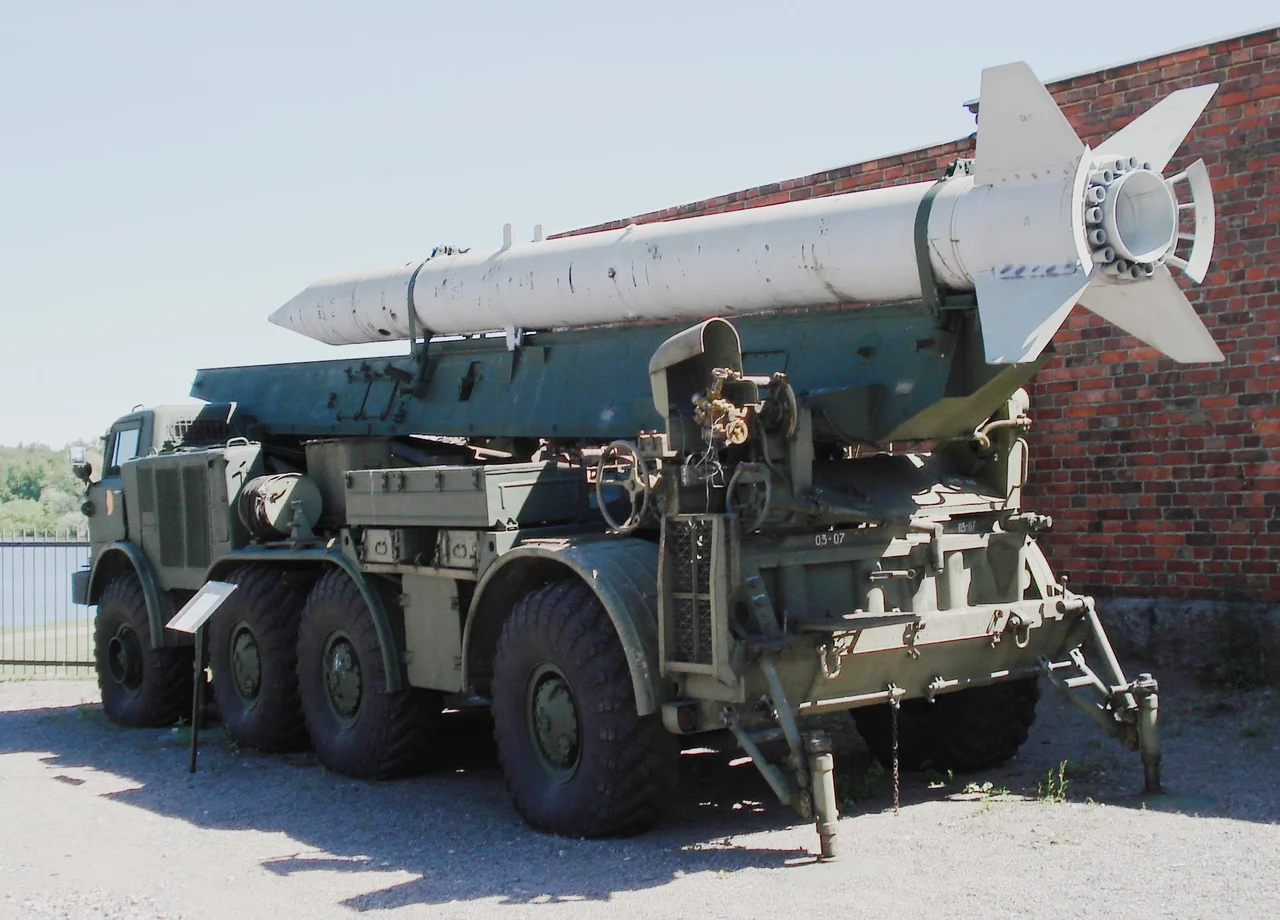
The real spectacle is outside. The gun yard holds the bulk of the museum's collection of 90 cannons, parked in rows like a vast metal vintage car show. Russian 76mm field guns, Soviet 122mm howitzers, German Nebelwerfer rocket launchers, British 4.5-inch howitzers (model Mk2), Soviet Luna-M tactical rockets (NATO designation FROG-7), Finnish-built bunker guns. The honorary place at the center of the yard belongs to the funeral howitzer of Artillery General Vilho Nenonen, a Mannerheim Cross knight, the same model that carried Mannerheim's coffin. The gun hall inside houses the rarest and most fragile pieces. The collection's claim to be the most comprehensive Russian and Soviet artillery collection outside Russia rests on the fact that Finland's wars left the country with vast numbers of captured Soviet guns of every era, while the postwar Soviet Union was generally not preserving its own outdated equipment for museums.
Now Part of Museo Militaria
On 4 December 2012 the Artillery Museum of Finland threw a farewell party at its Gun Hall. From 1 January 2013 the premises at Linnankasarmi were taken over by Museo Militaria, a new combined military history museum that merged the Artillery Museum with the Pioneerimuseo (Engineer Corps museum) and the Viestimuseo (Signal Corps museum). The artillery collection remains in place; it just has new institutional siblings now. The auditorium runs documentary films about the defining Finnish military victories: the Miracle of Ihantala in summer 1944 on the Karelian Isthmus, the counter-attack in the wilderness of Ilomantsi the same summer, the last battle in Ladoga Karelia, and the Winter War of 1939-1940. An interactive computer system maps the development of Finnish artillery from the 13th century to the present. A cafeteria fills out the visit.
Hameenlinna from Above
Hameenlinna sits in southern Finland's lake district, the great brick block of Hame Castle on the shore of Lake Vanajavesi. The Linnankasarmi barracks complex, with the artillery museum's open gun yard, occupies the space between the castle and the modern town. From the air the layout is clear: castle on the lake, barracks behind, town beyond. Helsinki is 100 kilometers south. Tampere, Finland's third-largest city, is 75 kilometers north. The lake stretches away in both directions, dotted with the small islands and pine-forested shores that define this part of Finland.
From the Air
The Artillery Museum of Finland sits at 61.01 N, 24.46 E in Hameenlinna, in the Linnankasarmi barracks complex next to Hame Castle on Lake Vanajavesi. View from 3,000-5,000 feet to take in the castle, the barracks complex with its outdoor cannon, and the lake. Helsinki Vantaa (EFHK) is 95 km south. Tampere (EFTP) is 75 km north. Best in clear summer weather; lake-effect cloud is common in autumn.
Nearby Stories
- Akaa 9.4 km away
- Hervanta 12 km away
- Forssa 15 km away
- Liesjärvi National Park 35 km away
- Tampere Ice Stadium 36 km away
- Battle of Lahti 39 km away
- Military Museum of Finland 75 km away
- Saynatsalo Town Hall 98 km away